Covert operations in Hungarian elections? A day to ward off all fears
Accusations of hidden interference mark the electoral appointment

-
CAT -
CAST
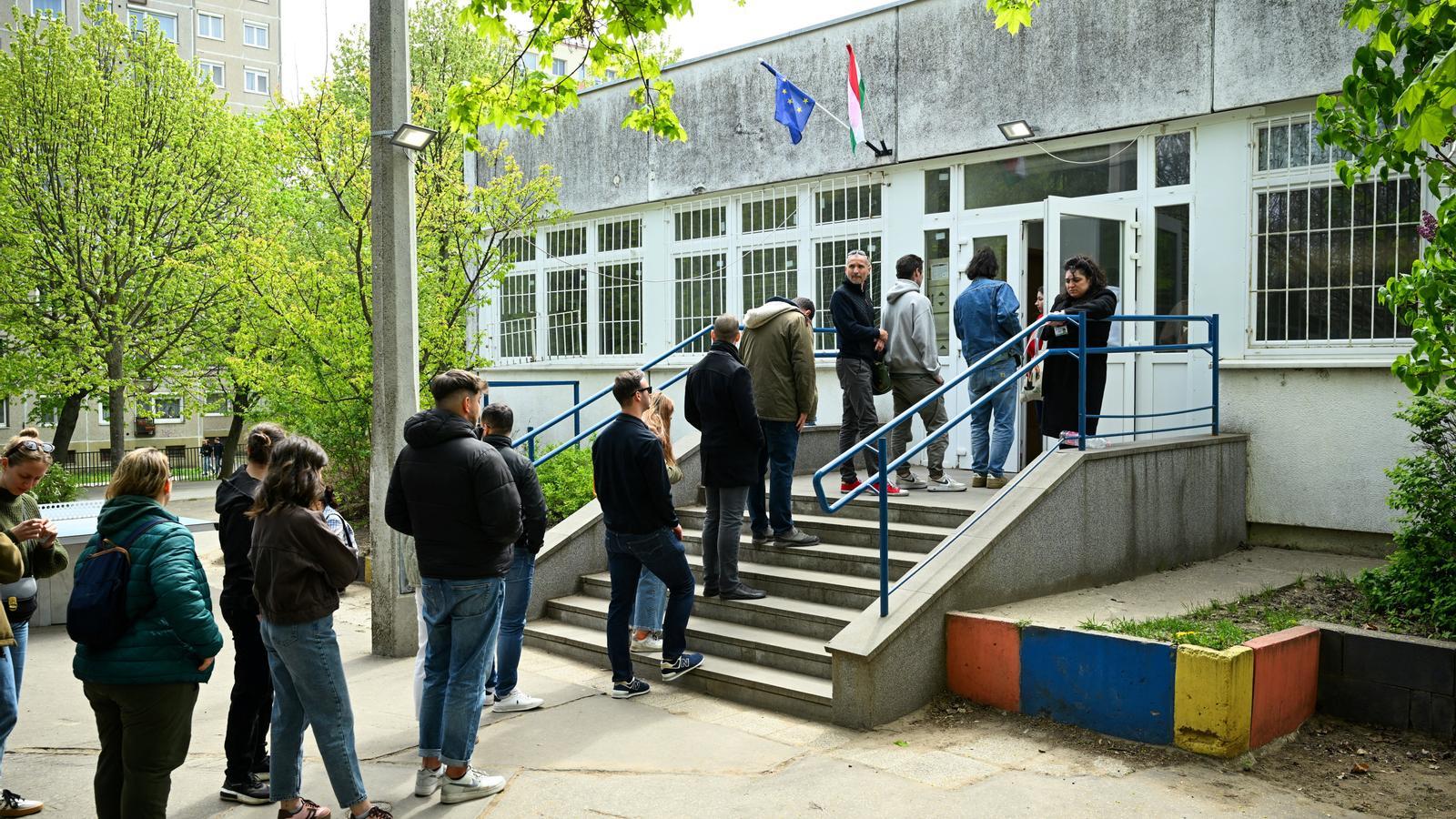
Special correspondent to Budapest"They are prepared to do anything. Tomorrow a whole series of false flag operations are expected, coordinated with Russian agents, following their advice. We have precise information." The opposition leader in Hungary, Péter Magyar, made this statement on Saturday night during his last campaign rally. From the top of the stage he intended to amplify the concern that some of his followers have expressed in recent days before Sunday's elections, in which Viktor Orbán is fighting for the prime minister's seat., in which Viktor Orbán is fighting for the prime minister's seat.
During the final stretch of the campaign, speculation has increased about the possibility of some kind of orchestrated maneuver to destabilize the country and influence the electoral outcome. Fear has been present throughout the election campaign in Hungary. Orbán accuses Ukraine and Brussels of interfering in the process and trying to drag Hungary into war, while the opposition warns of possible Russian false flag operations, that is, covert actions intended to make the public believe they are the work of someone else.
"We were afraid something would happen that would serve the government to declare a state of emergency and cancel the elections," a woman who preferred not to give her name told me on Thursday. She explained that last Sunday, for a few hours, she thought the moment had come, when the Serbian president, Aleksandar Vucic, announced that explosives "of devastating power" had been found near the TurkStream gas pipeline in Serbia, which transports Russian natural gas to Hungary. Orbán convened an extraordinary session of the Defense Council and accused Ukraine without presenting evidence. A former Hungarian intelligence official told Reuters that, in Hungarian security circles,
there had been discussions in recent days about a plan for a "false flag" operation that could affect the gas pipeline in Serbia to influence the elections.
"Ah, that's it, this is it, I thought – said the woman –. It conveyed a certain surprise that in the end nothing had happened. But there are still three days left."
“They have 36 hours left. I don't know what they plan to do… We have seen how they have manipulated elections for the last sixteen years, so we cannot be sure of anything until Monday morning,” said a young man, in the same vein, during the anti-government mega-event organized on Friday in Budapest's Heroes' Square.
Walking through Budapest these days, those who don't understand Hungarian might think it's Volodymyr Zelensky running for election, not Viktor Orbán. The city is plastered with posters showing the face of the Ukrainian president, alongside that of Péter Magyar. The posters warn that Zelensky and Magyar are "dangerous" and assure that the only "safe" option is to vote Fidesz. Orbán has focused his campaign on presenting himself as the sole guarantor of peace in Europe, while warning that if Magyar wins, Hungarians will end up involved in the war between Russia and Ukraine.
Cross accusations
But it is not only the opposition that warns of eventual false flag attacks. The government itself has also done so. Hours before election day, Zoltán Kovács, Orbán's state secretary for communication, published a message on X suggesting that the location chosen by Tisza on election night, in front of Parliament, and "a short distance from the prime minister's residence," could foster action against the government. "It only takes a short walk for a crowd to go from watching results to taking action." He added: "If the outcome becomes unfavorable, the setup allows for rapid mobilization in a politically sensitive location. In times of tension, proximity can turn reaction into escalation."
Messages were also spread from Ukrainian accounts, citing information from Ukrainian intelligence, warning that agents of the Russian secret services planned to pose as Ukrainians to take over buildings in the center of Budapest and "generate chaos" in the city on election day. They assured that the former colonel of the Berkut forces —who led the brutal repression of the Euromaidan demonstrations in Ukraine in 2014— was in the capital.
On Friday, the Reuters agency reported that Russian or Russia-linked content creators and distributors were publishing coordinated waves of content on Telegram to spread fear about what will happen if Orbán loses the election, according to an investigation by the data analysis company Vox Harbor.
Any good political strategist knows that fear is one of the most potent feelings when deciding a vote. In elections as uncertain as those in Hungary and in a global context as unstable and unpredictable as the current one, the effect of disinformation can be decisive.
