Historic participation in Hungarian elections even before the polling stations close
At 5 p.m. more people have already voted than in any of the elections in the last 30 years
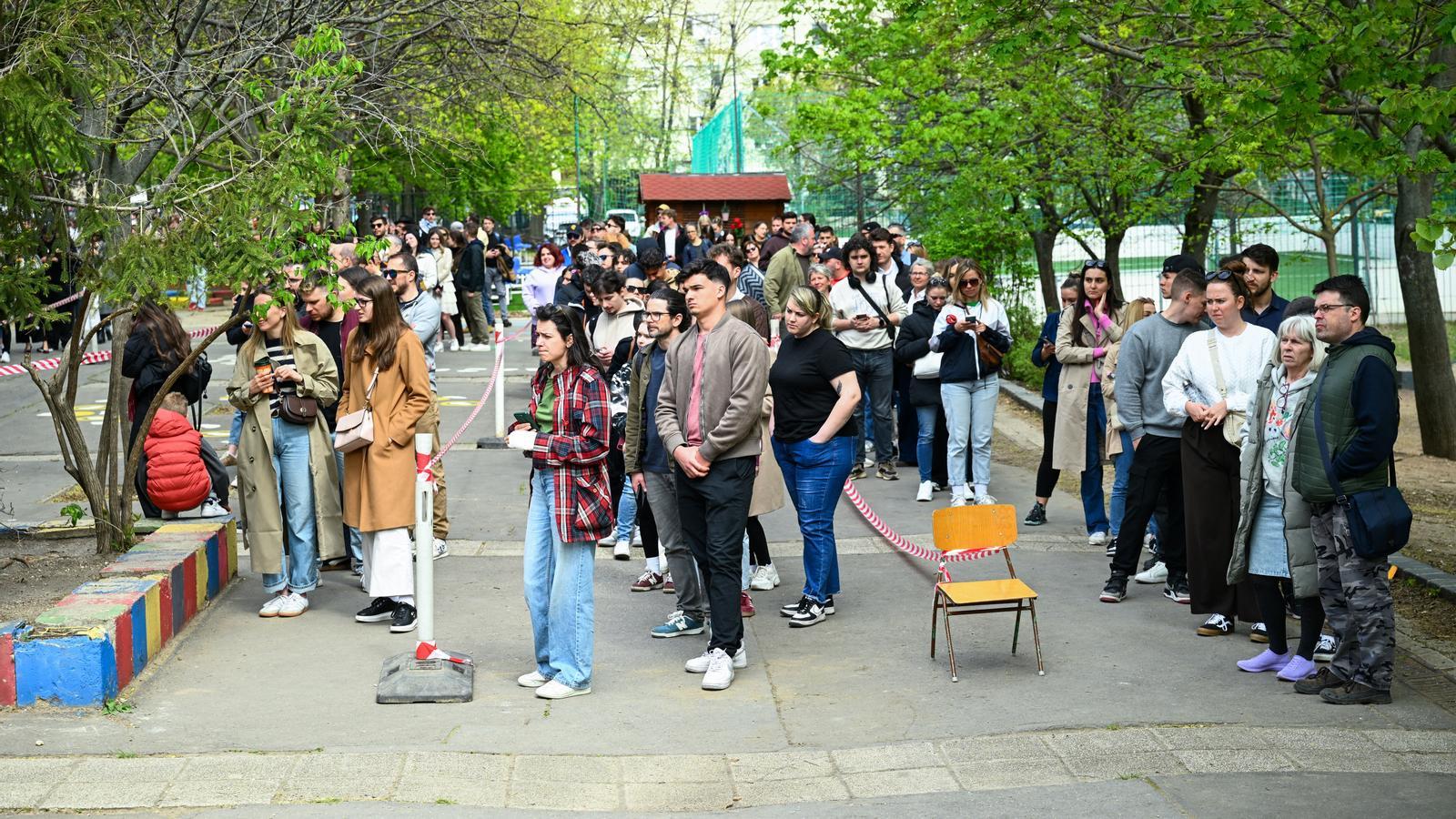

Special correspondent in BudapestThe legislative elections in Hungary are already historic before the results are known. After weeks of messages highlighting that these were decisive elections, the population has responded with massive participation. Preliminary data, corresponding to the count at 5 p.m., two hours before the polling stations close, show a participation of 74.23%. This figure is already higher than the total participation figure in all previous elections, since 1998. Until now, the highest participation had been recorded in 2002, when at the closing of the polling stations it stood at 70.5%.
"Record participation in the elections! Still two hours left. Now is the time to push very hard! Vote and encourage everyone to do so! Every vote can be decisive," reacted the opposition leader, Péter Magyar, on social media. Prime Minister Viktor Orbán also sent a message to encourage his voters to mobilize during the last hours of the day. "Hungary's peace and security could depend on a vote," he said, adding that "no patriot can stay home."
All independent polls give Tisza a wide margin of advantage, Magyar's party. Since leaving Fidesz two years ago, Magyar has managed to unite practically all opposition to Orbán's government, which has governed with supermajorities for the last 16 uninterrupted years.
However, analysts and citizens warn that nothing can be taken for granted before the official results are known. At the polling stations in Budapest today, there are several groups of observers monitoring the process. The organization Tiszta Szavazás (Clean Vote), which fights against electoral corruption, has issued a statement in which it assures that it has received reports of "organized transport" and "vote buying" in the cities of Debrecen, Pécs, and Kemecse. It also stated that in Dabas, a town south of Budapest, money had been distributed in front of a polling station.
"Everyone wants change"
In the early afternoon, on the esplanade in front of the majestic Hungarian Parliament, groups of tourists mingled with about fifteen people setting up a structure of lights and speakers. "Nobody is organizing this, we are a group of private individuals... it's a techno festival, it's nothing political," explains one of the three men setting up portable toilets a few meters away. They are right in front of the Ministry of Construction and Transport, which is barricaded with metal fences and police officers. I ask them if they have voted and what their expectations are. He doesn't elaborate on the answer, which is quite concise: "Everyone wants change."
At the polling stations, the messages received are along the same lines. But one of the few who agrees to answer (without giving his name) points to the reason: "Here in Budapest people are more liberal, but in rural areas there are many pro-Fidesz people." "Everyone around me is very hopeful that Tisza will win, but I have my doubts," he admits. A girl who has just voted at the same polling station is optimistic, but she's not entirely sure either: "I have a lot of hope, but I also have a strange mix of feelings. I'm kind of scared... if Tisza doesn't win, it will be a disaster." And she points to a possibility that is in the air today in Budapest: "If the opposition doesn't win, maybe people will revolt and take to the streets to protest."

