Russia and Iran are the main threats against the West, according to the head of the British MI5
While Moscow increasingly uses "criminals for sabotage", Tehran opts for "more ambitious targets"

-
CAT -
CAST
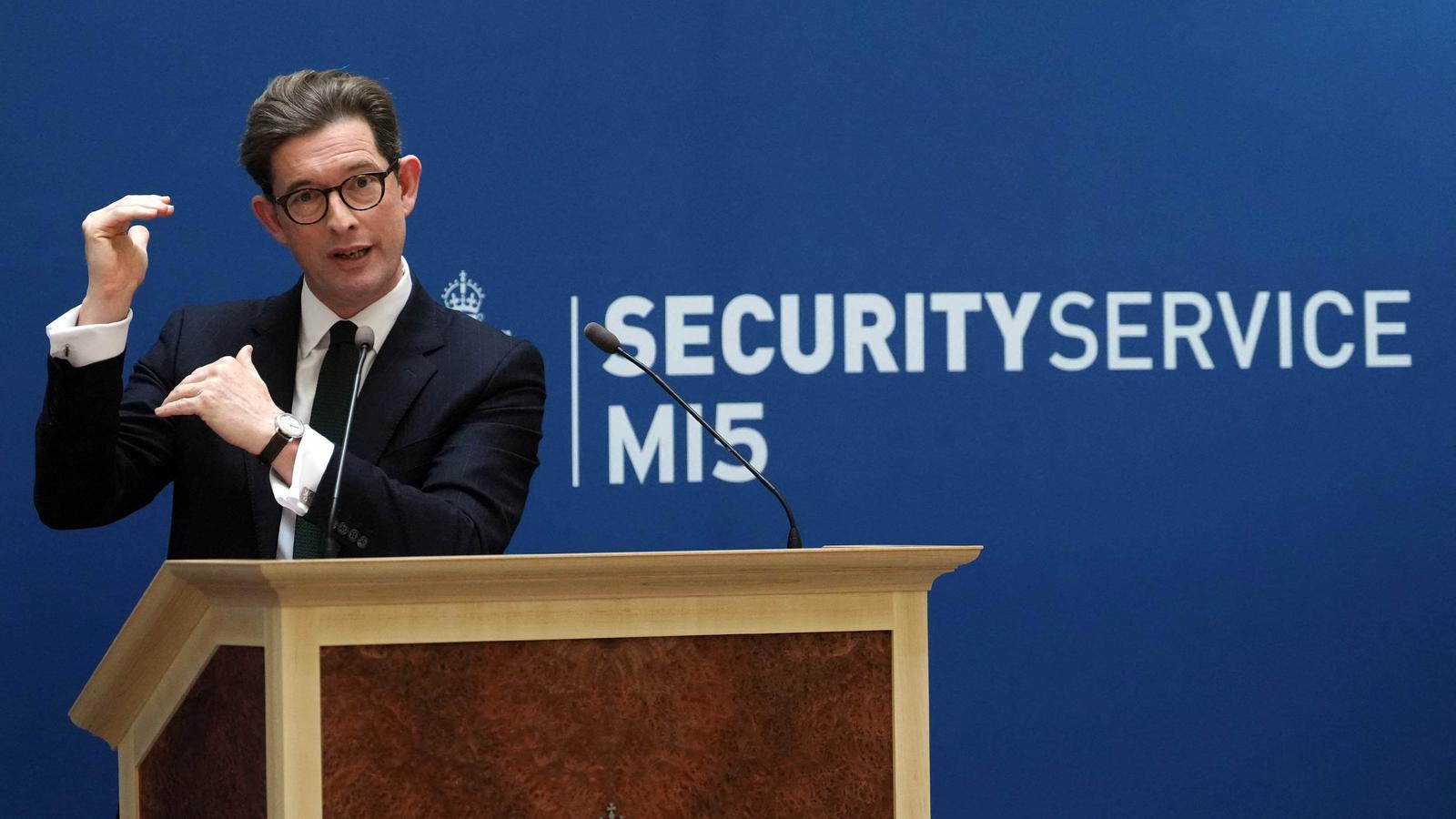
LondonRussia, hybrid warfare, Iran, artificial intelligence. The head of MI5, the British domestic intelligence service, Ken McCallum, warned this Tuesday of the rise of increasingly growing threats against the United Kingdom, and against the West in general. And he did so by emphasizing Moscow and Tehran as the main agents responsible for destabilization operations.
From the service's headquarters on the banks of the Thames, McCallum assured in his annual report that counter-intelligence operations "have quadrupled in the last decade," and already have a "dimension similar to the actions to prevent terrorist attacks." Overall, the effort dedicated to it is greater than in the Cold War era.
The head of MI5 has labeled Russia as the "main foreign aggressor." And, once again, he denounced the Kremlin's hybrid war against Europe, intended to weaken Western countries and "undermine support for Ukraine." There have been some variations in the methods of operation, however. Because, after the expulsion of nearly a thousand Russian agents in recent years, especially following the war in Ukraine, thanks to "MI5's successes in identifying them," Moscow has increasingly resorted "to criminals and collaborators recruited online" to carry out sabotage actions.
Although the threat is constant –and should not be underestimated–, MI5 believes that "with its traditional clandestine network dismantled, the Kremlin has a very limited global arsenal of action." But that is precisely why the intelligence service believes that the Kremlin will rush "to pay criminals to do the dirty work for them." Vladimir Putin uses this tactic against Kyiv's allies, he recalled, while the advances in his full-scale invasion of Ukraine are "minimal and at a horrific cost."
And although the Russian military and intelligence services have returned to intensifying hybrid warfare, they have taken great care not to cross the threshold of NATO's Article 5 with their actions, "which would be reckless on their part." The Alliance's Article 5 guarantees that an aggression against one member state is an attack against all.
Tehran changes strategy
Regarding Iran, McCallum highlighted a "significant shift" in "Iranian ambitions to target more difficult objectives." Attack attempts "are no longer limited to Jewish and Israeli institutions," as happened in March, in north London, following arson attacks against four ambulances of a healthcare organization that mainly serves the Orthodox Jewish community in that area of the capital.
This change in strategy would include the alleged plot from last month, still not sufficiently clarified, against the British airbase RAF Fairford, 160 kilometers west of London, used by United States bombers in their operations against the ayatollahs' regime since the start of the war, at the end of February.
In the last year, investigations into activities linked to Tehran have led to more than 50 arrests, reported McCallum, who did not specify how many have ended in judicial prosecutions. For example, the seven arrested due to the aforementioned RAF Fairford base incident were released twenty-four hours later, although all remain under investigation.
Ten days ago, British Prime Minister Keir Starmer stated that "there are solid indications" of Iranian involvement in the affair, an accusation that Tehran has repeatedly denied. London has sanctioned two Iranian citizens suspected of coordinating operations abroad.
McCallum has also warned of the growing threat of far-right terrorism, especially among young people radicalized on the internet, and explained that MI5 has even investigated a thirteen-year-old boy.
Finally, he warned of the risks of using artificial intelligence to improve terrorist attack methods, including drones. And he pointed out the future risk that technology could facilitate the development of biological weapons.
The terrorist alert level prevailing in the United Kingdom has been "severe" since April, which indicates that an attack is highly likely at any moment.
