Orbán's media empire sinks with the withdrawal of public money by the new government
The Hungarian public media, turned into Fidesz's propaganda machinery, dismiss hundreds of workers and suspend the television news broadcasts

-
CAT -
CAST
Barcelona"What has been happening here since 2010 is something that Goebbels and the North Korean regime would admire." In this way, Péter Magyar practically appeared for the first time on Hungarian public television, three days after becoming the country's prime minister-elect in a landslide victory that buried Viktor Orbán's era. "It is strange that the last time I appeared in public media was a year and a half ago", he added. It was September 2024, three months after Magyar's party, Tisza, won the European Parliament elections.
Last April 15th's interview with Magyar was described as historic in Hungary. During Orbán's 16 years of absolute power, public media had been transformed into a propaganda machine for the government and the ruling party, Fidesz, while any opposition figure was ignored. According to the independent portal Telex, between 2018 and 2022, opposition representatives were invited by public media outlets only eighteen times.
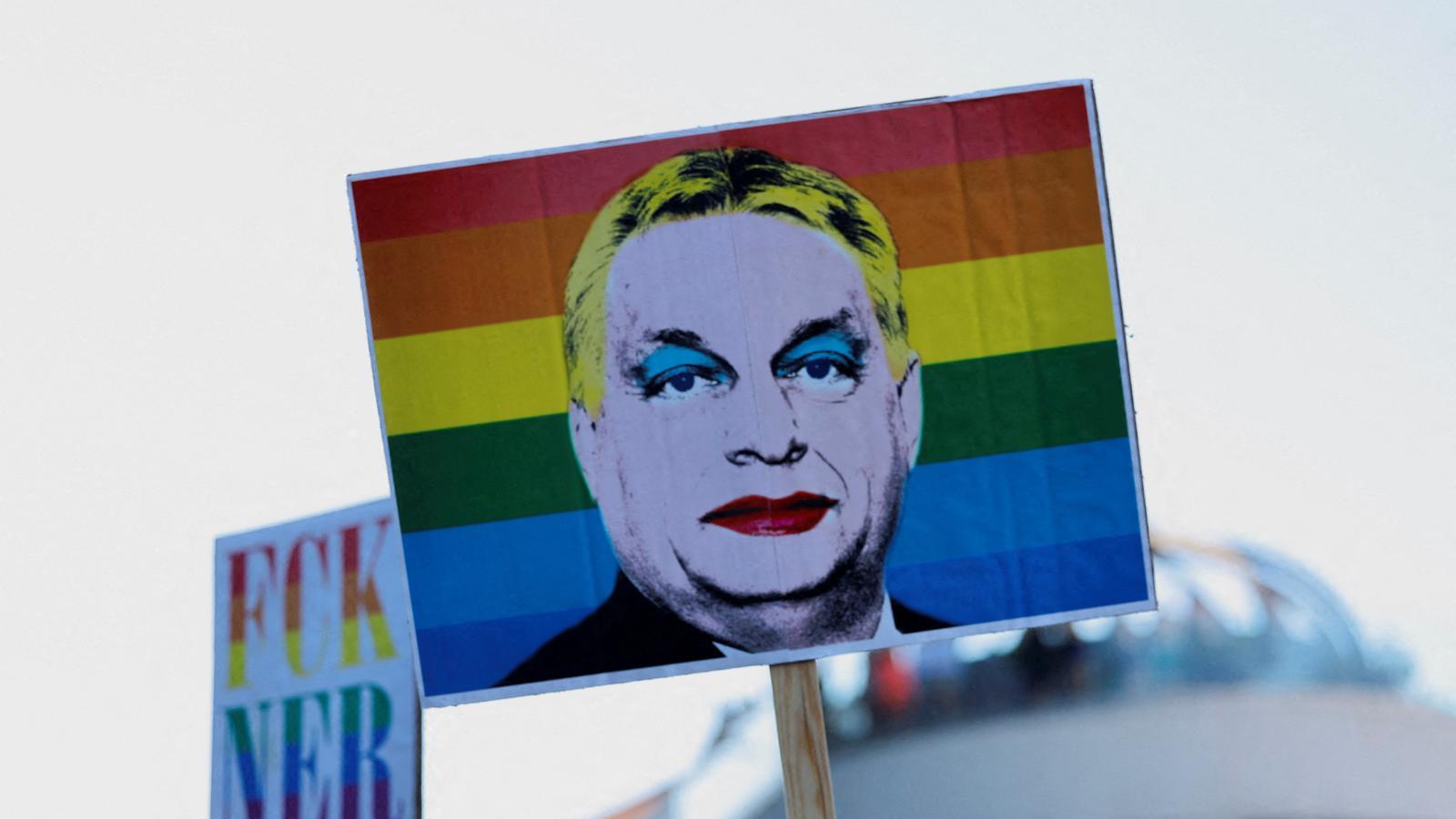
Now, the media empire built with public money to favor Orbán and Fidesz has begun to collapse rapidly following the change of government. The new prime minister has set as one of his main objectives to put an end to the "lie factory." The lack of press freedom and plurality in public media was one of the issues for which Brussels punished Budapest, with the freezing of European funds, which the new executive is in a hurry to recover.
One of the main victims of the political earthquake is the Mediaworks group, Hungary's largest media company, considered a key pillar of the pro-Fidesz media system. It is owned by Lőrinc Mészáros, a childhood friend of Orbán, who has become the richest businessman in the country and one of the emblematic figures of corruption and the clientelism system built by the former prime minister. "It was a huge pro-government and pro-Fidesz conglomerate, practically financed only with state aid, because it received a huge amount of money from state advertising. State advertising revenue has disappeared and, basically, the pro-Fidesz media conglomerate has collapsed," explains Ágnes Urbán, an analyst at the think tank Mérték Media Monitor, specializing in the Hungarian media system.
Mediaworks – which owns about seventy media outlets – has announced the closure of several newspapers, including Magyar Nemzet, one of the oldest in the country, which will become a weekly. It has also reported that the "organizational transformation" will involve staff reductions, although it has not provided details. According to several independent media outlets, the cutbacks will affect around 400 people. According to the newspaper Magyar Hang, only three printed newspapers in the conglomerate have a chance of surviving without relying on public money.
Changing faces in public media
"The restructuring of public service media will be much slower because regulatory changes require a lot of time," warns Urbán, who expects there to be movements in the media's direction to drive editorial changes. "There will probably be many layoffs of editors and journalists because it was a propaganda machine," he says.
Urbán laments that public service media "has completely lost its prestige," especially due to "pro-Russian propaganda in recent years." He explains that there were topics that were never discussed and people who never appeared. He gives the example of Péter Magyar before he was elected prime minister and also of the mayor of Budapest, the ecologist Gergely Karácsony, who has been invited only once to public media since he was elected in 2019. "Practically, everyone who somehow criticized Fidesz was immediately included in a blacklist of people who could not be invited to public media," the expert summarizes.
On June 12, three Tisza deputies introduced a bill in Parliament "for the complete transformation of public media", with the intention of dissolving all current public media oversight bodies to replace them with new authorities with political representation from both governing party members and the opposition. "The goal is to finally have a real public service, instead of one-party propaganda," promised the new Minister of Culture, Zoltan Tarr.
The audience has begun to see the first consequences of this restructuring process precisely this week. On Tuesday, public television suspended the news broadcasts of the main channel, M1. At the time when the news program is normally broadcast, the channel aired a message explaining that public media is undergoing a transformation "to ensure that it remains independent and credible in the future." "Public media cannot lie. We apologize for having done so for many years!", the statement expressed.
In early June, the director of MTVA – the public company that brings together three television channels and a news agency – Daniel Papp, announced his resignation. In a statement, the company justified the resignation "on the grounds that the recently elected government intends to carry out a complete transformation of public media".

