Morocco: X-ray of a rising geopolitical power
The North African country, driven by economic prosperity and a key alliance with the United States, seeks to enter the group of top-tier powers
-
CAT -
CAST
BarcelonaMorocco has changed a lot in a few years. It has improved in several aspects, especially economically, which favors job creation, construction, and infrastructure development. Even the authorities have enough resources to reform and beautify the appearance of cities. I encourage you to try it. Ask a Moroccan friend what the panorama of their home country was like when they left and what landscape they find now when they go on vacation.
Economic prosperity has been the impetus that Morocco needed to advance in its plan to become the main political, economic, and military power in North Africa. Even, to begin to rival Spain in some of these areas. Its geographical position – a bridge between two continents – and alliances with some of the world's major powers are the other elements that favor the slow but constant transformation of a traditionally agricultural country dependent on tourism into a sufficiently competitive logistics and industrial hub.
In this context, Morocco has increased its intervention in regional issues and has become a first-rate international player.
Economic Development
Morocco's political and geographical situation is its great advantage compared to neighboring states. Rabat has been able to attract investments thanks to the combination of political and social stability, added to its proximity to Europe, with which it maintains various economic cooperation and free trade agreements.
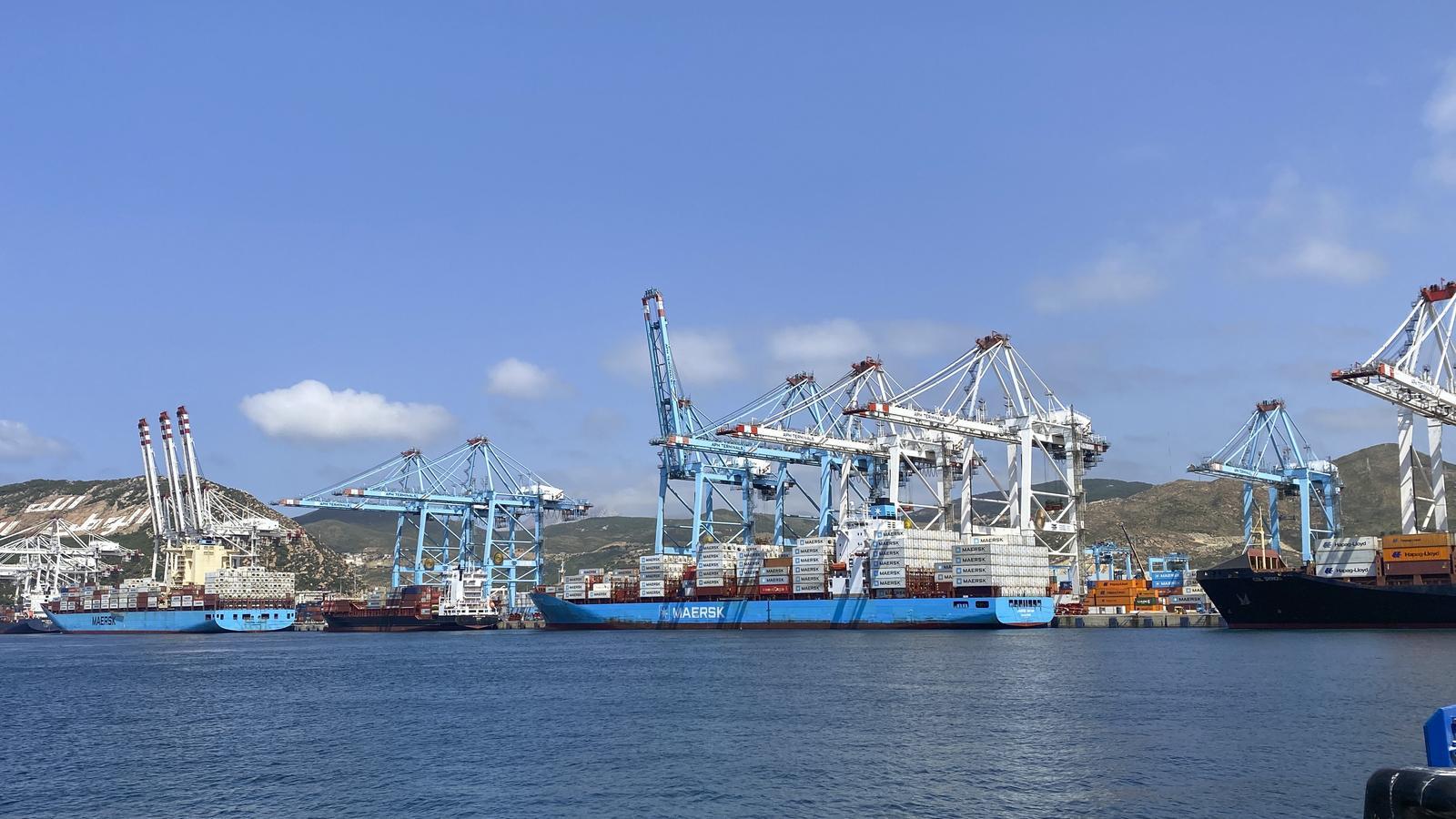
Economic expansion plans are numerous and are part of a forward-looking plan. One of the most relevant is the construction a few years ago of a new port near Tangier, the largest in the Mediterranean, which has become a mandatory transit point for goods circulating between Europe, Africa, and America. The port is the core of an industrial ecosystem in which the automotive, textile, and military industries have been established. Among others, armored vehicles are produced nearby on behalf of India.
On the other hand, the ambitious ongoing projects linked to the green economy are another sign that the country is just at the starting point of an era of prosperity. Rabat is making a very determined commitment in the renewable energy sector and everything points to it soon being one of our main suppliers of green energy. it will be one of our main suppliers of green energy.

Economic progress is evident - in recent years, an average GDP growth of 5% has been recorded -, but it also has a dark side: that it does not have a more notable impact on the population as a whole. The young people who arrived in Ceuta this week were fleeing a lack of future prospects, in a country where 30% of young people with university degrees cannot find work and where youth unemployment, in general, has long been a profound problem. The average age in the country is under 30 years old.
International alliances
All this has allowed Morocco to make significant investments in various African countries, through which it gains political influence. One of the most evident results of the success of Rabat's economic diplomacy is the change in the official position of Benin and Ghana regarding the sovereignty of Western Sahara, occupied by Morocco since 1976.
In any case, the main support Morocco has received on this issue has come from the United States and Israel. In 2020, Rabat and Tel Aviv normalized their diplomatic relations through the Abraham Accords, and Morocco became the seventh Arab country to recognize the State of Israel. The public rapprochement with Israel has not been well received by the people. But despite the support of broad sections of the population for the Palestinian cause, it has not produced any political or social crisis. In any case, it is the recognition of a reality that is already consolidated and that has some fairly interesting counterpoints for Morocco. To begin with, it has made them the reference partner for the United States in Africa. On the same day the agreement with Israel was signed, Washington sold them last-generation military drones. These are the same aircraft that Germany uses in its maritime and anti-submarine surveillance operations in the North Sea. Washington also hastened to recognize Moroccan sovereignty over the Sahara.The relationship between the Moroccan regime and Israel goes back a long way and has been favored by several factors. On the one hand, by the geographical and, in a way, cultural distance of Morocco from the Middle Eastern countries in conflict with Israel. On the other hand, the Jewish community of Morocco, along with that of Tunisia, is the only one in the Arab world that has not disappeared. Although very small – it is estimated to be made up of 2,000 members – it still maintains its traditional close relationship with the royal family. It should be remembered that one million Jews of Moroccan origin live in Israel.
The agreement with the Israelis has been extended to other fields, beyond the diplomatic one. For Israeli benefit, Morocco has awarded its partner gas exploration licenses in the waters of Western Sahara, in a new display of Moroccan plunder of Sahrawi resources that violates international law. Meanwhile, for Morocco's benefit, collaboration in the field of intelligence and security stands out, through actions that have reached the general public through occasional news reports. How the mobile phones of the Spanish government's leadership were spied on with the Israeli program Pegasus.
Regional power
Morocco's position on the international scene has taken a qualitative leap as a consequence of all these factors. Currently, all winds are in its favor. From prosperity and growth forecasts, to American support on the Sahara issue, through to new arms acquisitions, which have strengthened its military position with respect to its neighbors, Algeria and Spain.In this context, it is understood that Morocco may be tempted to force the situation to invert the current balance of power. The various operations in which the authorities of Rabat have allowed and encouraged the departure of tens of thousands of people towards the Spanish African enclaves of Ceuta and Melilla are a declaration of intent.

The current crisis comes a few days after Spain signed energy agreements with Algeria by which it increases gas imports from the African country, which has a terrible relationship with Morocco. Another of the possible explanations for the threat to Spanish sovereignty over these enclaves is that Rabat intends to use it as a bargaining chip with the Sahara. Morocco also does not recognize Spanish sovereignty over the Canary Islands, probably for the same strategic reason.
As we have seen, the Moroccan authorities are immersed in all sorts of high-level projects and discussions with interlocutors from all over the world. However, they are very aware that their strength lies in the first point we mentioned in this article: political and social stability.
The diaspora in Europe
Rabat also invests in stability, something its neighbors do not do. On the one hand, it represses critical voices and does not tolerate any kind of comment or judgment on the issue of Western Sahara. On the other hand, the prospects for economic improvements have so far deactivated possible strong outbreaks of rebellion.
On a third front, it makes an effort to maintain ties with the Moroccan diaspora to have some influence in European society, with special mention for France, historically the main economic partner, Spain - the current major partner - and Belgium. In Europe, consulates monitor the activities of emigrant communities. Meanwhile, in Morocco, organizations have been created to offer reception, medical, and logistical assistance services for Moroccans crossing the strait to visit family in the summer. As an anecdote, the Mohammed V Foundation has hung posters in airports welcoming them: "In your country, Morocco." The objective of all this is that emigrants and their descendants maintain Moroccan consciousness and the memory of their country of origin.
Sports diplomacy
In this context and taking advantage of football's popularity, Morocco joins the list of politically stable Arab countries with sufficient economic resources that leverage the sports arena to create a positive image of the country abroad. Morocco hosted the 2025 Africa Cup and approached the competition as a matter of pride and a display of national superiority. The next World Cup, in 2030, which the African country is co-organizing with Spain and Portugal, will be a moment of maximum global visibility that will allow Morocco to present itself to the world on equal terms with its European neighbors. In terms of external image, it could mean a qualitative leap.

Once economic prosperity is guaranteed, its rise as a political and military power, and new alliances with some of the most powerful countries in the world, Morocco is preparing to join the group of first-tier powers. Those that can afford to invest large sums of money to improve their image.
