Meloni limits the number of foreigners per class and bans the burqa in schools
The Italian government is promoting these measures at a time of rise of the far-right party National Future
-
CAT -
CAST
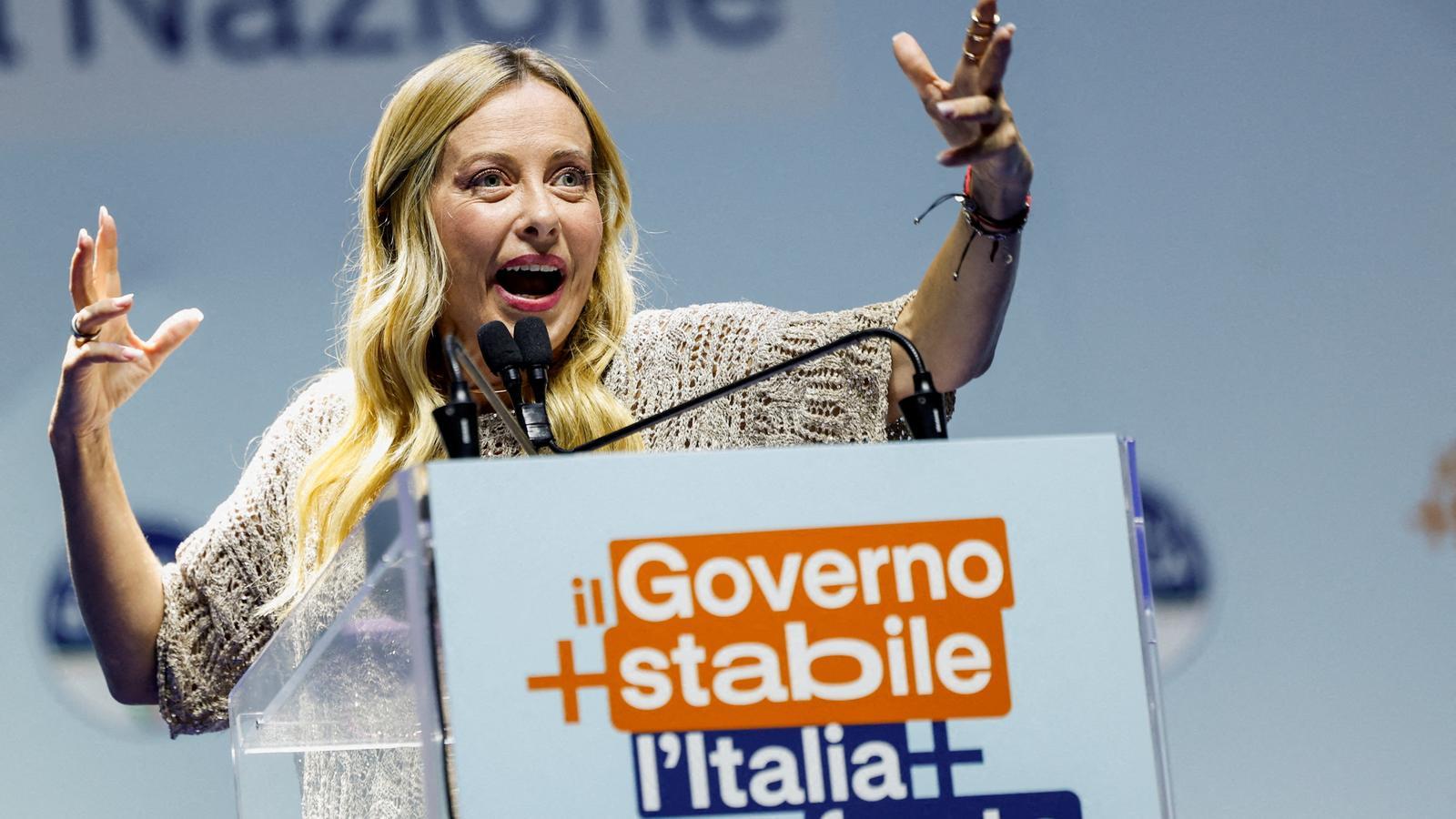
RomeItaly will limit the number of foreign students in classrooms, fine parents who refuse to learn Italian, and ban the use of burqas and niqabs in schools. “Common sense measures that do not divide, but rather foster true integration, avoid segregated classrooms, and provide all students with the same opportunities,” defended Prime Minister Giorgia Meloni.
Starting next academic year, in primary schools, the number of students with non-Italian nationality who were not born in Italy or who have not completed at least two years of preschool education will not be allowed to exceed 30% of the total number of students in a class. This excludes children born in Italy to foreign parents, even though the law does not consider them Italian but rather they acquire the nationality of their parents' origin. In secondary schools, the 30% limit will also apply to foreign students who have not completed at least three years in the national education system.
The Minister of Education, Giuseppe Valditara, has asserted that in Italy there are 34,000 classrooms with a presence of foreign-language students exceeding 30%, which is linked to higher school dropout rates or "lack of acquisition of the necessary basic skills."
According to data from Italy's National Institute of Statistics, foreign students represent 11.6% of those enrolled in Italian schools, and nearly half, 42.9%, hold European citizenship.
The measures had been announced last week by Meloni during a meeting with her party's youth wing. "Anyone who comes to Italy and wants to build a future here must learn our language, understand our culture, and respect our norms," said the leader of Brothers of Italy, who lamented that "it is not possible that in an Italian classroom, Italian children feel displaced for being a minority."
However, in Italy, the number of foreign students is already limited to 30% per class to allow for a balanced distribution of students among educational centers and classes, introduced by a circular from the Ministry of Education in 2010.
Burqa ban
Meloni also advanced the ban on using the burqa and the niqab in schools, an old proposal by the League that has never managed to prosper due to the legal problems it poses. "One must go to school with their face uncovered, and in Italy no one, in the name of a real or supposed tradition, can decide that a girl must hide her face," said the prime minister.
The decree approved this Thursday, however, does not specifically prohibit the burqa or the niqab –the use of which in Italy is very limited– but rather prevents access to schools "with the face covered or using any other means that prevents facial recognition." Including "the use of helmets or sanitary masks," pointed out the Minister of Education. Its non-compliance provides for a fine of up to 1,000 euros.
Valditara has announced a fund of 3.4 million euros to finance activities and courses aimed at strengthening basic skills in Italian for students and parents, who may be fined if they refuse to access them. Resources to favor integration that already appeared among the mandatory services that Italy offered to asylum seekers and that in 2018 were suppressed by the then Minister of the Interior, Matteo Salvini, current vice president and Minister of Transport in Meloni's government.
The decree-law comes just after former general Roberto Vannacci, leader of the far-right party National Future, has started to rise strongly in the polls –in fact, the phenomenon began weeks ago and already surpasses in voting intention Forza Italia and the League, Meloni's partners in the coalition government– thanks to a "proudly" racist and xenophobic discourse, with proposals such as re-emigration or separate classes for children with disabilities.
