At least 13 dead and several people trapped in a shopping center due to a strong earthquake in Japan
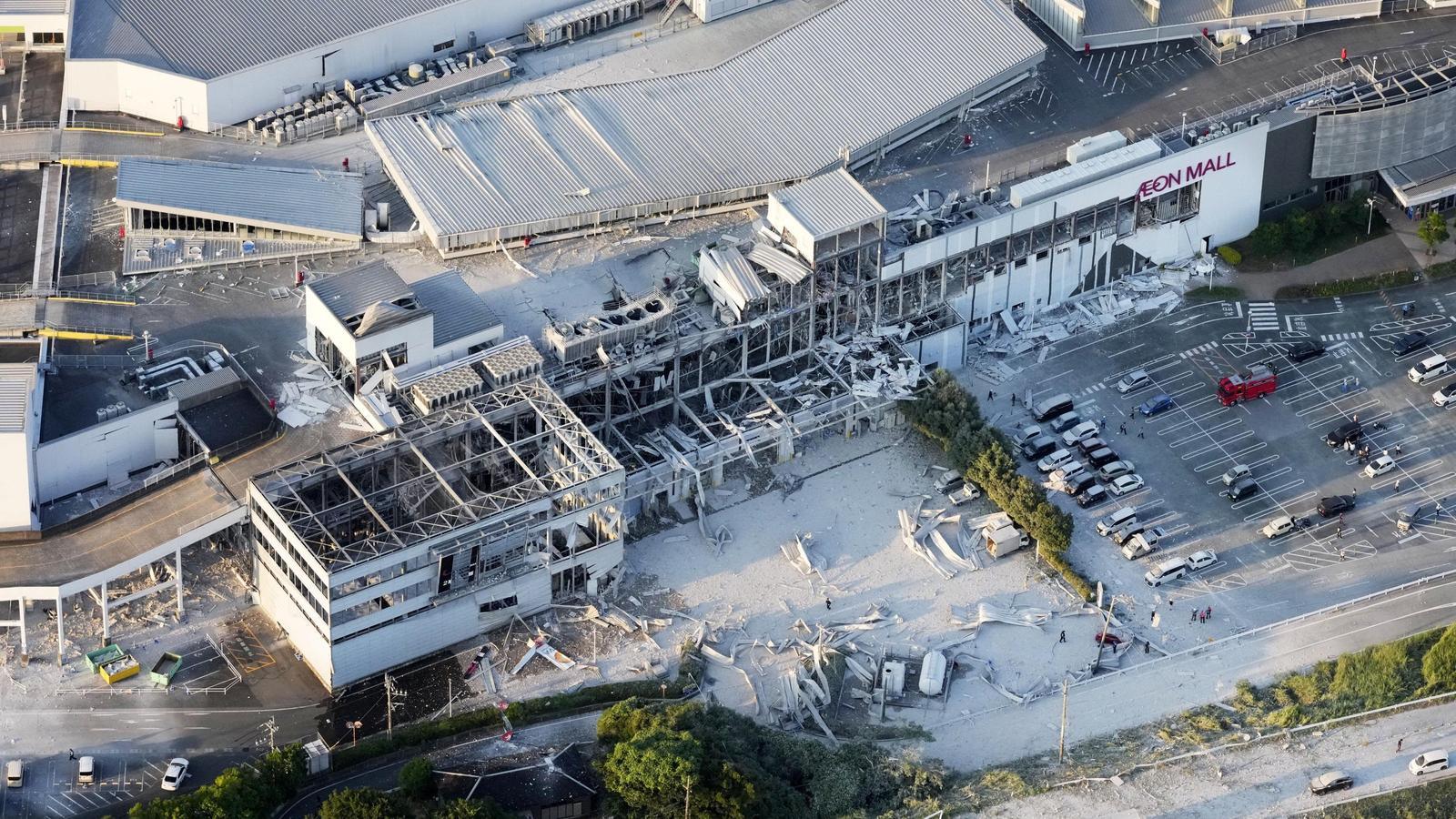
The rescuers' efforts are concentrated on a shopping center that collapsed and exploded shortly after
-
CAT -
CAST
BarcelonaA magnitude 7.1 earthquake shook the Kyushu region, in southern Japan, on Tuesday, causing at least thirteen deaths, nearly 200 injuries, and the collapse of buildings and road networks in the area. One of the places where rescuers are concentrating a large part of their efforts - up to 170 professionals - is a shopping center in the town of Kashima, where a dozen people were trapped. On Wednesday morning, it has already been confirmed that at least two people died during the collapse and subsequent explosion of the center.
The earthquake occurred at 16:27 local time (9:27 Catalan time), at a depth of about ten kilometers below the city of Uki, in Kumamoto Prefecture, on the island of Kyushu. Some areas of the region registered the maximum level on the Japanese seismic intensity scale, which measures surface shaking and the destructive potential of earthquakes. The country's meteorological agency also initially issued a tsunami warning for several coastal areas, but all alerts were lifted two hours after the earthquake.
A spokesperson for Aeon, the company operating the complex, explained that customers and workers were evacuated after the earthquake and assured that the specific cause of the explosion was still unknown.
The Japanese Prime Minister, Sanae Takaichi, said that "there are still people waiting to be rescued," for which the government is facing "a race against time." Regarding the number of personnel working in the area, the figure has increased from 3,600 soldiers, firefighters, and police working in the affected area to 4,600.

Kyushu Electric Power also reported that about 45,000 homes were left without electricity and the railway operator JR Kyushu suspended services, including its Shinkansen high-speed trains. The nuclear regulatory authority assured that no irregularities were reported at the region's atomic power plants.
The earthquake also caused severe material damage, including severe deformations on the main highway of the Japanese island, as well as the collapse of the wall of the popular Kumamoto Castle and the gate of the Yatsushiro shrine.
10 years after the last major earthquake
The earthquake comes just over 10 years after two tremors shook the city of Kumamoto in April 2016, leaving 278 dead and 2,800 injured. In fact, the Aeon shopping center was already severely damaged in that disaster and was closed for months to rebuild and expand it. Among other improvements, the roofs were reinforced to be more resistant to earthquakes. The complex, which had 200 stores, has been reduced to rubble.
Japan is located on the so-called Ring of Fire, one of the most active seismic zones in the world, with earthquakes every five minutes. 20% of earthquakes of magnitude 6 or higher recorded worldwide occur in Japan, so its infrastructure is specially designed to withstand tremors. The worst earthquake in Japan's modern history was on March 11, 2011, which was magnitude 9.1 and led to a tsunami that caused the Fukushima nuclear accident.
