Pedro Sánchez annoys the 'Foraster'
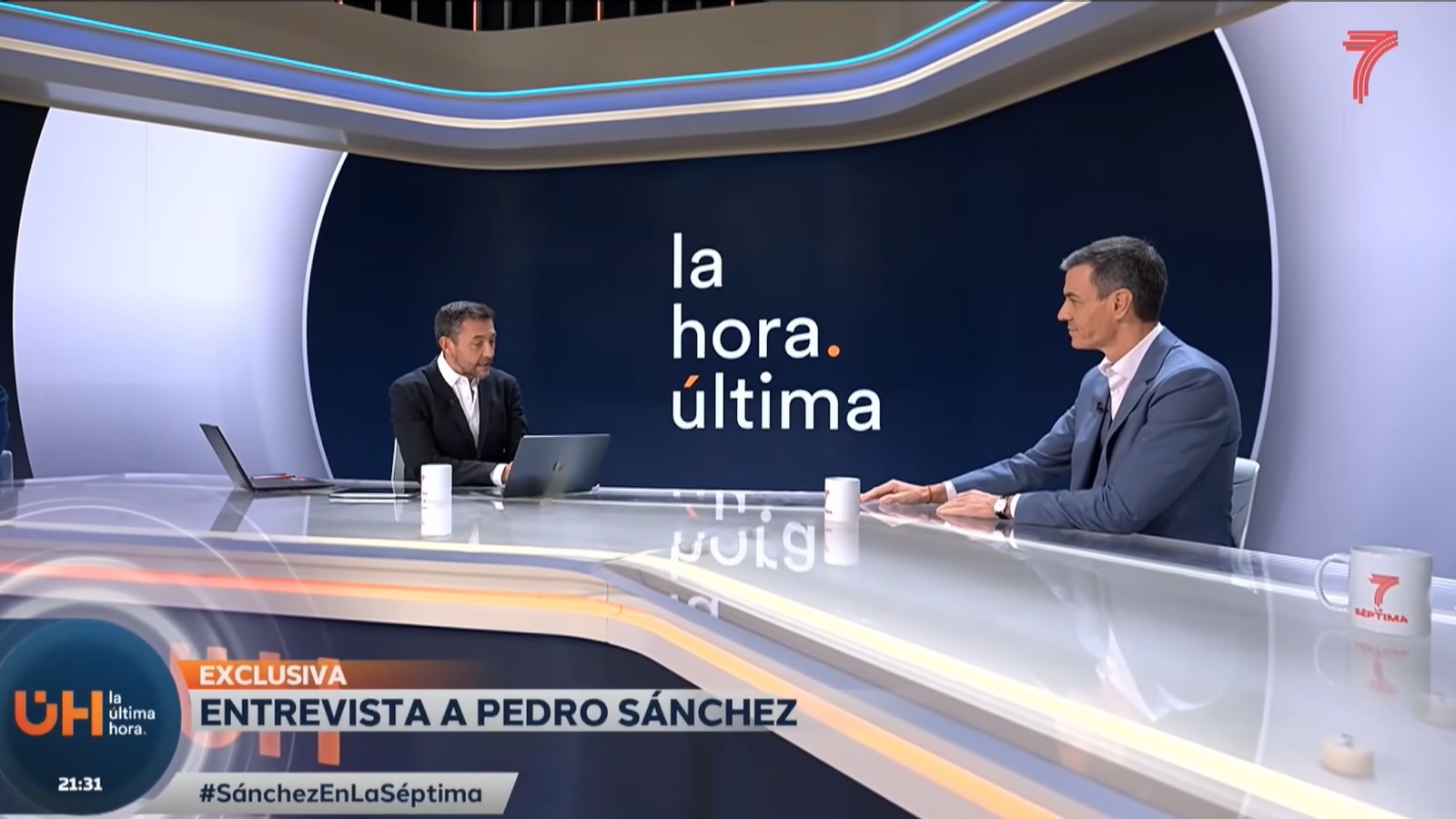

While David Broncano was interviewing Santiago Abascal on La revuelta, La Séptima, the new channel, lived up to its nickname of TeleSánchez and interviewed the Spanish Prime Minister to counter-program it. In Catalonia, the television strategy had its impact. While La 1 smashed the ratings with the Vox leader, with 589,000 viewers and a 31.9% audience share, La última hora by Javier Ruiz bothered the Foraster show at the Palau Sant Jordi. Sánchez gathered an average of 274,000 viewers and a 12.8% share. It was the seventh most-watched program of the day in Catalonia.
Pedro Sánchez was playing at home. In five days, the channel has already invited four ministers: Carlos Cuerpo, Elma Saiz, Óscar López, and Pablo Bustinduy. Journalist Javier Ruiz's demeanor is always one of feigned solemnity, but with Sánchez at the table, it seemed as if he were saving journalism. He is of such affected grandiloquence that with every question, it is as if he had to uncover Watergate. He projects such an exaggerated awareness of his own relevance that it cloys the broadcast. Pedro Sánchez, in a vest, blazer, and without a tie, displayed comfort with his surroundings. “¿Vamos a una mayoría de PP y Vox?”, he asked him right at the start. That this question is asked by the man who has spent the last five nights analyzing polls like a countdown before a nuclear explosion caused perplexity. It was just a warm-up to set the tone. Because the second question was the important one. The host asked him about the payments from the publisher of OK Diario to Koldo's lawyer for professional fees and also for some extras at luxury hotels in Marbella for a few judges. It is a topic that the rest of the private channels have avoided touching. La Séptima has already dubbed the scandal as Okloaca, because every corruption plot needs a good name to become media-friendly. While Ruiz and Sánchez were addressing the case, photographs of Eduardo Inda next to Isabel Díaz Ayuso appeared on the screen. A visual strategy that underscored the synergies between the digital pseudo-media outlet and the PP.
It was at the end of the interview when Javier Ruiz recalled what was happening with the competition: “While you are here, Santiago Abascal is on public television. Broncano has just confirmed that Vox vetted their audience and demanded that the audience be brought by Vox. I ask for your reading of this”, he asked him. Sánchez did not seem surprised at all and recalled that the far-right party has already banned certain media outlets on other occasions. “And then I have to hear that I am the dictator”, he lamented. He added that Abascal's orders were already a statement of intent of what could happen to public television if the PP and Vox win. Sánchez said it as if RTVE and Broncano could have done nothing about it. Presenting the network's submission to the demands of a party as an inevitable fact normalizes the idea that it is the power that imposes the rules on public television.
