Declassified the police files on the murder of Arturo Ruiz at the hands of the far-right in 1977
The victim's family had been fighting for years to clarify the facts and the flight of the alleged murderer to Argentina
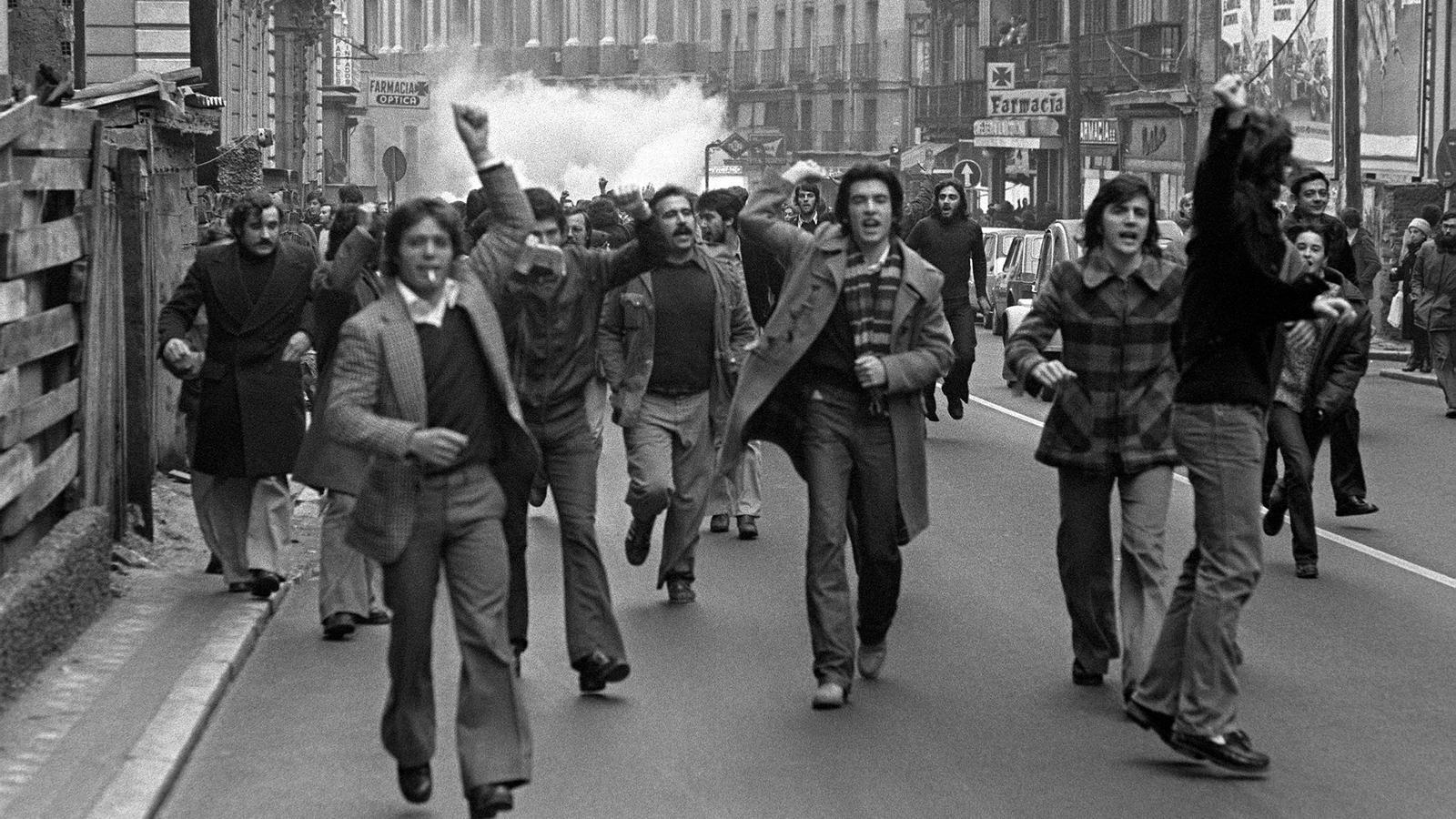
BarcelonaAlmost half a century after the murder of Arturo Ruiz at the hands of the far-right in 1977, and years of struggle by his family to clarify the facts, it will be possible to start having some answers surrounding the crime. The Spanish Council of Ministers approved this Tuesday the declassification of all police documentation related to the murder of the 19-year-old. Ruiz was shot in Madrid on January 23, 1977, during a pro-amnesty demonstration, just one day before the Atocha massacre.
The measure comes after the tireless pressure of his family. Miguel Ángel Ruiz –brother of the victim and legal representative of the five surviving siblings– filed an administrative litigation appeal in November 2024. The family demanded that the archives of the General Information Commissariat of the National Police be opened to clarify the authorship of the crime and the possible connections of the assassins with the state security forces and bodies of that era. Among other things, information was requested about the murder of Arturo Ruiz; about the alleged perpetrator, Fernández Guaza; and about his relations with the police forces. It also requested information about the Warriors of Christ the King commando that participated in the crime and about the role of the Ministry of the Interior, then headed by Rodolfo Martín Villa. The family also wanted to access the documentation related to the gunman's escape to Argentina.
"Murdered for his ideas"
"My uncle was murdered for his ideas, he was murdered by far-right gunmen. He was very young, he had high hopes and a zest for life. He was studying and working," explained Miguel Ángel Ruiz, nephew of Arturo Ruiz, to ARA six years ago. At that time, Miguel Ángel recalled that one of the murderers was never arrested or imprisoned and the other only spent a few months in prison. Arturo Ruiz's family tried many times to get the National Court to investigate the case: "They have archived the case because they say it has expired, but crimes against humanity do not expire and that is what all international treaties say," lamented Miguel Ángel.
As the Ministry of the Interior explains in the press release, until today the documentation was not accessible: "The content and nature of this documentation had been classified generically as secret by two agreements of the Council of Ministers of November 1986 and February 1996 [both with PSOE governments presided over by Felipe González], which granted this category to everything related to the structure, organization, means and specific operational procedures of the police intelligence services, especially those related to the anti-terrorist fight". Now, however, the department headed by the socialist Fernando Grande-Marlaska has considered that, due to the time elapsed, "there are no public safety reasons that prevent proceeding with the declassification".
Among the papers that the family will receive in the coming days are official documents and reports on those pointed out at the time as possible persons responsible for the attack. According to the Interior note, these are the far-rightists José Ignacio Fernández Guaza, Jorge Cesarsky Goldenstein, Ángel Sierra Sánchez and Stefano Delle Chiaie, the latter founder of the Italian neo-fascist group Avanguardia Nazionale.
The flight to Argentina
The shadow of police collaboration has always loomed over the case. After firing the shot, the perpetrator, José Ignacio Fernández Guaza, vanished. The only person convicted was the Argentine Jorge Cesarsky as an accomplice for having provided him with the weapon, but he only spent one year in prison.
The case took a turn in November 2023, when a journalistic investigation by El País located Fernández Guaza living under a false identity in Buenos Aires (Argentina). Far from showing any remorse, according to the version provided by El País, the far-right gunman bluntly admitted to committing the crime: "He threw a stone at me. I grabbed the gun and shot him in the heart. With malice. Remorse? You are talking to someone who never regrets anything," he told the same newspaper. Fernández Guaza also explained that it was the Civil Guard itself that told him to flee Spain, and asserted that the "Spanish security services" had provided him with the false documentation.
Despite this investigation, the Spanish National Court refused to reopen the criminal proceedings, alleging that the statute of limitations for the crime had expired. This is the argument that the Spanish judiciary has used in the majority of cases in which victims of Francoism have attempted to bring crimes to trial. Currently, only the Argentine justice system, through judge María Servini, kept the investigation into the Ruiz case open.
