Russia, Ukraine and the United States sit down to talk after 9 months without dialogue
The European Union will not participate in the tripartite talks but will meet with the White House delegation
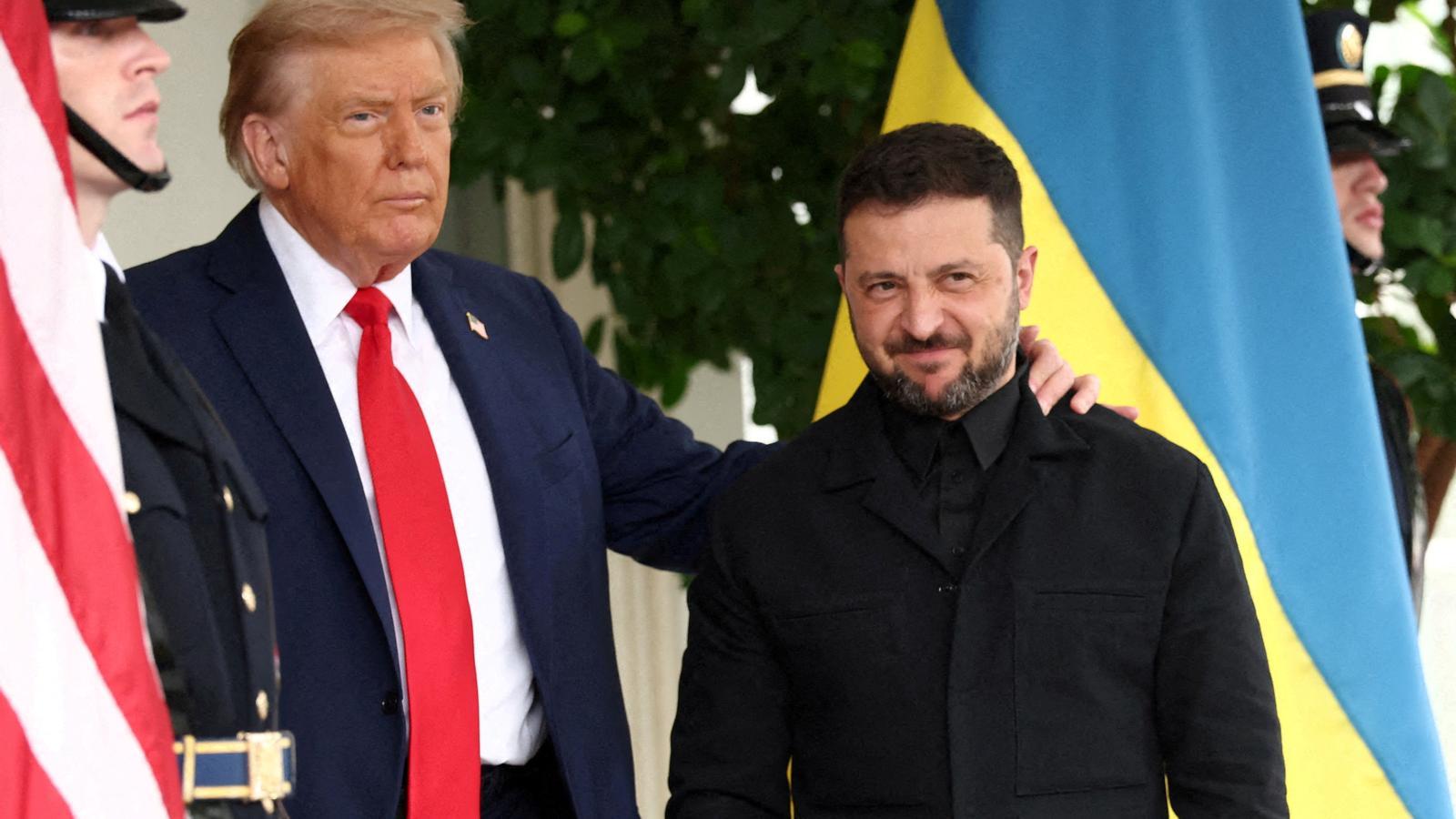
BarcelonaRussia and Ukraine sit down to talk again this Tuesday in Abu Dhabi after nine months without talks. The United States, with a Donald Trump weakened after the failure of the attack against Iran and the domestic defeat in the midterm elections, acts as a mediator at the negotiating table, where Europe is not present.
Talks resume with the war front at a stalemate: the Russian military offensive in the summer failed and Ukraine was able to retain Sloviansk and Kramatorsk, in the Donbas. The Trump administration continues to adopt the Kremlin's postulates, when it says it is seeking a "long-term security architecture" between Russia and Europe, that is, to keep Ukraine away from NATO and weaken the alliance's military presence in an Eastern Europe that Moscow continues to consider its sphere of influence. Since coming to power, Russian President Vladimir Putin has demanded an end to NATO's expansion into the post-Soviet space and a renegotiation of the balance of power, and now it seems that the US administration, which needs a deal, is betting on this outcome. Also on the table are the lifting of sanctions on Russia and the resumption of the NATO-Russia council, which was suspended when the Kremlin launched the full-scale invasion in February 2022.
Senior US officials have revealed that they are discussing with the Kremlin potential security guarantees for Ukraine similar to those provided for by Article 5 of NATO, which obliges allies to respond to an attack against any member state of the Alliance, a protection that Kyiv could invoke without belonging to the military bloc. It is by no means clear that these guarantees are truly comparable to membership in the alliance, nor that they cover attacks in the form of hybrid warfare. In 2021, Russia presented NATO with a series of demands that included a ban on incorporating new countries –among them Ukraine–, the withdrawal of troops to the pre-1997 borders, and restrictions on the location of missiles. NATO rejected this proposal and, less than a month later, Russia invaded Ukraine.
Jared Kushner, Trump's son-in-law and one of the main United States representatives, explained on Monday what this new security architecture between Russia and Europe could be: "A more solid dialogue, reliable communication in crisis situations, more military transparency, and reciprocal measures to reduce the risks of escalation, while fully respecting, at the same time, the sovereignty and the independent decision-making capacity of each country". All of this, he said, with the objective of "finding a way to reduce future conflicts". Kaja Kallas, High Representative for European diplomacy, responded on Monday: "We already have an established European security architecture. This includes international agreements through which Russia has undertaken obligations, also regarding sovereignty and territorial integrity. The problem is that Russia is not respecting these agreements".
Delegations from Germany, France, the United Kingdom, Italy, and the European Union will meet with the American negotiators in Abu Dhabi, but will not participate in the meetings between Russia and Ukraine, which will be held in a tripartite format with the United States. European leaders fear that Trump and Putin will attempt to negotiate a peace that involves major concessions to Russia. Donald Trump has also suggested on more than one occasion that to reach an agreement, Ukraine would have to cede territory. Kyiv refuses any modification of sovereignty, which would be illegal under international law, but Ukrainian President Volodymyr Zelensky has opened up to a ceasefire that "freezes" the current front lines.
