Pedro Sánchez's hot potato: whether or not to extradite a pro-Palestinian philanthropist wanted by Trump
The Public Prosecutor's Office endorses the deportation of Fergie Chambers because it does not see political persecution

-
CAT -
CAST
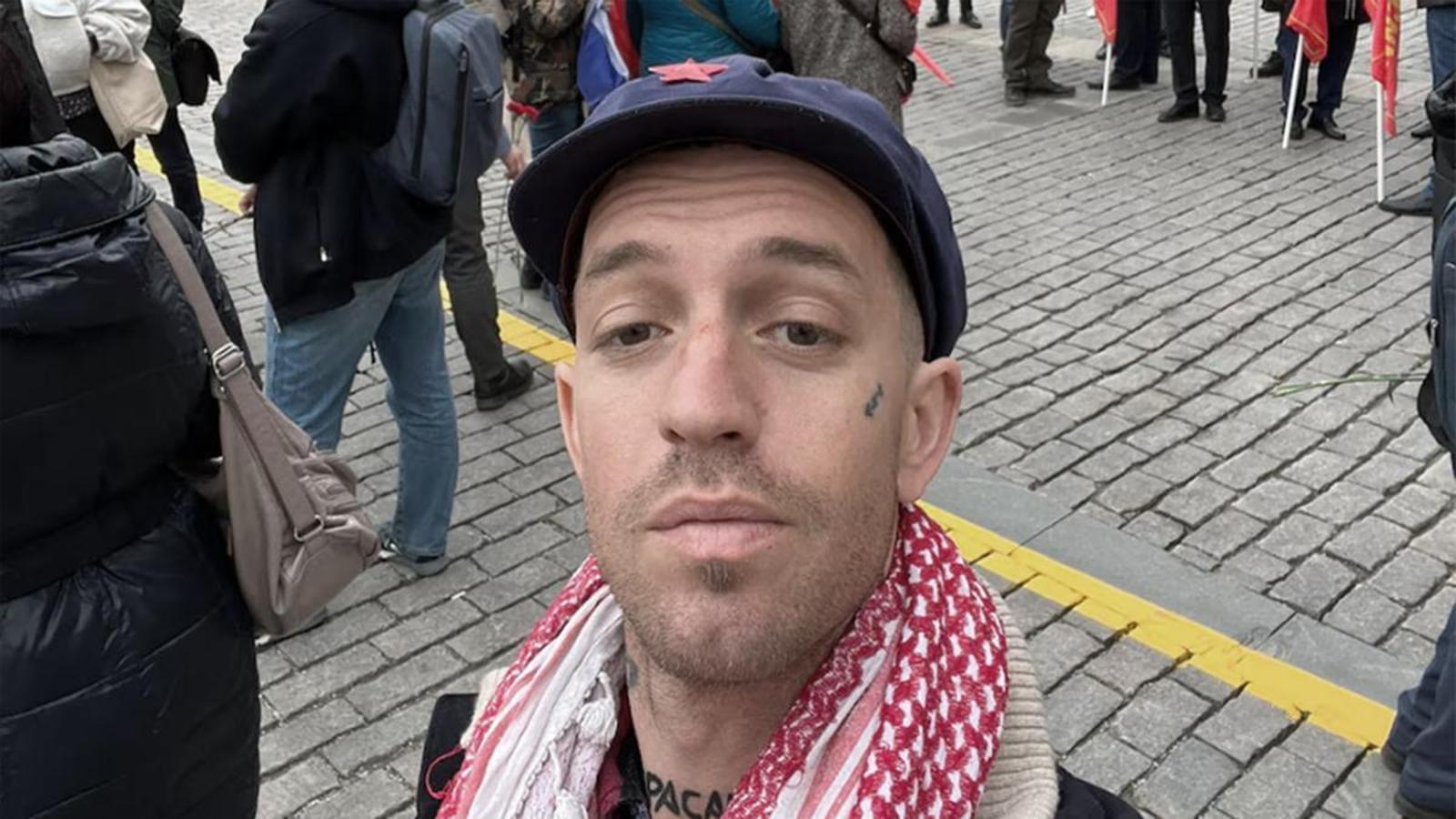
MadridThe Spanish government has a thorn in its side at the National Court. An American philanthropist and activist for human rights and the rights of the Palestinian people was arrested four months ago in Ibiza following an international arrest warrant issued by the Trump administration. Since then, he has been in prison waiting for the justice system and the Moncloa to make a decision regarding his extradition to the United States. It is James Cox Fergie Chambers, and now the Public Prosecutor's Office has declared itself in favor of giving the green light to his deportation. It considers that Washington's request was not made with the “purpose of persecuting or punishing him for a crime of a political nature,” but rather that he is being investigated for financing terrorism. On the other hand, his support group denounces that he is suffering “persecution of an exclusively political nature” as a “committed individual and humanitarian worker.”
Fergie Chambers is an heir to his family's multi-million dollar fortune and has allocated part of his wealth to helping the population of Gaza, which continues to suffer a severe humanitarian crisis. His support group explains that, for example, he has funded a bakery that produces thousands of loaves of bread to feed Gazan families, a free medical clinic in one of the areas most devastated by the war, a drinking water desalination plant, and a project to expand mental health care and psychosocial support for orphaned children. He was arrested on July 10 in Ibiza, where he intended to settle with his family. “He has donated more than a million dollars to humanitarian projects in Gaza, in addition to funding organizations and media outlets that support the Palestinian cause,” the manifesto summarizes.
In contrast, the US government accuses him of having spearheaded a protest against Elbit Systems, an Israeli arms manufacturer. It is the same narrative that has led the National Court Prosecutor's Office to support the extradition: “He participated in several acts of direct violence that caused significant damage to the facilities,” claims the document, which refers to the United States' request. The report also recalls that, three days after the Hamas attack on Israel on October 7, 2023, “he openly expressed his support” for the attack and presented Hamas as a “fundamental piece of Palestinian resistance.”
Likewise, it argues that, after having fled the United States, he made ten transfers from his Bank of America account to a bank in Tunisia with the “intention” of using the money to “promote violent actions that would benefit Hamas”. However, his support group replies that the Trump administration “has not presented any evidence to support” these accusations and asserts that Fergie Chambers wanted to allocate the funds to “sports, business, and charitable activities”, such as sponsoring the current champion of the Tunisian football league.
The three crimes he is accused of in the United States are money laundering, rioting, and conspiracy to incite riots, with a maximum penalty of 30 years in prison. The public prosecutor's office concludes that these are equivalent to the Spanish crimes of financing terrorism, terrorist-related damages or public disorder, and the formation and integration of a terrorist group. The extradition hearing is scheduled for this Friday, November 13. In September, in an initial statement, he opposed being sent to the United States.
The ball is back in the Moncloa's court
Despite this, the Moncloa will have the final say. The law on passive extradition makes it clear that the resolution of the National Court “will not be binding,” and that the Spanish government “may” deny an extradition for “reasons of security, public order, or other essential interests” for Spain. It is also foreseen that it could halt an extradition if it is for “political crimes” or if there are “well-founded reasons” to believe it has been requested with the “purpose of persecuting or punishing” a person for their political opinions.
For this reason, the Fergie Chambers support group is demanding that Pedro Sánchez prevent it and grant him political asylum. The decision places the Spanish government between a rock and a hard place, after having recognized the state of Palestine and having championed the cause of the Palestinian people in contrast to the reactionary wave around the world. The last time the Spanish government commented, at the end of September, it limited itself to sending the case to the National Court and waiting for the “definitive decision,” without anticipating its outcome.
For their part, Esquerra, the CUP, Comuns, Sumar, Podemos, Bildu, the BNG, and Compromís, among others, sent a letter to ministers Fernando Grande-Marlaska and Félix Bolaños demanding that the Spanish government deny the extradition to avoid collaborating with the “political persecution” that Fergie Chambers is suffering. Furthermore, Sumar and Podemos presented two initiatives in Congress demanding that the PSOE prevent it, but they were not put to a vote.
