Far from a Yalta 2.0, exploring a G3
-
CAT -
CAST
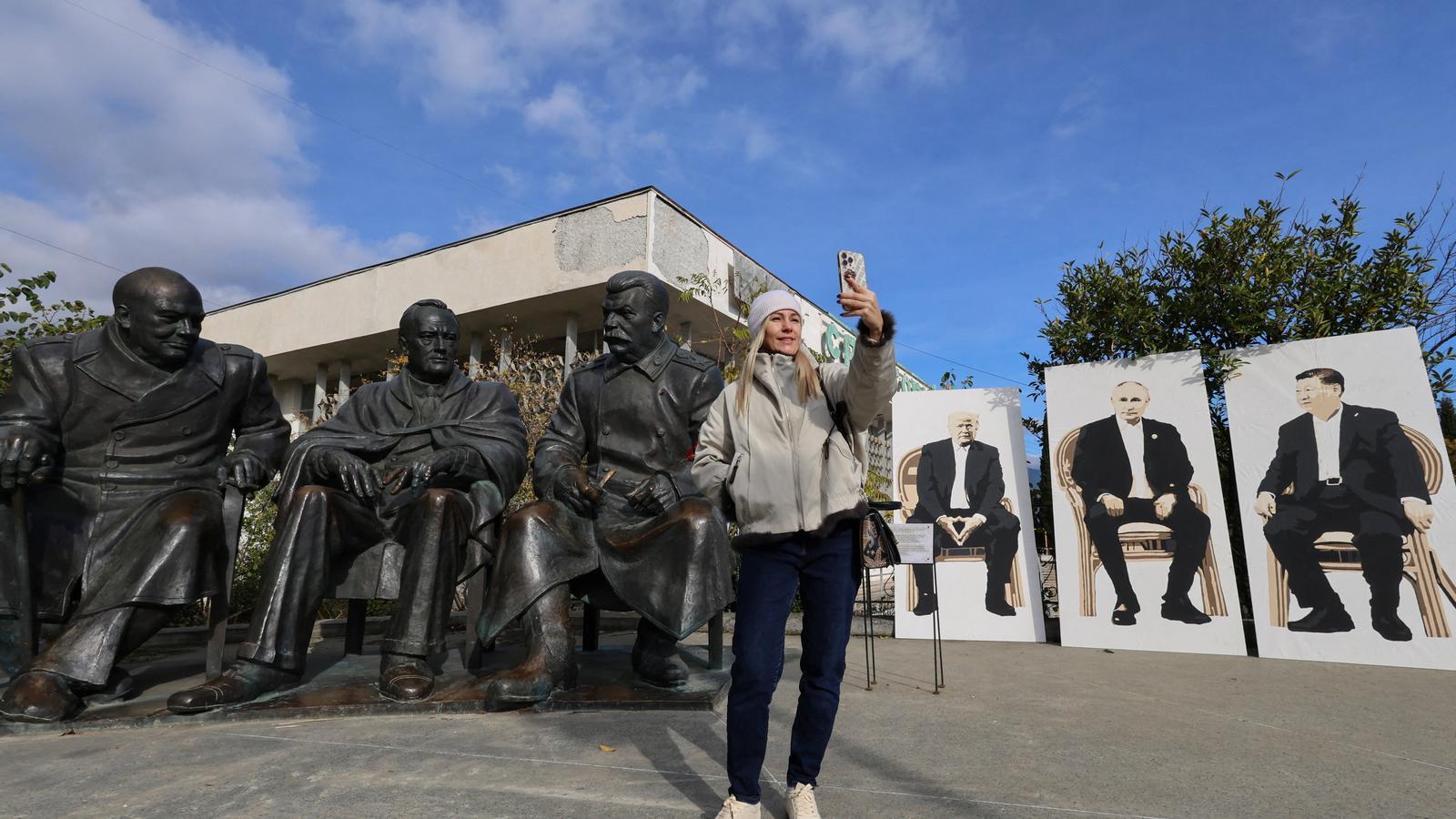
This Thursday's meeting between Donald Trump, Xi Jinping, and Vladimir Putin, facilitated by the Asia-Pacific Economic Cooperation forum, is unusual, but not unprecedented. And by no means is it comparable, at least at this moment, to the 1945 Yalta Conference, a comparison that has gained traction following the allusion by Polish Foreign Minister Radosław Sikorski.
It is unusual for its three-way format, although bilaterally Putin and Xi have met often, just as Trump and Xi have, and for their part, Putin and Trump converse with some regularity and in 2025 they met physically in Alaska. Never before had a US president met with his counterparts from Russia and China at a summit since the end of the Cold War. But it is not unprecedented, because for decades the great hegemonic powers – and we are talking about three countries that often act as imperialist actors – have been meeting at the level of their heads of government to exchange opinions and generate agreements outside of general and regional multilateral institutions. They do so following the tradition of diplomatic conferences of the European powers established after the defeat of Napoleon, certainly, but in no way can it be compared with Yalta.
The Yalta agreements refer to a long process: six meetings between 1942 and 1945, in the midst of the Second World War, between three powers opposing the Germany-Italy-Japan Axis. The talks were initiated by Roosevelt, Churchill, and Stalin, but at the final meeting in Potsdam, to approve the final version of what had been agreed upon at Yalta, the first two were no longer present: Roosevelt, due to his death, and Churchill because he lost the elections in the United Kingdom.
The Yalta agreements refer to a long process of negotiation about the world and post-war rules, with topics such as Germany, the creation of the United Nations, or the political future of the countries of liberated Europe. Nothing to do with this Thursday's meeting, with a reduced agenda, without significant prior negotiations or shared previous background, and in principle without its continuity as an eventual G3 of the great powers being assured.
Although in the American magazine Foreign Affairs since 2021 several authors have insisted on the advantages that the creation of an informal group of great powers would have –in the manner of the European Concert of Nations or the Congress of Vienna– to manage the current geopolitical competition, the enormous erosion of the multilateral system and to promote some type of concerted collective action, there are still no signs that it is feasible. There cannot be a global concert without all members committing themselves to a stable territorial statu quo, even accepting –as was done at Yalta and, above all, starting from the Cold War– the existence of spheres of influence for each of the great powers. And this, today, with wars like those in Ukraine, Iran and Gaza/West Bank seems unlikely in the short term.
Denuclearization of North Korea
There is no official agenda, although it is said that ongoing wars, proposals for strategic nuclear arms limitation agreements, and control mechanisms for some artificial intelligence developments will be discussed. In my opinion, the topic with the best chance of achieving progress is something else: improving stability on the Korean peninsula. The topic was opened with the proposal by the South Korean president at the United Nations General Assembly last September: an ambitious plan to normalize relations with North Korea, which includes replacing the 1953 armistice with a "peace regime" that promotes the "mutual respect of each party's systems and the acceptance of our differences." The plan includes a phased approach to achieve a denuclearized peninsula, which would mean putting negotiations on North Korea's nuclear armament back on the agenda, a topic that has been to Trump's liking since his first presidency. Wait and see.
In short, the main value of the meeting is symbolic and performative. The three powers emerge as winners even without substantive agreements: they show their power to their domestic audiences and to the world and strive to create habits and a shared foundation.
It is also clear who is losing out, once again: the European Union, which still does not understand that giving unequivocal support to Kyiv in its fight against Russian aggression should not prevent the re-establishment of direct dialogue mechanisms with Moscow, which have been practically non-existent since January 2022.
This Thursday in Shenzhen no one will utter a phrase like Churchill's, which infuriated Stalin: “The eagle must allow the little birds to sing, no matter what they sing”. These three eagles seem more interested in exploring an eventual G3 than in hearing how other birds chirp.

