Did Ukraine attack Germany's interests? The trial for Nord Stream begins
The justice system accuses of war crimes the head of the Ukrainian military group responsible for the attack against the key gas infrastructure for Europe
-
CAT -
CAST
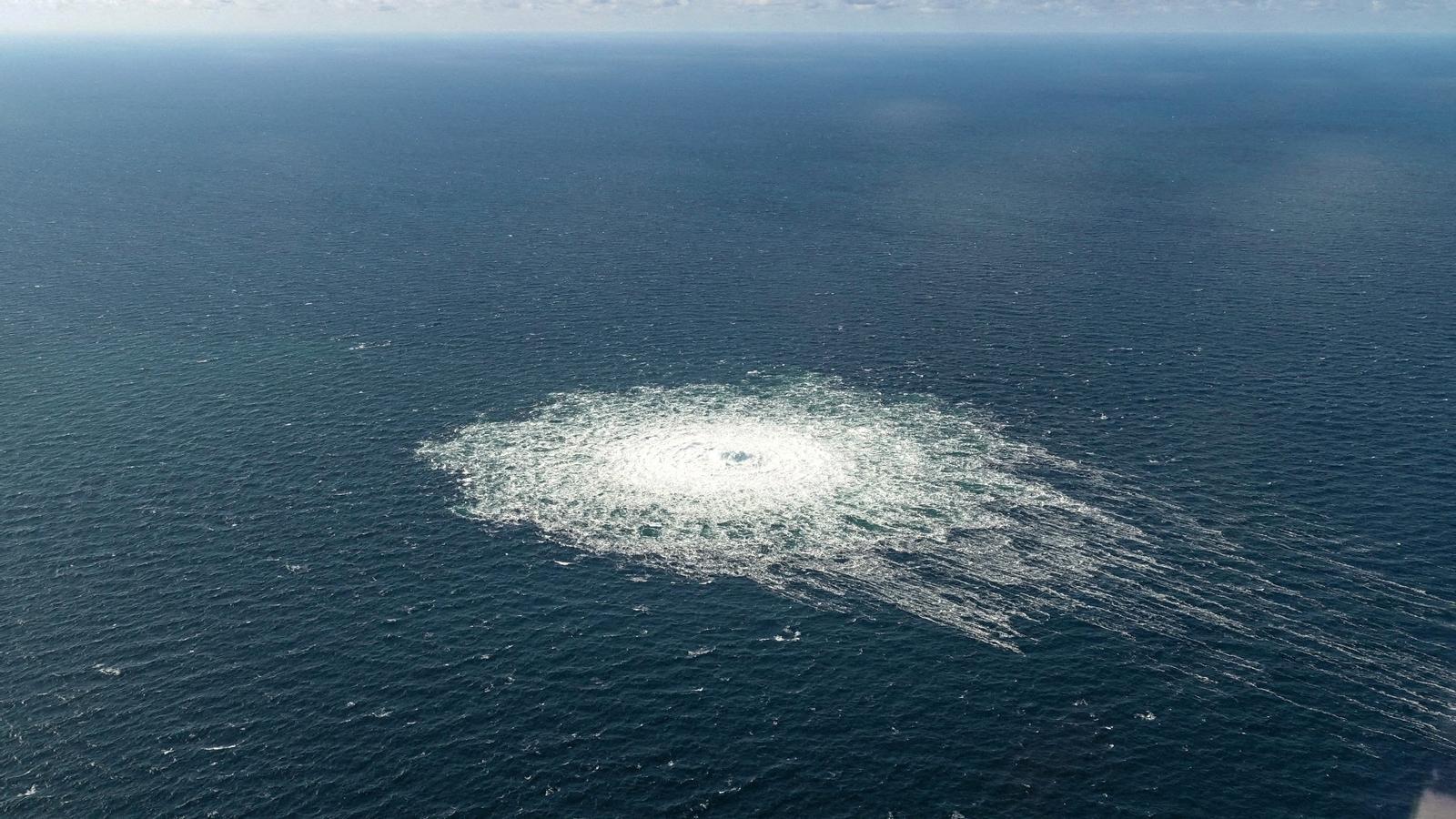
BarcelonaSerhii Kuznetsov faces a historic trial starting today. He is the Ukrainian accused of leading the military group that, under orders from Kyiv, in September 2022 sabotaged the Nord Stream pipelines, located in the Baltic Sea and through which, until a few weeks before the attack, Europe was supplied with Russian gas. The trial began this Wednesday with a two-hour hearing in Hamburg (Germany), where the Public Prosecutor's Office accuses the Ukrainian soldier of committing a war crime for having attacked civil infrastructure using combat methods prohibited against civilian targets.
The former soldier was arrested in August 2025 while on vacation in Italy and, according to the German Public Prosecutor's Office, was leading a group of seven people. With this human team, and using false documents, the soldiers rented a sailboat on the German Baltic coast with which they sailed and subsequently jumped into the water, diving 80 meters to place explosives on the Nord Stream 1 and Nord Stream 2 pipelines, causing "serious damage," the indictment recalls.
The text also emphasizes a far from minor issue: it asserts that Kuznetsov was a member of an elite Ukrainian unit tasked with carrying out sabotage operations. The direct link of the attack to Kyiv is especially relevant because, should it be proven during the trial, it would mean confirming that Ukraine attacked the interests of Germany, the main economic and military ally of Volodymyr Zelensky in the war against Russia. Berlin received 50% of the total gas needs of all of Germany through these pipelines.

According to the indictment, leaked to several German media outlets, while he was detained in Italy, Kuznetsov himself asked in a phone conversation with his wife that the Ukrainian authorities make it public that it was an "official operation". Ukraine admits, through security sources in the country cited by media such as the Wall Street Journal, that the operation had the approval of the then head of the armed forces, Valerii Zaluzhnyi, but not that of the Ukrainian president, Volodymyr Zelenskyy. Everything suggests that Kyiv's objective, not confirmed by official sources, was to cut off an especially important financing route for Russia, to whom Europe was paying for the gas it obtained.
The alleged perpetrators of the attack raised suspicions during their sailboat trip through the Baltic Sea. At the port of Kolobrzeg, in Poland, coast guards inspected the vessel, which was flying the German flag, because the appearance of the crew members, who did not seem to be tourists, raised alarms. During their trip, the members of the group traveled with fake passports. Kuznetsov carried a Ukrainian passport, but he appeared in it with a different name, and the Prosecutor's Office points out that it would have been provided to him by the Ukrainian secret services.
Despite Ukraine's direct involvement in the attack, until now the government of the conservative Friedrich Merz has avoided commenting publicly on the allegations and on the impact they may have on relations with Kyiv. Berlin has asked to wait for the conclusion of the proceedings, which will last at least until February. Meanwhile, the Kremlin, aware of the potential geopolitical consequences of the attack on the relationship between Germany and Ukraine, called this Monday for a "just verdict" that reveals the names of the perpetrators of the sabotage and also of "those who ordered it".
Doubts about jurisdiction
The attack on the energy infrastructure took place in international waters. However, Germany took over the investigation because the pipeline ends in its territory and because the sabotage put its interests and the country's energy security at risk. In Poland, the attack was also partially investigated, but the judiciary ended up releasing a second suspect, Vladimir Zhuravlov, who was later arrested again in Croatia and is currently waiting to be extradited to Germany.
At the time of the attack, the infrastructure was no longer sending gas from Russia to Europe. Once the full-scale war against Ukraine began, Moscow had drastically reduced gas shipments during the months prior to the attack. Furthermore, Nord Stream 2 never became operational. It was completed in 2021, but Germany suspended its certification as part of the sanctions against Russia when Moscow recognized the Ukrainian regions of Donetsk and Luhansk as Russian territory.
In the case of Nord Stream 1, Russia had interrupted the supply, citing an oil leak during repair work, and the gas flow was not resumed. Even so, to ensure the maintenance of the pipelines, pressurized gas was still circulating through the infrastructure, and the attack caused the largest methane leak that has ever occurred anywhere in the world.
