Bulgaria asks Russia for explanations for another drone attack against ships in the Black Sea
NATO opens the door to "adjusting" the military presence on the eastern flank "as necessary"
-
CAT -
CAST
BarcelonaThe escalation of the war in Ukraine continues in the Black Sea. Two ships were attacked by drones early this Tuesday about 24 kilometers off the coast of Bulgaria. One has sunk and the other has been left adrift. Russian and Ukrainian drones have turned these waters dangerous for commercial vessels, with attacks that attempt to hinder the transport of grain, vital for the economies of Ukraine and Russia.
In the two attacks, at least sixteen sailors were injured. The aggression against the sunken ship, the Azov Concord, has caused the disappearance of eleven of the crew members, while the other five have been rescued. The attack took place 17 nautical miles (27 kilometers) from the Bulgarian coastal town of Krapets, near the border with Romania. The Azov Concord is a cargo ship flying the flag of Saint Vincent and the Grenadines that was sailing from Romania to Turkey, according to the agency specializing in maritime transport Maritime.bg.
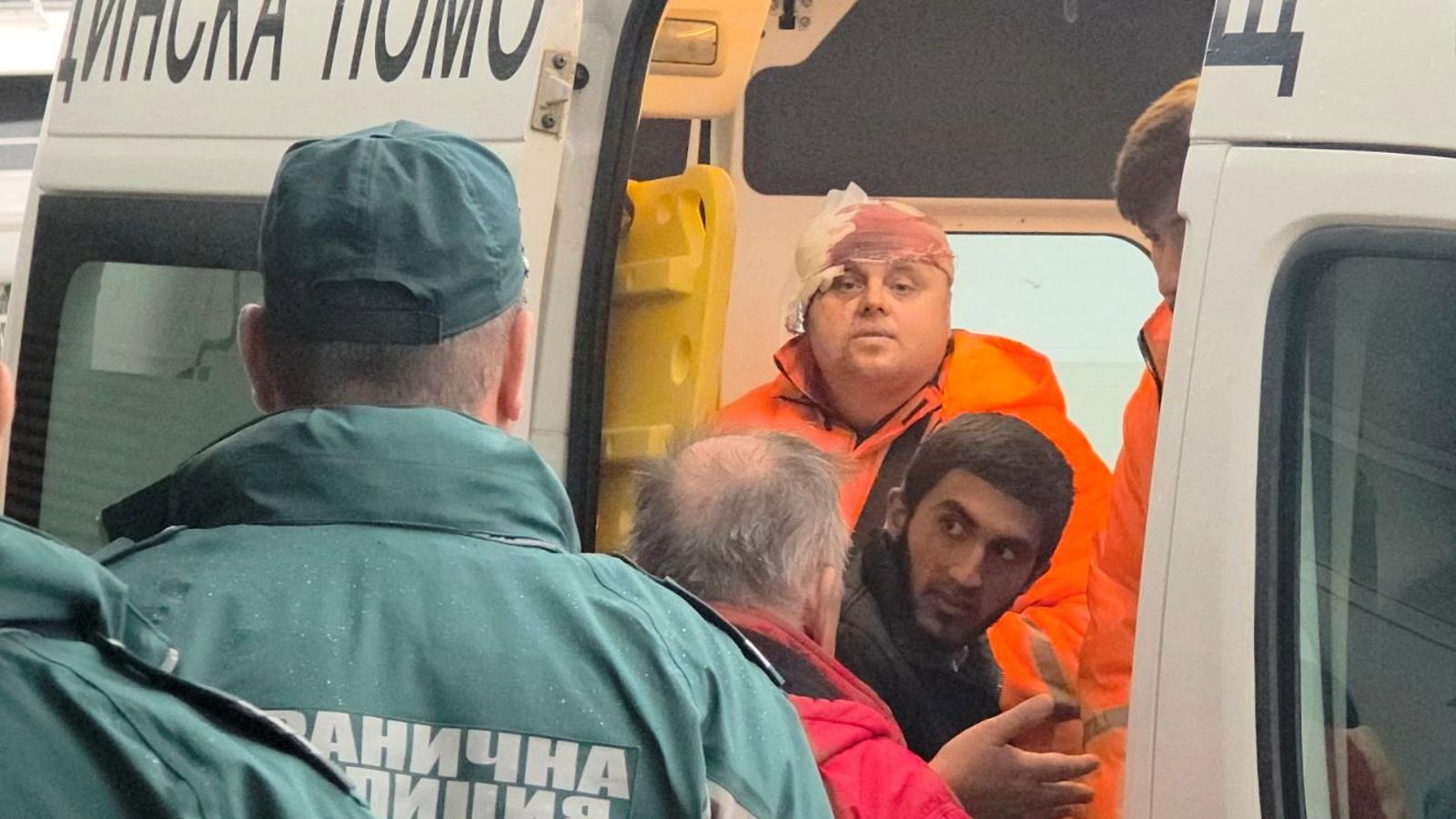
In the other attack, 18 miles (29 kilometers) from Byala, the Ukrainian-owned cargo ship Chelsea 3, which was sailing under the Maltese flag from Turkey to Romania, was damaged, according to the same portal. The fifteen crew members, seven Ukrainians and eight Azerbaijanis, were rescued alive, three of whom had minor injuries. They have all been taken to the Bulgarian port of Varna. According to the crew, three drones impacted the ship.

Despite not having "solid evidence", the Bulgarian Prime Minister, Rumen Radev, has pointed to Russia as responsible for the attacks. Radev has argued for Russian authorship because it "makes no sense" for Ukraine to be responsible, and it is Moscow that benefits from the attacks. However, the Bulgarian Prime Minister, who is pro-Russian, opposes EU aid to Ukraine to defend itself against the Russian invasion and is committed to negotiating with Moscow to end the conflict.
The Bulgarian leader has conveyed his suspicions to the Russian ambassador, Eleonora Mitrofanova, in an emergency meeting in which he asked her for explanations for the attacks, according to the Bulgarian government in a statement. Mitrofanova said, however, that she has no information about the incidents, and has not ruled out that they could be "a provocation by a third country", without specifying which one.
The Ukrainian government has pointed directly to Russia as responsible for the new attacks. "It demonstrates, once again, Moscow's deliberate disregard for civilian lives and maritime security in the Black Sea", said Ukraine's Minister of Foreign Affairs, Andrii Sybiha.
NATO, open to "adjusting" deterrence
After there had already been a similar attack less than a week ago off the Bulgarian coast, the country's prime minister has described the new attacks against merchant ships near Bulgaria's territorial waters as unacceptable, and has requested help from his EU and NATO partners to reinforce the surveillance of the airspace and sea and strengthen Bulgaria's response capacity. Radev has also requested help to clarify the origin of the aggressions.
NATO Secretary General, Mark Rutte, has responded to the Bulgarian request with the commitment that the Atlantic Alliance will monitor the security situation in the Black Sea and will "adjust" the military presence on the eastern flank – already reinforced – "as necessary". For her part, Ursula von der Leyen has stressed that the Black Sea has become "another front in the escalation of Russia's war in Ukraine". The President of the European Commission has condemned "unacceptable" aggressions that "seriously endanger the lives of crews and threaten security".
Alternative routes for Ukrainian grain
There have now been four drone attacks against ships in the Black Sea in just one week. Also off the Bulgarian coast, a drone attack sank a merchant ship and damaged another. The attack took place 130 kilometers from the coast, and Sofia has not attributed it. One day earlier, another ship, a Turkish merchant vessel transporting Ukrainian grain, was attacked off the coast of Romania, an event that Ukrainian President Volodymyr Zelenskyy attributed to Russia. Two of the crew members died.
These incidents are in addition to other attacks against civilian vessels in the Black Sea in recent months. Among others, a Greek oil tanker suffered damage when it was attacked by a drone while sailing through the Black Sea in March; two Turkish sailors were injured in June during a drone attack against a ship off the coast of Chornomorsk, and two sailors from Azerbaijan died in September after also being attacked by unmanned aerial vehicles while heading to Romania.
Russia has bombed Ukrainian ports in the Black Sea, which has forced Ukraine to rely increasingly on river ports on the Danube and maritime routes near the coasts of Bulgaria and Romania, both NATO countries. Ukraine has also intensified attacks against Russian ships exporting grain in other areas of the Black Sea and the Sea of Azov, northeast of the Crimean Peninsula, between Russia and Ukraine.
All these incidents have once again put under scrutiny Europe's ability to protect maritime traffic and critical infrastructure in the Black Sea, more than a year after the EU launched a strategy to strengthen security in the region.

