NATO's "theory of victory" to repel attacks on allied territory
The military commander in chief of the Atlantic Alliance in Europe argues that they do not seek to inflict a strategic defeat against Moscow

-
CAT -
CAST
BrusselsNATO claims to be prepared for an attack from Russia. NATO leadership has reiterated several times that it will not back down in the face of Moscow's threats and that it will defend "every inch of allied territory" against any aggression, but until now it had avoided detailing what this defense might consist of.
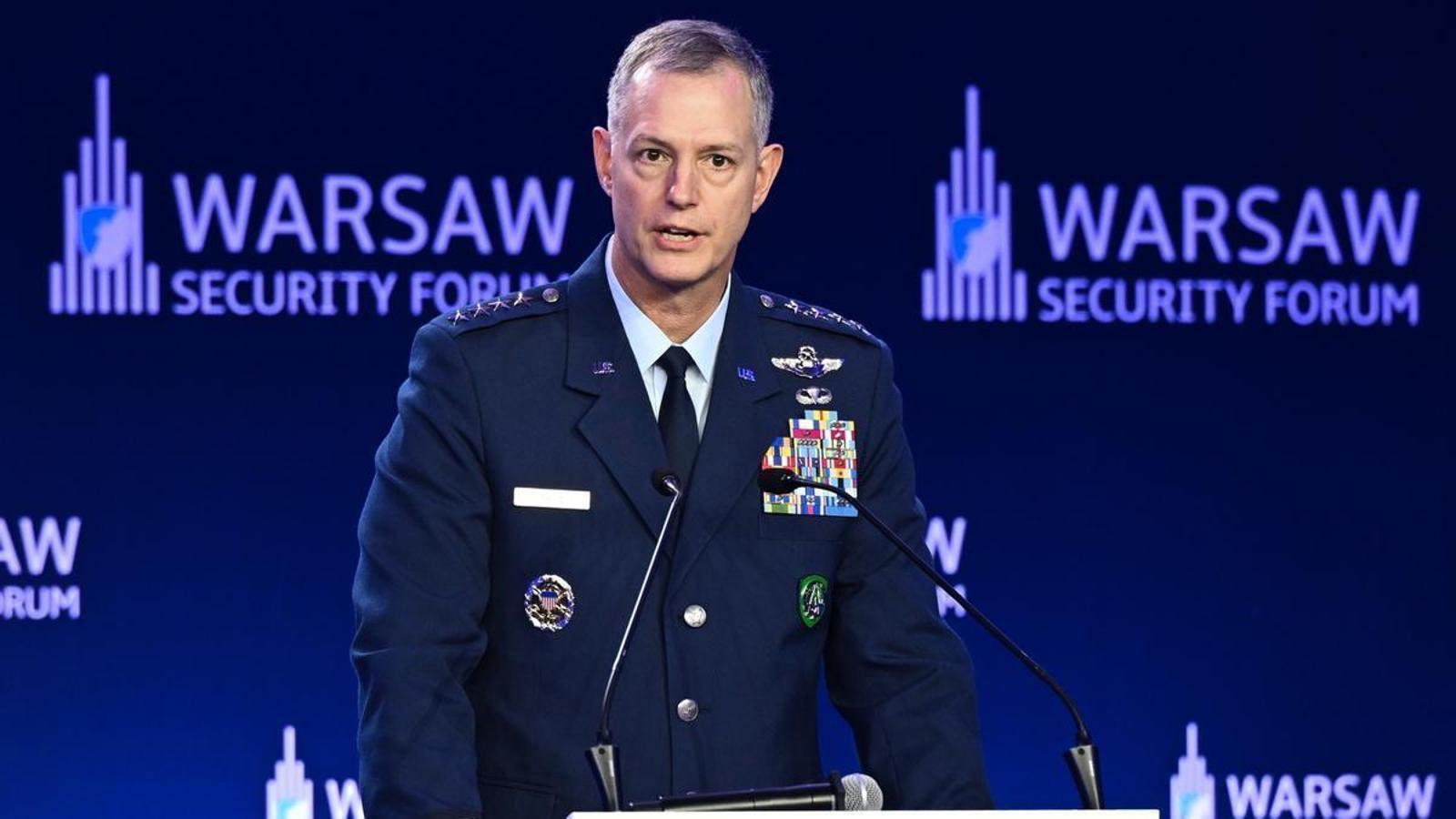
The NATO Supreme Allied Commander in Europe, General Alexus Grynkewich, explained this Monday what he called his "theory of victory," that is, how he foresees the Atlantic Alliance must act in the event of an attack on allied territory. The theory, he assured, is based on a concept known as "denial defense," which prevents an adversary from seizing the territory in question.
The approach, he said, must be threefold: "Block, neutralize, and break" any offensive. Thus, as can be inferred from his words, NATO would initially opt for a defensive strategy and, only after exhausting the options, would lean towards more aggressive alternatives. "My theory of victory is simple: we will block the initial attack. If the attack persists, we will neutralize it and prevent the enemy's advance. And if necessary, we will break the enemy forces and the combat operating system that is deployed against us," he said. "We are not seeking to inflict a strategic defeat on our adversary. We do not need to do so. We only seek to stop any attack in its tracks and prevent them from seizing our territory and holding it," he added.
Grynkewich presented this theory during the Security Forum that the Alliance held in Warsaw this Monday. During his intervention, he was blunt with Moscow and assured that NATO forces would destroy "anything" involved in a Kremlin attack, in the event that Moscow were "foolish enough" to launch an offensive on Alliance territory.
No imminent confrontation
However, he insisted that NATO is a defensive alliance, and ruled out that there should be any imminent military confrontation. In his view, the current situation requires maintaining "sufficient military readiness" to respond to any kind of scenario, even the least likely ones.
Grynkewich's statements come in a context of escalation between Russia and NATO allies due to the increase in "gray zone" episodes, such as the attempted drone attack at Leipzig airport, in Germany, which the authorities of that country attributed to Moscow. While European leaders discuss joint response mechanisms, concern is growing over the commitment of the President of the United States, Donald Trump, to NATO's mutual defense pact.
