Support for Israel among U.S. Democrats cools
Many congressmen are beginning to use rejection of large pro-Israel lobbying groups, such as AIPAC, as an electoral claim.

-
CAT -
CAST
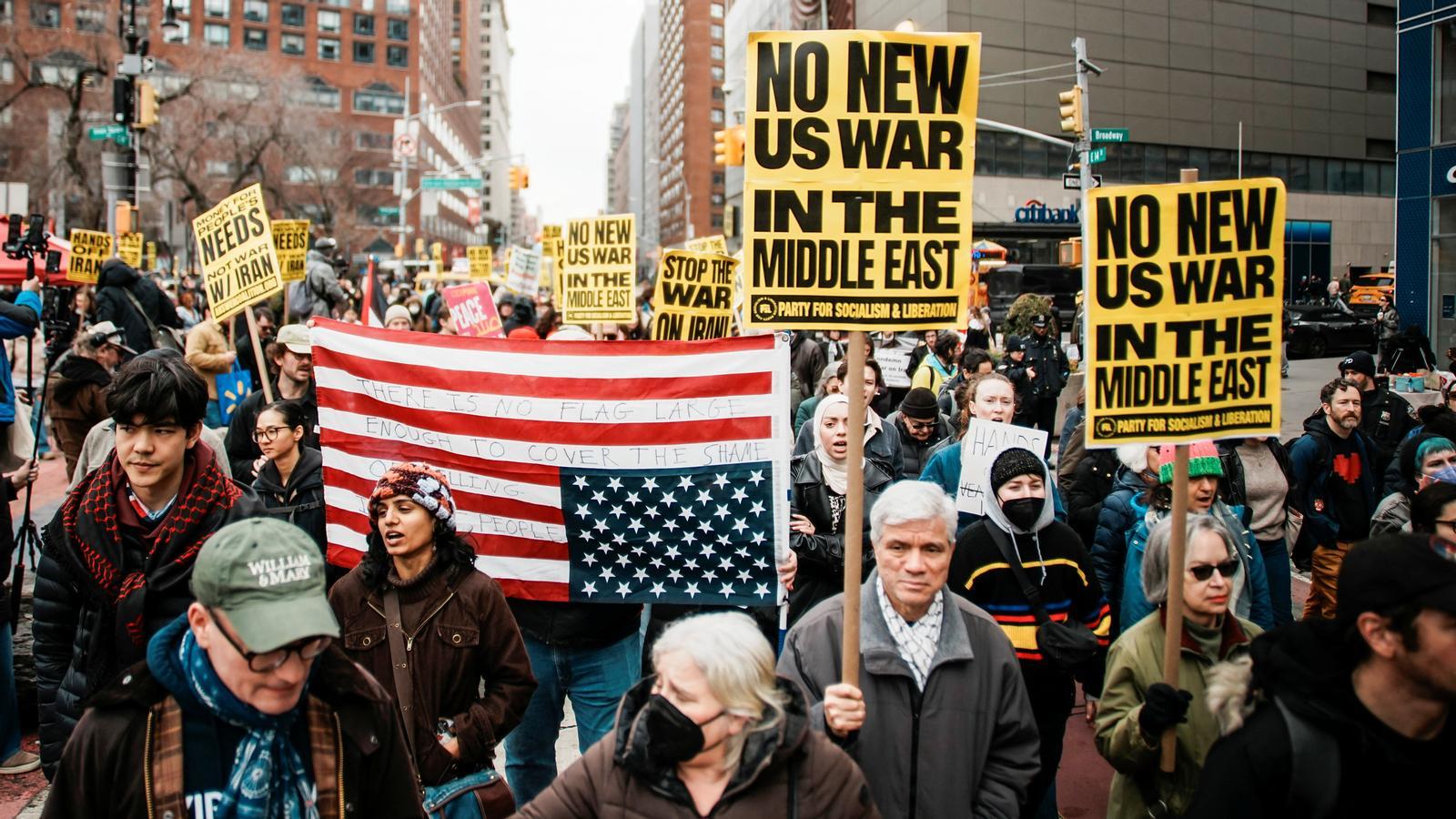
WashingtonThe start of the Gaza war and Israel's escalation in the genocide against Palestinians opened a rift between the Democratic bases in the United States. In the 2024 presidential elections, Kamala Harris found herself caught between millionaire donations from pro-Israeli lobby groups and a growingly critical militancy of the massacre in the Strip. Her inability to take a strong stance on the conflict took its toll at the ballot box, with a significant bleed of protest votes. Now, the war in Iran, into which Donald Trump has allowed himself to be dragged by Benjamin Netanyahu, has intensified this distancing. The rupture is such that many Democratic candidates for this year's legislative elections are trying to distance themselves from AIPAC, one of the major pro-Israel lobbies.
In general, support for Israel has fallen among Americans, according to a poll by NBC conducted in the early days of the military campaign in the Middle East. Currently, 39% of citizens view Israel negatively, whereas in 2023 – just after Hamas's October 7th attacks – it was only 24%. The loss of sympathy has been most pronounced among Democratic and independent voters: 57% and 48%, respectively, view Israel negatively.
Despite the backstabbing within the MAGA bases and criticism from some sectors against the president, the perspective held by Republicans has not been as affected. Only 18% view Israel negatively, six points more than in 2023. When the poll was conducted, the dramatic departure of the US chief of counter-terrorism, Joe Kent, had not yet occurred. The official resigned arguing that Israel had "deceived" Trump into getting entangled in the conflict. A statement that should be taken with a pinch of salt, considering that Kent and certain sectors of Trumpism have clear sympathies towards white supremacism and anti-Semitism.
Solidarity with Palestine is growing
The war, however, has not been a determining factor, but has simply given impetus to a widespread sentiment that has been brewing within American society. Thus, as the number of Palestinians killed by Israeli attacks has increased –more than 72,000–, solidarity with Palestine has grown to the detriment of sympathy towards Tel Aviv.
A poll published by Gallup just before Trump and Netanyahu bombed Tehran on February 28th indicated that, for the first time since the early 2000s, Americans feel more sympathy for Palestinians than for Israelis: 41% compared to 36%. Until last year, the trend was the reverse.
The Jewish lobby, against the most progressive
Many Democratic candidates have gotten the message and are campaigning against AIPAC. For the first time, many are openly rejecting this pro-Israel lobby, despite its power. In 2024, the Zionist group (formerly known as the American Zionist Committee for Public Affairs) invested millions in primary campaigns to oust two lawmakers from Congress: Cori Bush and Jamaal Bowman. Both were members of The Squad, a term used to describe the most progressive bloc of Democratic congressmembers.
One of The Squad's most high-profile figures is Alexandria Ocasio-Cortez. The New York congresswoman had been critical of the Gaza war, but it is only now that she has openly opposed continuing to militarily fund Israel. “Consistent with my voting record to date, I will not support Congress sending more taxpayer dollars or military aid to a government that consistently ignores international law and U.S. legislation,” the congresswoman said in a statement released on Wednesday.
Previously, Ocasio-Cortez had made an exception on the issue of military aid, saying that Israel has a right to defend itself, a mantra that is almost omnipresent within American politics. Her stance also serves to differentiate herself from other potential presidential candidates for the 2028 election, should the congresswoman decide to run.
This phenomenon is also being replicated for this year's legislative elections. In Chicago, Democrat Daniel Biss wants to win a seat in Congress this November with a campaign based on opposing AIPAC. Biss, who is Jewish and the grandson of Holocaust survivors who emigrated to Israel, has dedicated himself to warning that AIPAC and similar political action committees are pouring money into the campaign to unseat him.
Biss is not the only Democratic candidate from the Chicago area following this tactic. Many Democrats across the country have begun to openly state that they will not accept further donations from AIPAC. For example, California Governor Gavin Newsom said in a podcast interview that he has never accepted and “will never accept” donations from the group. Senators Ruben Gallego and Cory Booker said the same a few days ago. Despite both having received donations from AIPAC previously, they claimed that they would no longer receive them going forward.

