The complete postcard of the Puigcerdà lake
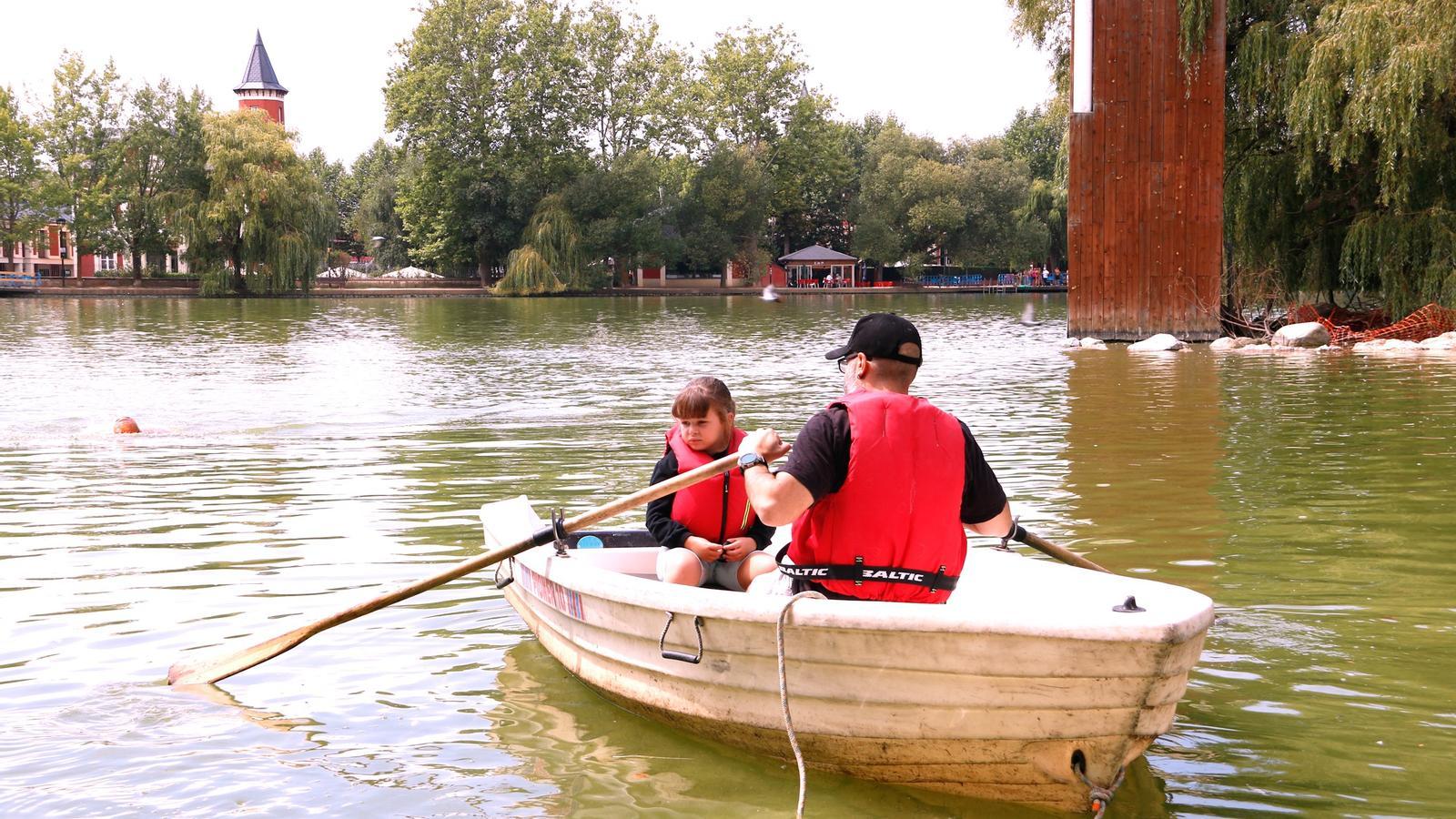
The rowboats will sail even in winter

-
CAT -
CAST
GironaThe most celebrated postcard image of Puigcerdà is composed of the lake, the trees of Schierbeck Park, the stately summer houses, and the mountains in the background crowned by snow. And sailing on the water, of course, a rowboat. But this bucolic vision of the capital of La Cerdanya often lacked the rowboats, which have successfully reappeared this summer after a few years of absence. The Puigcerdà City Council is determined to keep the boats all year round, and for this reason, it will open a tender to contract this service. It will even be possible to sail in winter, provided that weather conditions allow it.
This summer, the boat activity, recovered with a company from La Cerdanya, has operated every day and has allowed visitors to share attractive images taken from the lake. The city council, given the good reception the initiative has had, wants to go further and is even studying expanding the fleet with a dozen new vessels and an auxiliary motorboat. It also plans to combine the management of the boats with that of the bar service in Schierbeck Park.
A lake with many uses
The lake of Puigcerdà is an artificial lake of medieval origin, probably built or expanded in the 13th century in a place that had previously been an area of wetlands that collected water from the mountain. The first document that records it dates from 1260. Since 1310, the Puigcerdà irrigation canal has brought water from the Querol or Aravó river. For centuries, the water was used for irrigation, cleaning the ditches and sewers, and helping to fight fires. It was also fished in, mud was extracted to be used as fertilizer, and, when the cold arrived, ice was produced there which was later stored in a well built in the 17th century.
The great transformation arrived at the end of the 19th century, when Puigcerdà became a select summer destination for wealthy families, mainly from Barcelona. The surroundings of the lake were filled with magnificent villas and gardens, and that space, until then purely functional, became one of the great showcases of the town's social life. The construction of the bandstand and the jetty in 1884 introduced a new way of experiencing the lake: that of strolling and recreation.
A paradise that invites you to rest
The boats, therefore, are not a recent tourist invention. They have been part of the lake's history for more than 140 years. And also part of it is the Schierbeck Park, touching the shore, promoted by the Danish consul German Schierbeck and inaugurated in 1925. Today, the park and the lake form an inseparable whole, with paths, well-tended vegetation, birds, and corners that invite rest. It is worth mentioning here the Lake Festival, started in 1886, a nocturnal celebration of Venetian inspiration that still today forms part of Puigcerdà's festive calendar.
The lake changes with the seasons. In summer, it is a space for walking and boats where you can cool off when the sun goes down. In autumn, the trees that surround it give it a melancholy look. And in winter, it can even become frozen and incite some reckless person to walk on a thick layer of ice. Climate change does not bode well for the repetition of this phenomenon, which occurred 20 years ago and forced the council to explicitly prohibit walking on the lake. Now, the idea of having boats navigate it throughout the year has something of a return to the origins.
