"We must stop complaining about the hardness of the dining room job because economically we are ahead of any other"
Gastronòmic Fòrum Barcelona begins at Fira Barcelona, which will last until Wednesday afternoon

-
CAT -
CAST
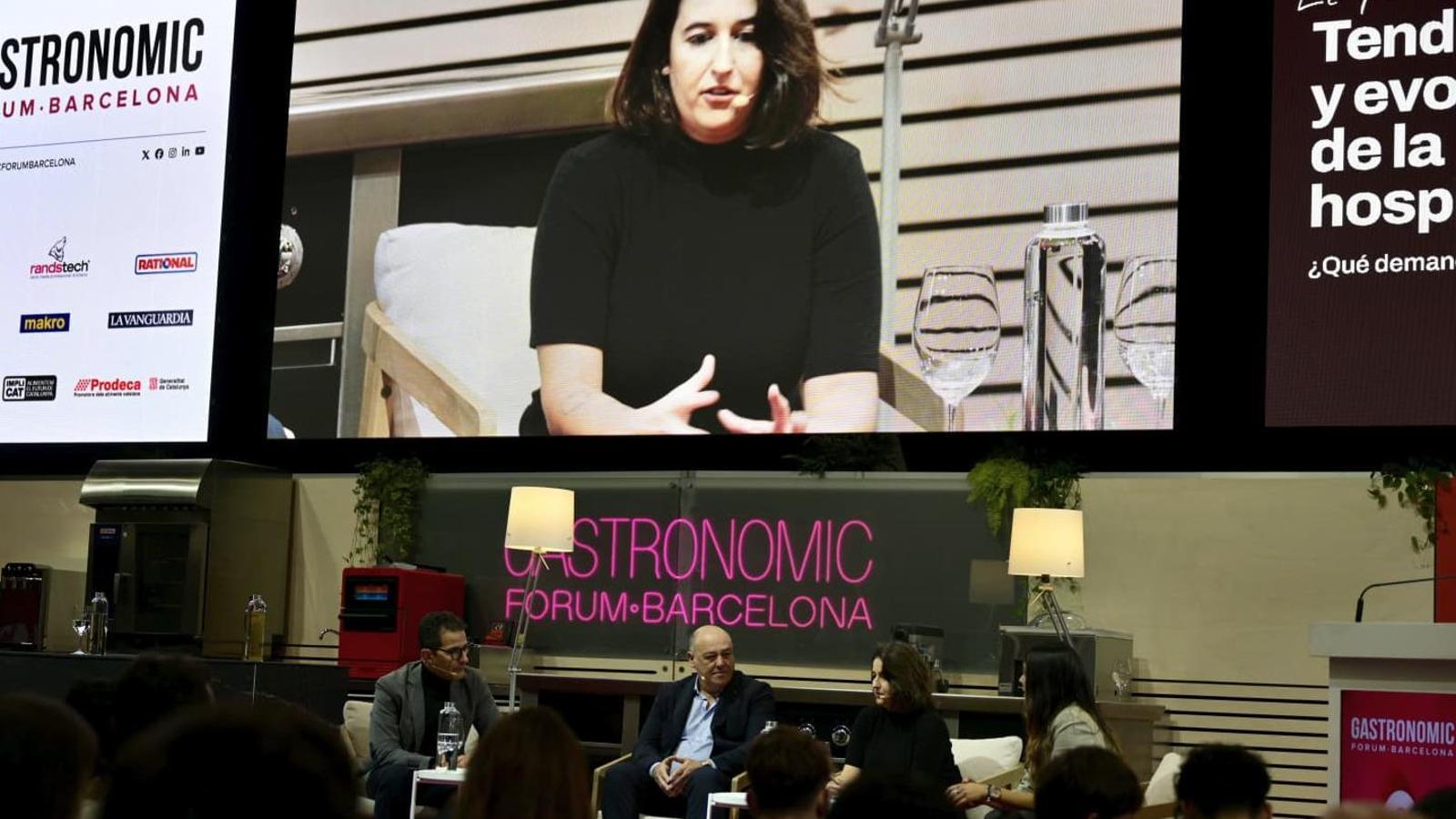
Barcelona“The power of the dining room” has been one of the first presentations with which the Gastronòmic Fòrum Barcelona has just begun, which is taking place at the Fira Barcelona Gran Via venue, and will continue until Wednesday. Throughout these days we will find out which is the best artisan panettone and best chocolate panettone in the State, who wins the innovation award, as well as the chef of the year in Catalonia. Directed by Pep Palau and Josep Alcaraz, the Gastronòmic Fòrum Barcelona combines the debate on the restaurant trade with food exhibitors.

“We have been wrong in the way we convey the dining room profession; in the narrative we have explained until now,” said the director of the Via Veneto restaurant, Pere Monje, one of the speakers in the debate “The power of the dining room,” who added that “we must stop complaining about the toughness of the dining room profession because economically we are ahead of any other.” They fulfill the marked working hours, many restaurants close two days a week (weekends in the case of Via Veneto). On the other hand, until now when talking about the waiter's profession, the arguments were centered on working hours, on the difficulty of dealing with the client, when “a dining room is the soul of a restaurant, where artificial intelligence will never be able to enter because we are people dealing with people.” For her part, the head of the dining room Marianna Suárez, from Celler de Can Roca, maintained that waiters are the ones who make people who go to the restaurant feel good. “They might forget what they have eaten, but the treatment we have given them, the way they have felt, that they will remember,” and she commented that it is also not about talking about a “war between kitchen and dining room, because we go together, and we are nothing without each other.”
The difference between hospitality and good service
To continue, Pere Monje focused on the training of waiters, of people who want to dedicate themselves to the profession. “Just as Barça has La Masia, we also have to take care of young talent, of training it”. If the person who wants to dedicate themselves to it, “has a flame inside for the profession, then we must give them the opportunity to be able to light it”. Monje agreed with Marianna Suárez: “If a client returns to the restaurant another time it is because they want to repeat the way they felt there”. And at this point head of the dining room Gemma López, from the Suru restaurant in Barcelona, related that in Barcelona there are continuous openings, and clients want to get to know them, and they eat well there, but not in all places do they feel at home: “One thing is hospitality and another is good service, and hospitality is what is in short supply”. In this sense, Juan Carlos Ibáñez, from the Lasarte restaurant in Barcelona, maintained that “the client wants to eat and drink, and also to be treated well”. These are the three principles that are linked. That is why in a dining room there cannot be robots, because the client wants close, cordial service. “We are hosts, and we must train the young people who arrive at the restaurant, and let them do it, because we are not performing open-heart surgery, so if the young people make a mistake, we are behind them and we can help them, we can give them peace of mind”.
The good treatment that the client seeks in a restaurant has changed its definition over the years. After Covid, as Marianna Suárez remarked, “people look for more warmth, informality and for us to be approachable at the same time, for us to have active listening”. The profession has changed due to this treatment that the client demands, and to understand it, at Celler de Can Roca it is essential to have the specialist in psychology that they have hired on staff. In fact, in the debate “The power of the dining room” one of the questions asked by the attending public was whether it was necessary to allocate more economic weight to the dining room. The answer focused on the specific circumstances of each restaurant.

And what is the greatest joy that waiters have felt in a dining room? “The greatest joys we have seen in a dining room is to see our customers cry,” stated dining room manager Abel Valverde. “They cry for many emotions, for the food, for the drink, for the service that has taken care of and pampered them and all of that gives them a unique state of mind,” added sommelier Juan Carlos Ibáñez.
Finally, the speakers listed the characteristics that the service profession has. A waiter, a dining room manager, a sommelier are discreet, humble, elegant; they know how to be present at the right moment; they have an open mind; they have respect; they know languages; they give happiness; they connect with a look, with a gesture; they are kind; they give without expecting anything in return; they give and give without expecting anything in return; through their ears pass many details that enrich their memory. And, in short, “it is a profession that has so many nuances, that it wouldn't end even in seven lifetimes if we had them”. The final phrase that encompassed the explanations is that “good service is that which goes unnoticed, and when you need it, it offers you a smile”.
