Is luxury in food caviar or a freshly harvested vegetable?
In ancient times luxury was the color purple, which was obtained from the death of 250,000 sea snails, from which a drop of the dye was extracted

-
CAT -
CAST
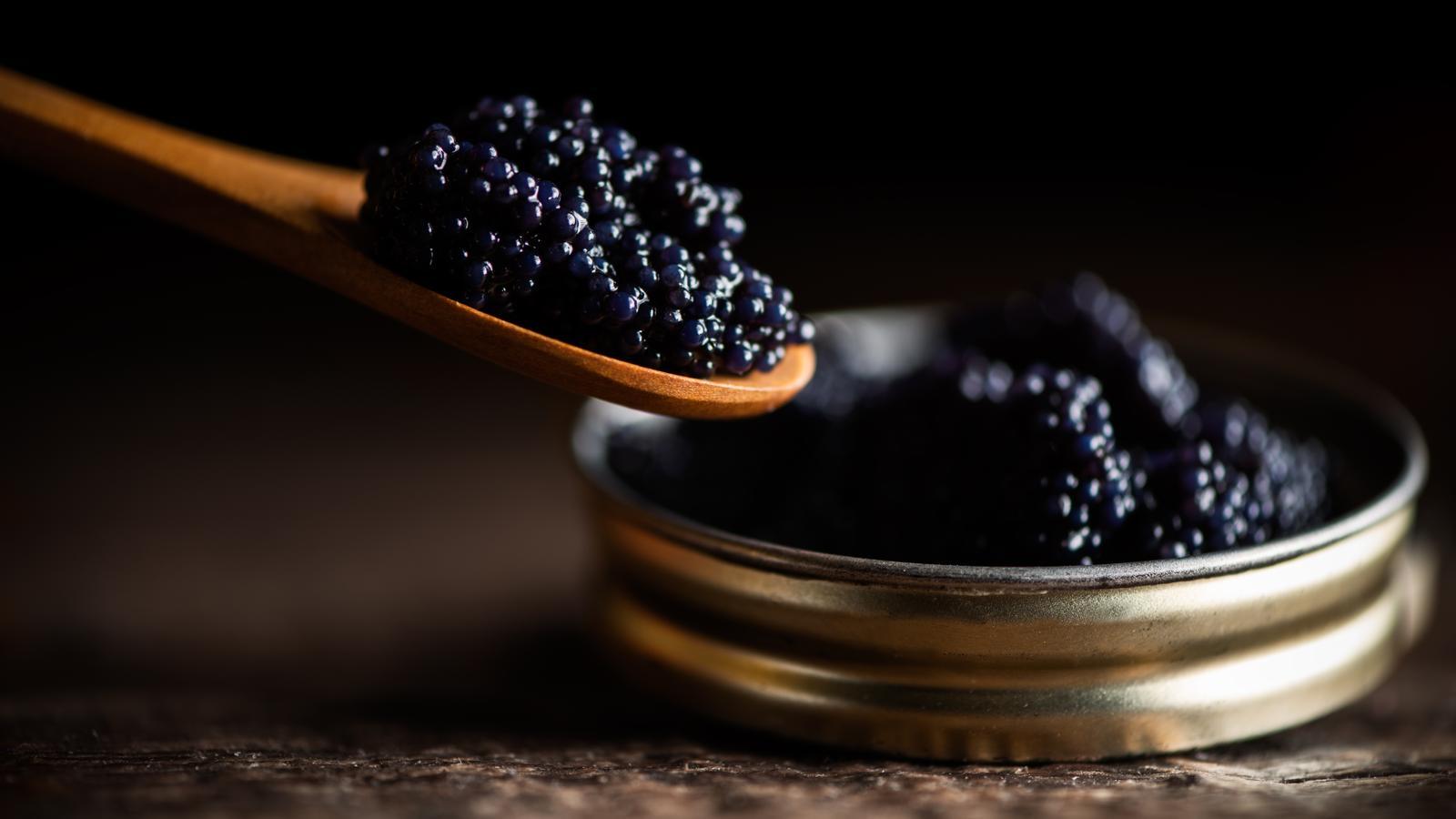
The definition of luxury in food is tricky. Some maintain that luxury is eating a food that is not within everyone's reach and that arrives from the other side of the world. With these parameters we could talk about caviar. But there are also people who maintain that true luxury is eating what one has grown, harvested and cooked oneself: you know exactly what you are eating and you do it at the best possible moment: when the food is ripe. If, in addition, you savor it accompanied by those you love most, then the luxury is supreme.
In the book En tierra de Dioniso, the anthropologist María Belmonte explains that in ancient times the purple color was obtained from a sea snail, the murex brandaris, which yielded a drop of dye, so that to obtain thirty grams it required the death of about 250,000 snails. That is why a purple scarf was a luxury object, and it was what drove trade between Asia and the Mediterranean, which existed since the year 900 BC.
If we continue talking about luxury with other non-edible examples, we end up with gold. Today it is more expensive than ever, but back in antiquity the writer Diodorus Siculus described "the terrifying working conditions in the gold mines" for the workers who dedicated themselves to it. As María Belmonte says, often what is beautiful and what is sinister tend to be linked.
Opinions about luxury
I have asked different people about luxury in food, and I have obtained answers of all kinds, which I reproduce without the objective of it being a scientific survey; just an improvised one. They have told me that it is eating a Can Cabrissas 'tap' (the pastry shop closed on Saturday, October 31st) with a glass of the good bubbly. They have also explained to me that luxury is eating broth, freshly made, on a winter day. At this point, I pause because broth, 'escudella' and 'carn d'olla' (meat stew) are the answers I have received the most. Perhaps because it is November, and Christmas is approaching. Or perhaps because we have an intimate connection with soup, us Catalans and also many peoples from everywhere, because boiling vegetables and proteins must probably be the oldest dish. The general director of the Alicia Foundation, Toni Massanés, adds a more striking piece of information: he asserts that a study verified that terminal cancer patients improved their state of health when they consumed soup. Literally, Toni Massanés said at the Girona Gastronomic Forum: “It made them want to live”.
A third answer that I also obtained with my street-level study has fruits as protagonists. Many have told me that luxury is eating fruit freshly picked from the tree, that has not passed through a cold storage chamber or a refrigerator. If possible, eating it at the tree itself, just when you have picked it, and you take shelter under the shade of its leaves. A green almond, in the month of June, when it is still half liquid, when it has not yet turned into an almond. Split with a stone from under the almond tree. A peach, under the leaves of the peach tree. A 'coll de dama' fig, under the fig tree with a pachydermic trunk.
Finally, another luxury also shared by many: that of cooking for oneself what one has bought at a farmers market, in those specialized markets, of vegetables, of cheeses, of honey and especially now that the first ones are arriving, those of oil, the new harvest ones or the green oil ones. With the shopping done, thinking on the way what we will cook, and with the decision made, arriving home and doing it. The final luxury: sharing it, because to cook is to love. And here we would already have the true luxury of life.
