Lucía Fumero i Rita Payés: "Being close to her makes you a better person"
Musicians. They release the album 'Rueda eterna'
-
CAT -
CAST
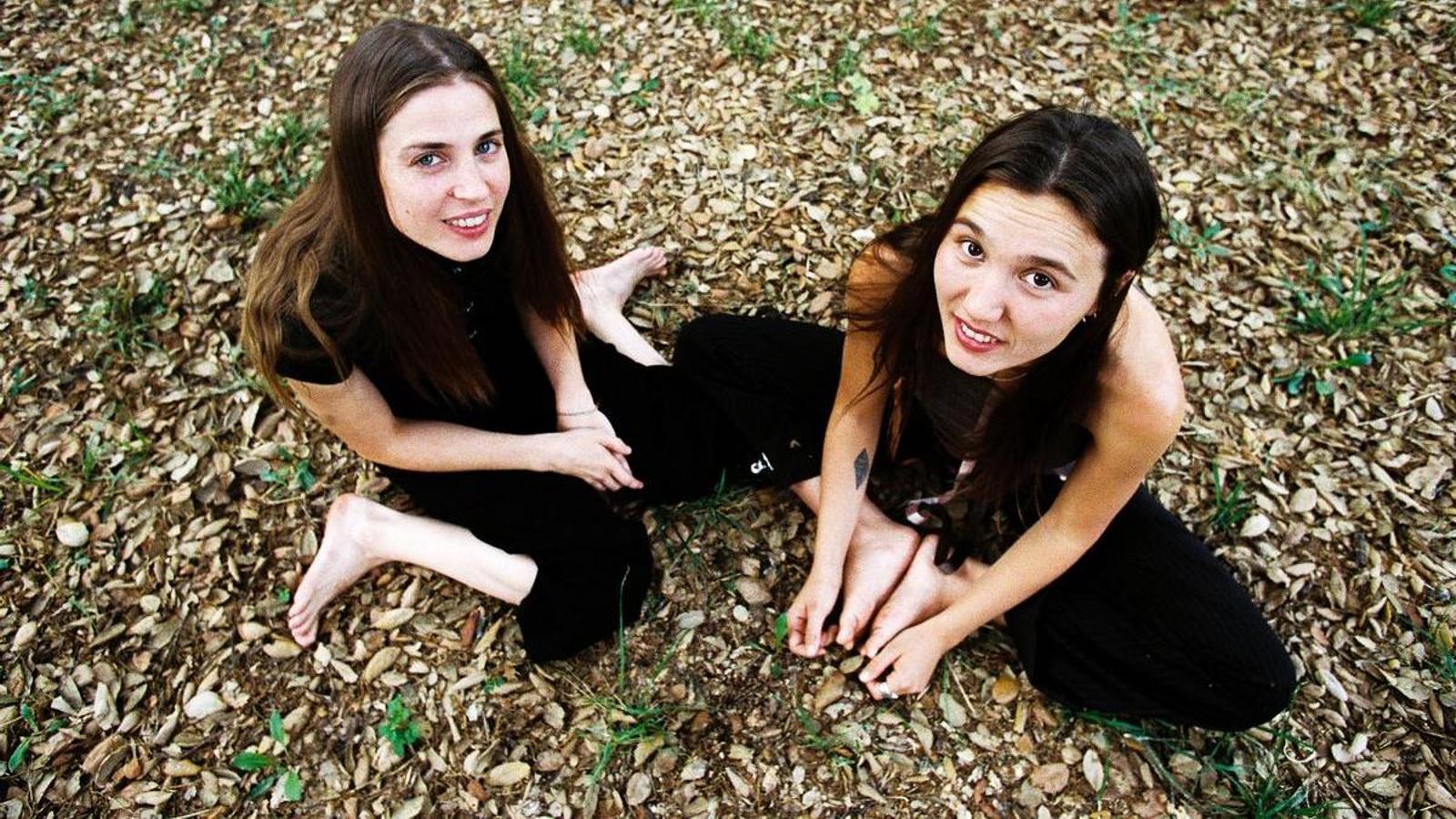
BarcelonaThe headline quote is said by trombonist Rita Payés (Vilassar de Mar, 1999) about pianist Lucía Fumero (Barcelona, 1991), who also subscribes to it. The musical and personal symbiosis between the two has this effect and, furthermore, multiplies the artistic and emotional impact of songs like those that make up the joint album Rueda eterna (2026), jazz, Latin American song, and Brazilian rhythmic aromas that they will spread on a European tour starting on October 14th in Paris.
You have been friends for many years and have often collaborated with each other, but do you remember when you decided you would make the album together?
— Rita Payés: Exactly, no. It was something we knew would happen at some point, and in fact it surprised us because we believe it happened sooner than we expected.
Would this album have been different if you had made it before Folklore (2024) and De camino al camino (2024)?
— Lucía Fumero: For sure. There is always an essence, but you are not the same person now as you were before or ten years ago. If we were to do it ten years from now, it would also be super different.
I mention this because I have the feeling that both Folklore and De camino al camino were two albums that culminated an artistic stage for each of you, like the great album you had achieved at that moment in your lives, and that perhaps this gave you more peace of mind to approach this kind of collaboration adventure between friends.
— L.F.: Yes, but I don't have the feeling that Folklore has been a great album compared to the others I have released. This is something that perhaps is seen from the outside or because it coincides with a moment in my career when maybe more people know you, but the care I put into the music is always the same.
What do you admire most about each other as musicians?
— L.F.: About Rita, obviously, I love the sound she has with the trombone and her voice. I really remember a moment when there was a click with Rita: I saw her at a concert, which was also a gig in a square where the sound was awful, and when she started singing everyone went silent. She has this way of connecting with the world that creates a silence around her, and I think that is highly admirable. It is truly incredible.
— R.P.: How beautiful, this! I have many things that I want to tell you, musically and personally, because sometimes everything gets mixed up and I feel that we are doing this because there is not only a musical admiration but there is a personal affection. It seems to me an absolute wonder from where she makes the songs, this way of from where she understands music, from such an everyday place, that in reality I feel it very close to me. This makes her music have an immediate return from people. Being close to her makes you a better person.
Jazz is your common musical ground, but you also share the influence of Latin American music, in which Rita has delved precisely due to Lucía's influence.
— R.P.: Yes, absolutely.
And in this album there is also a strong presence of non-obvious Brazilian rhythms.
— L.F.: Jazz and bossa nova have a lot in common. For example, when I was little I connected much more with the jazz standards that came from bossa nova. It is a very similar language, the harmonies are also very alike. And now I am discovering a lot of Brazilian music beyond what we know in the West and it is stunning, with a brutal African component. We have always been a bit connected to that, and now it has suddenly emerged. Well, a choro had to be there because we have always played it...
Apart from the song Choros y alegrías, I was also thinking about the African part of rhythms like those of Diablito de San Juan and Rueda eterna.
— L.F.: A Uruguayan friend told us that the rhythm of Diablito de San Juan is a chamarrita. I suppose you keep nourishing yourself with music, and in the end we are all a bit connected. I hope. I wish.
This connection between you is impressive in the song Si la muerte.Basically, it is voice and piano, but with an incredible symbiosis.
— L.F.: In fact, at concerts it always makes me very happy when this song comes up. I am always very eager to play this song. I love accompanying Rita!
— R.P.: I am basically a trombonist, rather than a singer, but as a joke I am now also a bit of a singer. I mean that I get the feeling that at Si la muerte we build a comfort zone.
— L.F.: Yes. I feel that we place ourselves in a super pleasant and safe place, and that from there you can take many more risks.
In Caperucita you do take risks. That is to say, it is a song quite different from the rest of the album, it is almost like a suite to finish the album.
— R.P.: Risks, yes, I play the guitar, which for me is an extreme sport.
You also say: "there is no longer a wolf that scares me".
— P.S.: That is what life is about.

Did you have the lyrics written before thinking about the album, did you work on them together...? How did it go?
— L.F.: Each one brought a bit of their song, and then we worked on them together to see how we would instrument them or how we would arrange the voices. But yes, each one already had their own thing. After sharing them, we suddenly saw that they share many words, there is that magic.
Will this joint project condition your own projects? Are you taking a season now to do only this?
— L.F.: Yes, yes, we both took some time off to do this. We will do something a little different, because we both like being able to have a range of different music, but now we are focused on this project, which we both feel is our own.
Rita, every time we speak your status as a mother keeps changing, because you keep adding children to this world. Congratulations, because the latest child is very recent. After two girls, now a boy, right?
— R.P.: It's a boy, yes. Now I can sing Lucía's song more as my own: "Mi niño se está durmiendo" [it refers to a verse from the song Rueda eterna].
With Rita we have spoken other times about how to reconcile when you are a musician. I think you have managed quite well, haven't you?
— R.P.: I don't know if I've managed it. We go along as best we can. Both of us try to do what we believe is best for our children and what we also believe is best for us, because each moment of their lives calls for something different. We, like little chameleons, keep adapting to the moment. I won't lie to you, it's wacky. At the same time, I feel that I am very privileged to be able to keep doing what I want and also to be able to raise them. Obviously, I would like to do it better. I think no mother in the world will say she is a perfect mother, not by a long shot. But I do try to do the things that I believe are important and spend time with them, even though there are phases of everything. I have taken both girls on tour a lot, but now I will leave them at home more. So I go with the little one, and Lucía sometimes brings him and sometimes doesn't. Everything also depends on the schedules, since suddenly they go to school and they like to do other things and they say to you: "Now on the plane, really?" It's difficult. Clearly, in general, there should be more support. And that is even though we can manage it very much on our own terms.
— L.F.: I think we are superconscious of it, that we have this luck.
— R.P.: Yes, because we have also had quite pleasant entries into motherhood. Not everyone has that.
As daughters of musicians, of Horacio Fumero the one and of Elisabeth Roma the other, how has the perception that your fathers and mothers have had regarding your career changed? Did they protect you more at the beginning?
— L.F.: My father has been my mentor. Now I can acknowledge it, I look back and say: "He has taught me many things". It's like in samurai movies, where there is one who goes to the mountain of stairs to learn from the mentor and they tell him: "Not like that, now you have to climb them this way". Well, I feel a bit like that with my father. We spent a lot of time together and had many conversations. When I went to live in the Netherlands, when I came back to Barcelona I didn't see my friends, honestly. I was obsessed with learning to play the piano and I would come to Barcelona and it was: "Dad, how do you do this?" We played and studied a lot together, but above all we had many conversations in which he explained to me how to manage concentration to have the reins over your own brain when you don't feel like studying. Now that doesn't happen anymore, obviously, because perhaps I am much more developed and I have taken more of my own path, but it was a super important period in my life as a musician. How lucky!
And you, Rita, how are you handling it?
— R.P.: Lucía's father has also been a mentor to me, because he is a very inspiring person and, at the end of the day, I have played a lot with him. It is very different from what I have received from my parents, who are also musicians, although over the years I have realized that it has also been somewhat revealing. My father, for example, plays the trumpet, but he is not a professional. He gives lessons, but he is not a gigging trumpeter. I have also done that, studying with him, and I feel that many things of his have inspired me, as an older person who simply plays for enjoyment. He gets up every morning and practices, and he will probably never do a solo trumpet gig. He simply does it because he finds pleasure in doing it. And I think: how cool! It is very much his medicine. Music also has that power. My father taught me that, apart from being the person who got me into jazz, because at home he was the jazz geek, although later I ended up playing with my mother.
