The sailor who founded Trasmediterránea
Ernesto Anastasio also presided over Unión Naval de Levante and directed Campsa
-
CAT -
CAST
In the summer of 1980, the Spanish people watched with perplexity the outbreak of what would become one of the most remembered cases of the peninsula's true crime history. We are talking about the murder of the Marquis and Marchioness of Urquijo, an aristocratic couple who were victims of shots from a mysterious figure while they slept in their mansion in Somosaguas (Madrid). We label the killer as mysterious because, although the justice system handed down a sentence and convicted the couple's former son-in-law, the speculations about the participants in the crime have never stopped over the last forty-six years. In fact, the court itself opened the door to various hypotheses when it stated in the sentence that the person who fired was undoubtedly Rafael Escobedo Alday, "alone or in the company of others". This addendum seemed to point to a large number of individuals, all of them members of a grotesque bunch of characters who for years were protagonists in the media: the children of the Marquis and Marchioness, the irascible estate administrator, the effeminate butler, Dick the American (the daughter's second husband), the Marquis of Torrehermosa, or Javier Anastasio de Espona, who is the one we are really interested in.
- (1880-1969)
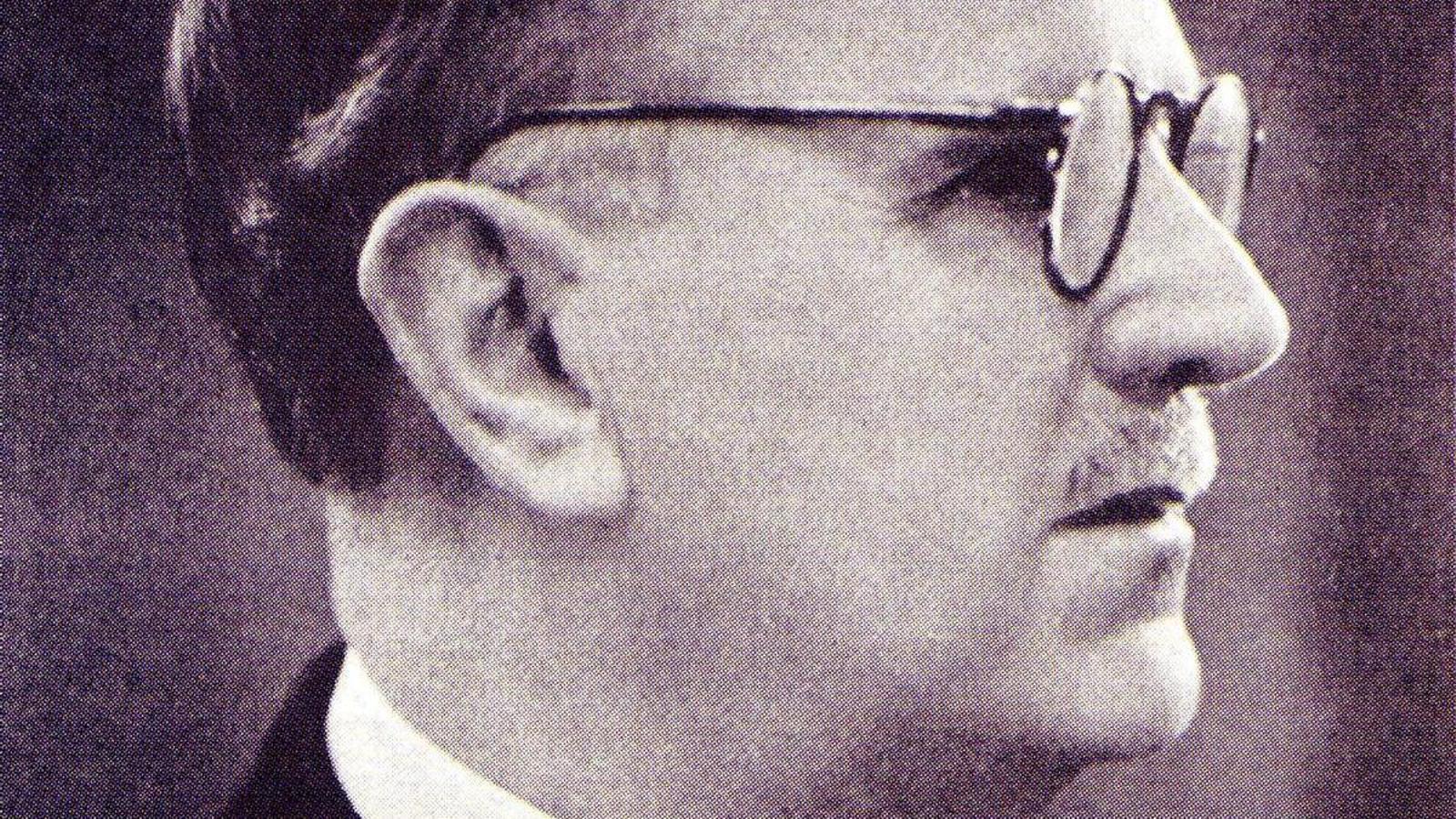
If Javier Anastasio was part of Rafael Escobedo's circle of friends and conceived of his life as an endless party, it is thanks to the wealth built by his grandfather, Ernesto Anastasio Pascual, a key figure in the shipping, oil, and legal worlds. Being born in the Cabanyal neighborhood, in Valencia, provided him with a bond with the sea that would mark his life. When he was twelve years old, the family settled in Barcelona, and once he finished high school, he began studying nautical science. By twenty-three, he was already a ship captain, which allowed him to become, in 1907, a harbor pilot in Barcelona—the youngest in Spain—a stage of his life that would last more than a decade. Since he studied law in parallel with his maritime activity, he soon began teaching maritime law at the Official Nautical School of Barcelona, of which he was appointed professor in 1914.
One of his jobs as a legal advisor to shipping companies proved providential, because having the Compañía Valenciana de Vapores Correos de África as a client, he struck up a good friendship with its owner, José Juan Dómine. The latter, impressed by his capabilities, did not take long to propose that he be part of his projects, and the main one was to establish a large coastal shipping company that would allow the sector to scale up. This is how Trasmediterránea was born in 1916. In addition to Anastasio and Dómine, Joaquín María Tintoré Punyed and Vicente Ferrer Peset were involved in the founding of the company, but not Joan March Ordinas, as is often said. The reality is that, for the Majorcan magnate, Trasmediterránea seemed like an interesting project from the very beginning, so he invested resources in buying shares of the firm until he managed to become its owner a few years later.
The next major project of the Anastasio-Dómine tandem was the creation of a shipyard at the port of Valencia, which they christened as Unión Naval de Levante (UNL). Anastasio himself was appointed president, a position he held until his death. For the incorporation of the company in 1924, they had the support of the Germans from Krupp, a steel industry with great prestige in the manufacture of weapons. Spain's condition of neutrality during the First World War was a significant factor for the Germans to decide to partner with UNL. Later, in the midst of the monopolist fever of the Primo de Rivera government, the management of the oil monopoly was put out to tender, a contest in which a pool of banks that counted on the participation of Anastasio and Dómine prevailed. This was the birth of Campsa (1927), which had Dómine as its first president and Anastasio as general manager. The business curriculum of our protagonist is almost endless, because, in addition to everything we have seen, he also directed, between 1932 and 1967, the insurance company Unión y el Fénix, one of the largest in the national landscape.
Proof of the crucial importance of Anastasio in the shipping sector is that some experts consider him the most important civilian mariner in Spain of the last two centuries. Furthermore, between 1955 and 1980, a large cargo ship owned by Trasmediterránea and built by UNL sailed the seas under the name Ernesto Anastasio.
