Plants that can poison you on a hike
The innocent appearance of many plants hides substances capable of causing serious poisonings in people and animals

-
CAT -
CAST
During the summer, thousands of people go out to enjoy nature, from walks in forests or along a river to excursions in some of the country's natural parks. And yet, although many, being prepared, might put a small first-aid kit with mosquito repellent, disinfectant, or gauze in our backpack to deal with small unforeseen events, few think about the much less obvious risk that lies behind such a common and seemingly harmless gesture as picking a bunch of wildflowers or tasting some berries, which in some cases can end up in the emergency room.
“We have a very romanticized view of nature. There is the idea that everything natural is harmless, and that is not the case. In fact, some of the most toxic substances that exist on Earth have natural origins, such as botulinum toxin,” explains Eva Castells, a researcher at CREAF and coordinator of the Toxicology Unit at the Faculty of Veterinary Medicine of the Autonomous University of Barcelona (UAB).
Numerous plants grow in Catalonia that contain toxic substances capable of affecting both people and animals. Some are native species; others, like the Cape ragwort (Senecio inaequidens), an invasive plant from South Africa that has colonized regions such as Cerdanya and Ripollès, are spreading across the territory and represent an increasingly important problem for livestock.

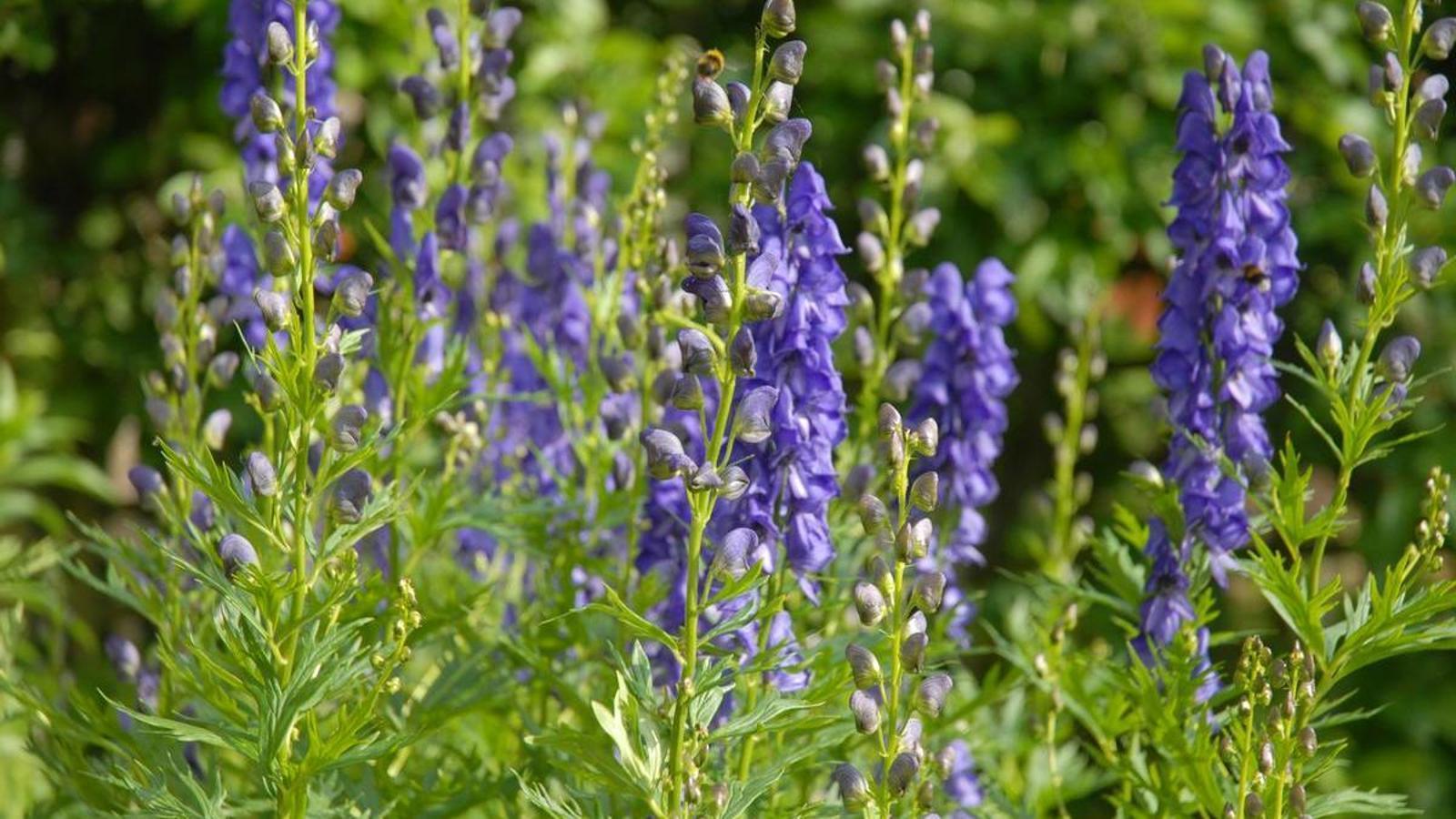
Probably, the most feared is the blue monkshood or wolfsbane (Aconitum napellus), considered the most poisonous in Europe. Before flowering, it strongly resembles the "coscoll" (Molopospermum peloponnesiacum), an edible plant from the apiaceae family highly valued in salads. “Plant poisonings are not as frequent as those caused by drugs or cleaning products, but when they occur, they can be very serious and even fatal,” warns Castells. Furthermore, toxicity does not depend solely on the plant, but also on the dose. The same substance can be beneficial in low concentrations and become toxic when it accumulates. “Sometimes we pick a plant because we know it is medicinal, but we are unaware of the concentration of its active compounds,” adds the researcher. Additionally, the effects also vary depending on each person's sensitivity.
Mistakes, more common than they seem
Although there are no official records of plant poisonings in Catalonia or Spain, some cases are notable for their severity. Three summers ago, for example, a hiker accidentally ingested blue wolfsbane in the Vall de Núria and had to be transferred in a very serious condition to Vall d'Hebron Hospital. When the GRAF located him, he had difficulty moving, a very low pulse, and bluish extremities. Wolfsbane is not the only species that can be confused. The false hellebore (Veratrum album), before flowering, resembles yellow gentian (Gentiana lutea), a plant used to make vermouth and in traditional remedies. Dwarf elder (Sambucus ebulus) can also be confused with elderflower (Sambucus nigra), highly valued in popular medicine, although the former is toxic.
In infants, especially those under 5 years old, poisonings are much more frequent. In fact, they represent 85% of cases and the symptoms, Castelles points out, can be more severe, since for the same amount of ingested substance the resulting dose is higher given that the weight of infants is lower. "We must teach children to distinguish edible plants and fruits from those that are not, or simply prevent them from putting plants in their mouths," recalls this researcher.
“One day we suspected that my young daughter had eaten the fruit of the melia (Melia azedarach), which is like a small berry. We called the poison control emergency phone number. There they told us to take her to the hospital as a precaution. We went, but in the end, nothing had to be done because she was not feeling unwell. They did not give her activated charcoal because it only works if ingested quickly, within the first 30 minutes or so. And she had already ingested it hours ago,” recalls Josep Padullés, a Ramón y Cajal researcher at the Institute of Botany of Barcelona (IBB-CSIC-CMCNB). A typical confusion for children is picking fruits from the buckthorn, which are poisonous, thinking they are blackberries, as both ripen at the same time and share the same habitat.
Although most poisonings occur through ingestion, some also occur through simple skin contact. The nettle is the best-known example, but not the only one. Several plants secrete a very irritating whitish latex that can cause skin lesions. “This is one more reason not to pick plants or flowers when we go to the countryside,” recalls Padullés.
Why are plants toxic?
Toxic substances are part of what botanists call secondary metabolism in plants. Beyond defending themselves from herbivores or pests, these compounds also help them relate to other organisms and protect themselves from environmental factors, such as ultraviolet radiation or drought. “The same substance can fulfill very diverse functions,” explains Castells.
And, as often happens in nature, what is lethal for one species can be essential for another. Hemlock, which was used to execute Socrates, is extremely toxic to humans. In contrast, there is a moth, Agonopterix alstroemeriana,that feeds exclusively on it without suffering any ill effects. A reminder that nature is neither good nor bad: it has simply evolved to survive, and often the difference between a remedy and a toxin is not just the dose, but ignorance. And in the mountains, in the forest, ignorance can be as dangerous as poison.
The seven most toxic plants in Catalonia

It is one of the plants that cause more serious poisonings, usually due to the intentional consumption of leaves or seeds as a drug of abuse or for suicidal purposes. It can be fatal. It has small seeds that can be mixed with millet, buckwheat, or sorghum grain and cause food poisoning in people and farm animals.
- Curiosity: Atropine, the plant's active ingredient, is an alkaloid that is used as a drug to treat poisoning by organophosphate pesticides. A variant of atropine is scopolamine or burundanga, which is related to intentional poisonings or chemical submission.
- Where does it live? It has a wide distribution throughout the territory, mainly in ruderal grasslands and low-altitude cultivated lands. Very abundant.
The majority of intoxications occur due to accidental ingestion. It belongs to the apiaceae family and when the plant is young it can be mistaken for edible plants such as parsley or wild carrot. Cases of intoxication are serious and, although not very frequent, can cause death.
- Curiosity: In Ancient Greece it was used as a poison to execute politicians and prisoners. It is the plant that was used to execute Socrates in 399 BC. Later, during the Middle Ages and the Modern era, it was used as a medicinal plant, but this use was eventually abandoned due to its danger.
- Where does it live? It has a wide distribution in Catalonia. It grows in nitrophilous grasslands and is frequently found on riverbeds. Quite abundant.
Poisonings normally occur as a result of ingestion due to confusion with wild celery (Apium graveolens) or dandelion (Taraxacum officinale). In contact with the skin, it can cause local anesthesia. The clinical picture begins a few minutes after ingestion. It is an infrequent but very serious poisoning that can lead to death.
- Curiosity: The blue tora produces very beautiful lilac flowers that do not appear to be toxic. In 2023, a serious poisoning with blue tora occurred in the Pyrenees, just after the Federation of Excursionist Entities of Catalonia, with the collaboration of Vall d'Hebron Hospital, had carried out an informative campaign on the toxicity of this plant.
- Where does it live? Pastures and meadows of the alpine regions. In Catalonia it is found in the Pyrenees. Quite abundant. It flowers in summer.
Poisoning occurs accidentally through consumption of the fruit, usually due to confusion with other edible species such as blackberries (both plants coexist in the same habitat and fruit at the same time). Ingesting five berries (two or three in children) already causes neurological symptoms requiring hospitalization. Poisonings are serious and fatal cases have been described in both children and adults.
- Curiosity: Rhododendron toxins can accumulate in animals and cause indirect poisoning. Cases of poisoning have been described from snails that were on the rhododendron or from consuming goat's milk from animals that had consumed it.
- Where does it live? Widespread distribution throughout Catalonia in hedgerow habitats. Very abundant. Fruits from June to September.
It can cause photosensitivity and the appearance of skin symptoms after high exposure to the plant when exposed to the sun. In very rare cases, second-degree burns have occurred. Intoxications also occur due to interactions with medications.
- Curiosity: It is widely used as a medicinal plant for its anti-inflammatory and antidepressant effects. Hypericin is responsible for the red color of St. John's wort oil, also known as cop oil, a natural remedy made with macerated flowers, after it has rested for 40 days in sun and dew.
- Where does it live? Widely distributed in Catalonia mainly in grasslands, meadows, and sedge marshes. It flowers from April to September.
The whole plant is toxic, including leaves and fruits. It causes very serious poisonings, usually due to intentional exposure, and are sometimes fatal. It is one of the species that cause the most plant mortality in Europe along with colchicum.
- Curiosity: Taxol is an antitumoral agent used for the treatment of some types of cancer that was initially identified and extracted from the bark of a species of yew (Taxus brevifolia).
- Where does it live? Wide geographic distribution in Europe. It grows in shady forests. In Catalonia it is scarce.
- A few minutes after ingestion, a gastrointestinal effect occurs, and after a few hours or even weeks, it can induce multi-organ failure which can be fatal. Several serious and even fatal poisonings have been described in both children and adults. Some occur by confusing colchicum with wild garlic (Allium ursinum). In fact, it is the plant that has caused the most mortality in Switzerland in recent years.
- Where does it live? Alpine habitats. In Catalonia it is mainly found in the Pyrenees in wet meadows and stream banks on fertile soils. Not abundant.
