Winegrowers have the right to earn a living

-
CAT -
CAST
Laws are debated and approved to be applied. It makes no sense to publish them only for them to become a dead letter. The Food Chain Law, which came into force in January 2014, was reformed in 2021 in order to restrict abusive commercial practices. The text establishes that the purchase price set in the contract must always cover the effective production cost of the primary producer, in this case the farmer or the livestock breeder. It is expressly prohibited to buy below what it has cost to produce the food. It is a standard that the countryside demanded for a long time to be applied.
In recent months, the costs of agricultural diesel (B) and fertilizers have skyrocketed by double-digit percentages. This has led the administration to implement compensation measures to avoid the suffocation of the countryside. These are factors that already make it difficult for producers to not only cover their costs but also obtain a legitimate margin or profit, like the distributors. If on top of all this, purchase prices lower than the legal minimums are added, a perverse effect is produced. The sector has begun to mobilize to denounce these situations in the primary sector and a tractor protest is already planned in Barcelona for the 14th, which recalls the one experienced in February 2024.
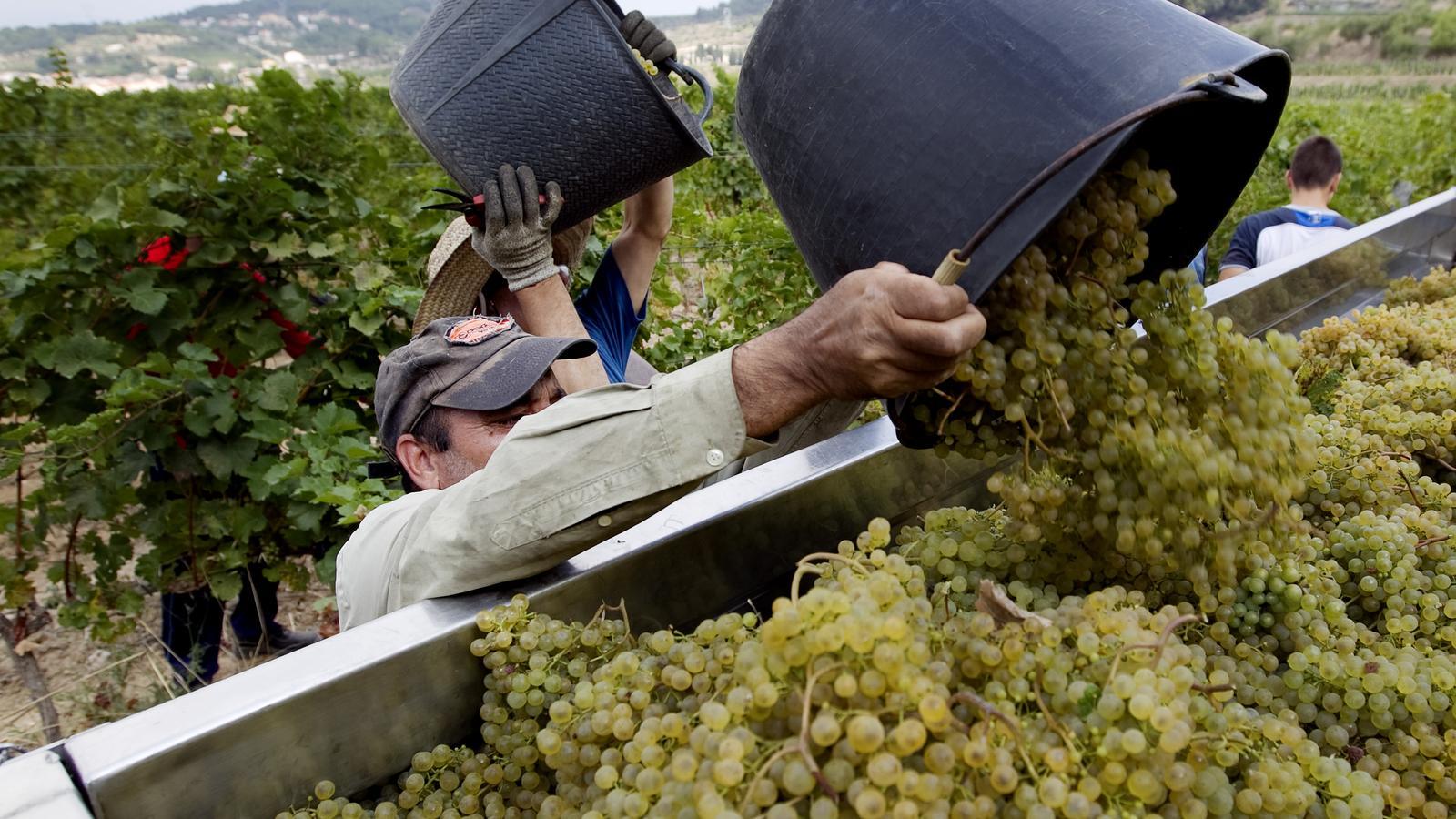
Therefore, one must applaud, in this context and during a harvest in which the price of grapes has been a central axis, the initiative of the Ministry of Agriculture of the Generalitat to investigate a total of 50 grape purchase contracts susceptible to infringing the Food Chain Law. This action by the department led by Òscar Ordeig began last August following complaints from farmers, organizations, or other professionals in the sector, and, in some cases, ex officio. It is a matter of verifying whether the contracts have paid producers below 53 to 56 cents per kilo, which is the reference price established by the Catalan Wine Institute (Incavi). Investigations into the wine sector are the responsibility of CadeCAT, the unit dependent on Agriculture.
In August, the main winegrowers' organizations in the country formed a united front against the "abusive" purchase prices expected for this year's harvest. In a statement, these organizations, including Unió de Pagesos, denounced that the compensation planned by the sector from large wineries and other processors was around 30 cents per kilo of grapes, an amount that is almost half the reference production cost of between 0.53 and 0.56 euros per kilo established by Incavi. But the complainants went further. In this regard, they warned that some large buyers were considering formulas to disguise the real price received by the producer. One of them would consist of the fact that, in some cases, only 70% of the grapes would be paid at the announced price, while the remaining 30% could be paid at 12 cents per kilo.
As established by the reform of the food chain law, the autonomous communities also have inspection and sanctioning powers in this matter, and the Generalitat has decided to exercise them. Producers have every right to earn a legitimate profit, to earn a living, like the distributors and other agents in the chain, who are obliged to comply with the law.
