An Icelandic find

-
CAT -
CAST
BadalonaIn times when I struggle to find good reads (good in the sense that they carry me away), there is a strategy that rarely fails. Try going to a trusted bookstore (in my case, Mitja Mosca, in Badalona) and, without rushing, stroll near the books while you chat with the bookseller, pick one up just because you are attracted to its cover, read the first page of another, let yourself be carried away by absurd intuitions rather than logical reasons (well-known author, respected publisher).
That was how I took home Dear Helga, a novel that the Icelander Bergsveinn Birgisson wrote in 2010 and which has now been published in English. Along with the author, I also discovered the Lleida-based publisher Eclecta and the translator Macià Riutort. A trio of aces.
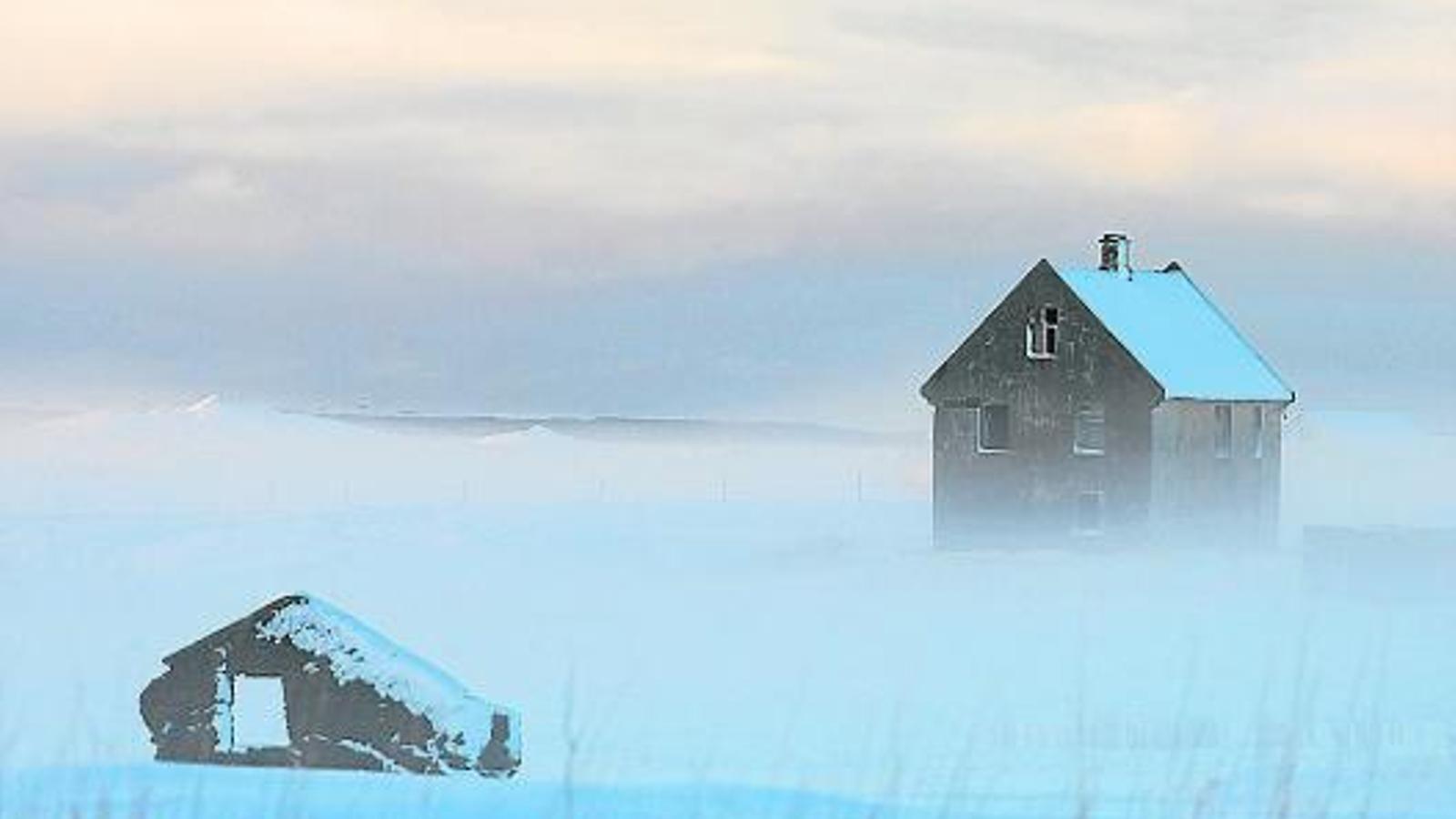
On the back cover, the editors speak of a contemporary classic and an impressive work of art. After reading it, I agree with them, but it was not these forceful words that made me choose this book among dozens. It was a simple and elegant cover, the attraction to a literature and a country I am unfamiliar with, and the first sentence of the novel's description: from a remote valley in Iceland, an old farmer writes to the woman he loved all his life. At that moment, I did not want convoluted plots, literary experiments, or trendy topics. I wanted someone to tell me a good story well.
Dear Helga is a poetic, ardent, and painful love story, but it is also a portrait of a place in the world and a way of life, a great reflection on fidelity (in love, to oneself, to the country), a well-argued critique of progress, and an exquisite taste of Icelandic tradition and literature. It is not for nothing that it was written by a poet.
Macià Riutort's translation, beyond being harmonious and fluid, is packed with supplementary information about the folktales and poems cited, about the fantastic characters of Icelandic culture, or about the specific farming terms used by the farmer protagonist.
In case you are not convinced yet, a taste: "The vision of your naked body illuminated by the sun's rays was as refreshing to the eye as that of a flower on the bare ledge of a cliff. Truly, I know of nothing that can compare to this vision. The only thing that comes to my mind is when my Farmall tractor arrived: tearing off the packaging and the cardboard that protected the engine and seeing that radiant magnificence that was to change my life completely. Look at my poverty of spirit, comparing you, dear Helga, all young and naked, with a tractor! I know I am besmirching your beauty by comparing you to things of this world. You were an impressive tractor."
