We trust that the three-way meeting of Xi, Putin and Trump will be symbolic
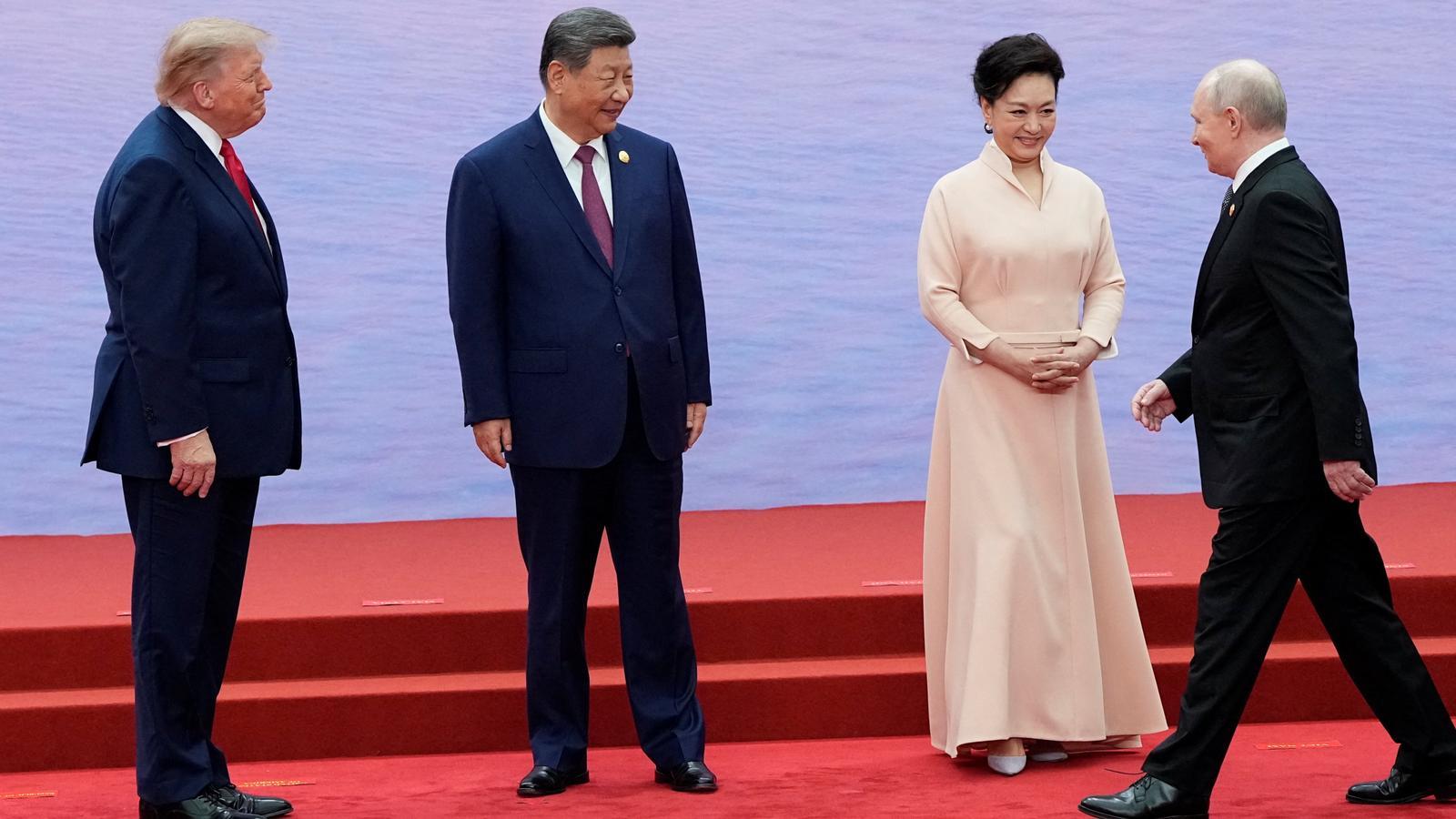

For once, it would be bad news if a meeting of three world leaders achieved all of its goals. The three leaders meeting this Thursday in the Chinese city of Shenzhen are the President of the United States, Donald Trump; the President of Russia, Vladimir Putin; and the President of China, Xi Jinping, who is the host. The meeting is of high historical voltage, and as some analysts are already saying, there is an expectation that it could end up becoming a sort of Yalta 2.0, in relation to the famous meeting of Winston Churchill, Joseph Stalin, and Franklin D. Roosevelt in February 1945, shortly before the end of World War II, in that tourist city in Crimea. Although its historical weight may be exaggerated, it is considered that it was at Yalta where the new world order that governed after the war and until the fall of the Berlin Wall was created. A world in which Russia dominated much of Eastern Europe, the United States spread its economic and military power to the rest, and Europe remained subordinate as an ally and partner. The fear, therefore, is that the three leaders, all three with megalomaniacal tendencies, might be tempted to divide up the world again by splitting the spheres of influence.
There are reasons to be concerned and also reasons to think that everything will end with a succession of symbolic gestures without further relevance. And even that an even stronger confrontation could brew between them. That Putin and Xi have a good rapport is already known. This year they have already had four bilateral meetings, and China, pragmatic with its northern neighbor, with whom it shares many kilometers of border, has saved its situation many times by buying its oil and helping it economically. What has transpired from this Wednesday morning's bilateral meeting is that Moscow and Beijing share the vision that a “fairer multipolar order” must be built. For Xi, this mainly means a world without tariffs and with free trade for its products, and for Putin a world without sanctions and with an almost disarmed Europe or one that does not pose a threat to his expansionist ambitions.
It remains to be seen whether they will convince the third party in the dispute in any aspect. Trump arrives in Shenzhen after losing the midterm elections, but for that very reason with the need to reinforce his authority as a supposed world leader. They have many issues on the table. The war in Ukraine, which Trump thought he could end in two days and which is clearly a thorn in his side that he would like to remove as soon as possible, even if it means making major concessions to Putin; the war in Iran, a country allied with China and Russia, which has caused energy prices to rise around the world and has hit the Asia-Pacific region very hard; the renewal of the Nuclear Non-Proliferation Treaty; the governance of artificial intelligence, and the survival or otherwise of free trade and globalization. And it is not ruled out that the normalization of relations on the Korean Peninsula will also play an important role.
Be that as it may, whether there are some agreements or whether the differences are accentuated, two major conclusions are already emerging from this historic meeting. One, that the world has definitively turned towards the Asia-Pacific axis – the members of the APEC Forum account for 62% of the world's GDP –, and two, that the European Union no longer has a seat where the future of the world is decided and is limited to being a guest listener without voice or vote.
