A war of offers shakes the Italian banking sector
The country aims to create the first great pan-European entity while an internal earthquake occurs under Meloni's watchful eye

-
CAT -
CAST
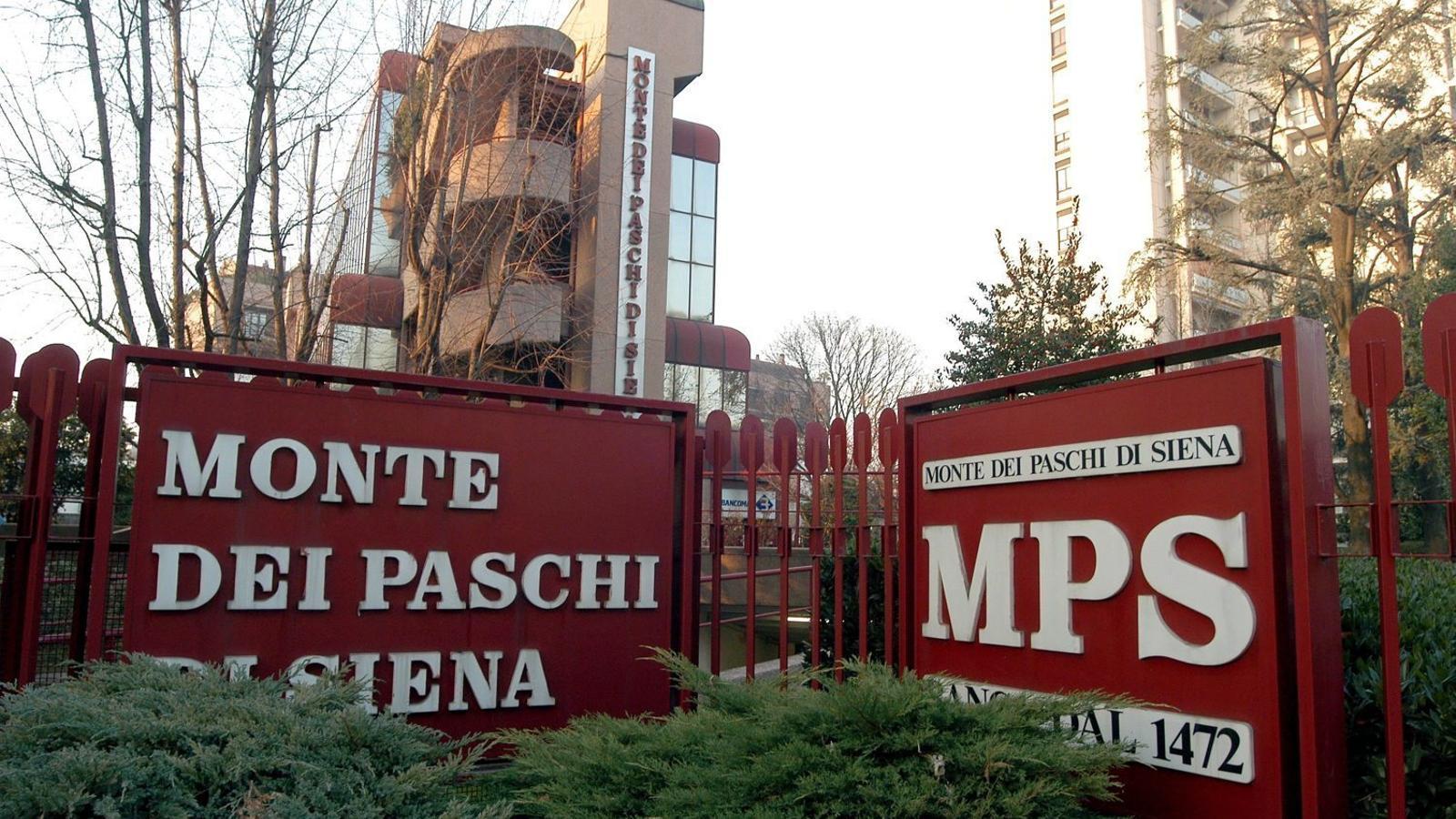
BarcelonaThe Italian banking sector is experiencing a real earthquake that could completely change the current landscape. The latest plot twist was protagonized by Monte dei Paschi di Siena (MPS), the world's oldest bank founded in 1472, which last week presented an offer of 34 billion euros to acquire the Italian entities Banca Popolare di Milano (BPM) and Banca Generali. This move is the latest chapter in a war of hostile bids in which several entities are battling to eliminate competitors and strengthen their position within a national market where growth is increasingly difficult. Amidst these tug-of-wars, Italy also aspires to lead the chapter of cross-border mergers, creating the first pan-European banking giant. All this, under the watchful eye of Giorgia Meloni's government, with a key role in some of these operations.
Just as in other countries, banking concentration has not gone unnoticed in Italy. For instance, Monte dei Paschi itself completed the acquisition of Mediobanca in September last year, an operation that allowed the Siena bank to strengthen its position in the national market and, at the same time, fully enter the insurance business. At the time of the purchase, Mediobanca was the main shareholder of the insurance group Generali with a 13.22% stake in the capital, the great totem of the sector in the transalpine country.
But the great wave of bids and the war in the sector broke out shortly before the start of summer. In early June, it became known that Monte dei Paschi had initiated talks to merge with BPM, an entity with a strong presence in central and northern Italy. The move would consolidate MPS's presence – currently the third largest entity in the country – in the northern half of the territory, and would threaten the leadership of Intesa Sanpaolo, Italy's largest banking group by assets, customers, and branches. The reaction was immediate, as within a few days Intesa presented its offer to swallow Monte dei Paschi, an operation to impose its dominance that would lead to the disappearance of the mythical Siena group. Faced with this threat, Monte dei Paschi decided to double down and pursue the integration not only of BPM, but also of Banca Generali, the private banking subsidiary of the insurer Generali.
By now, the shareholders of the entities involved are analyzing hostile offers while eyeing another Italian banking giant, Unicredit. The group led by banker Andrea Orcel is Italy's second-largest bank by asset value, precisely behind Intesa. Unicredit's obsession lies elsewhere, with an interest clearly focused on growing beyond national borders. The entity aims to increase its stake in the German bank Commerzbank, thereby originating the first major European banking group and inaugurating the chapter of cross-border mergers that the European Commission so desires, intent on creating "continental champions" that can compete with the large Chinese and American groups.
Concentration margin
Sources close to the Italian banking sector contacted by ARA see two clearly differentiated strategies in this context. On the one hand, Intesa and Monte dei Paschi are battling to dominate the national network and strengthen their leadership in the insurance business. Generali, the leading insurer in the country and the asset that arouses the most interest in the operation, plays a key role in this regard. In fact, Intesa's offer for Monte dei Paschi includes a binding agreement with a third Italian financial company – Unipol – for it to absorb MPS's banking business. In this way, Intesa would circumvent competition regulation and would keep the assets of the former Mediobanca, which holds the key stake in Generali, separating a relevant part of the purely banking business.
While Unicredit does not forget the Italian market, its objective, on the other hand, is to become a banking giant with a presence in Italy and Germany – especially in the SME sector, where Commerzbank maintains strong activity – as well as Austria and other parts of Central Europe. "If the operations are completed and the decision-making centers are maintained, Italy will have two European giants with very different strategies," point out the consulted sources. Despite the concentration, the interviewed voices agree in pointing out that the transactions would fall far short of monopolizing the sector, with room for growth in areas such as personalized advice or wealth management.
The flood of offers in the national market is mainly due to a reduction in margins in traditional banking activity. Despite rising interest rates that favor business, the banking concentration process that Italy has experienced since the last financial crisis has been less intense compared to other economies. The governor of the Italian central bank, Fabio Panetta, usually recalls a figure to justify the path the sector can still take. The five largest entities in the country group together a lower volume of assets than their German, French, and Spanish counterparts. According to data from the European Central Bank (ECB), Italy had a total of 142 supervised financial institutions in 2025, a figure that in Spain is almost half, up to 73. In this regard, Panetta – who often highlights the "solidity" of the Italian banking system – considers that consolidation can "strengthen" the sector as a whole.
The role of Meloni and Germany
In this entire scenario, the role of the government led by Giorgia Meloni is not insignificant. Rome still holds a stake of around 5% in Monte dei Paschi after it was rescued in 2016when a private capital increase that the entity needed to survive failed. While voices from the executive have expressed their willingness to divest this stake – the Minister of Economy, Giancarlo Giorgetti, said that the role of a public shareholder in banks "had come to an end" – the Italian government also does not want this to happen at any cost.
Monte dei Paschi is an entity with deep roots in the territory, and the disappearance of its brand would mean losing a national symbol. Despite maintaining a neutral stance, Meloni stated last week the following words: "I hope Monte dei Paschi is not dismantled, losing its name and its identity," she said, referring to Intesa's takeover bid.
Beyond the Alps, Friedrich Merz's German government also expressed its rejection of the Italian banking group's moves, in this case the attempt by Unicredit to take over Commerzbank. Although tensions have eased and both entities are scheduled to meet this September with representatives of the German executive, reservations remain, partly due to the symbolic blow it would represent for Berlin if a company from Southern Europe acquired one from the center. As one of the consulted sources rightly states, "Germans like Italians, but they don't want them too close either."
