Brussels foresees a "very fought" vote in the European Parliament to ratify the Mercosur agreement
The European Commission says that the provisional text in force would not fall immediately if the Eurochamber ends up positioning itself against it

-
CAT -
CAST
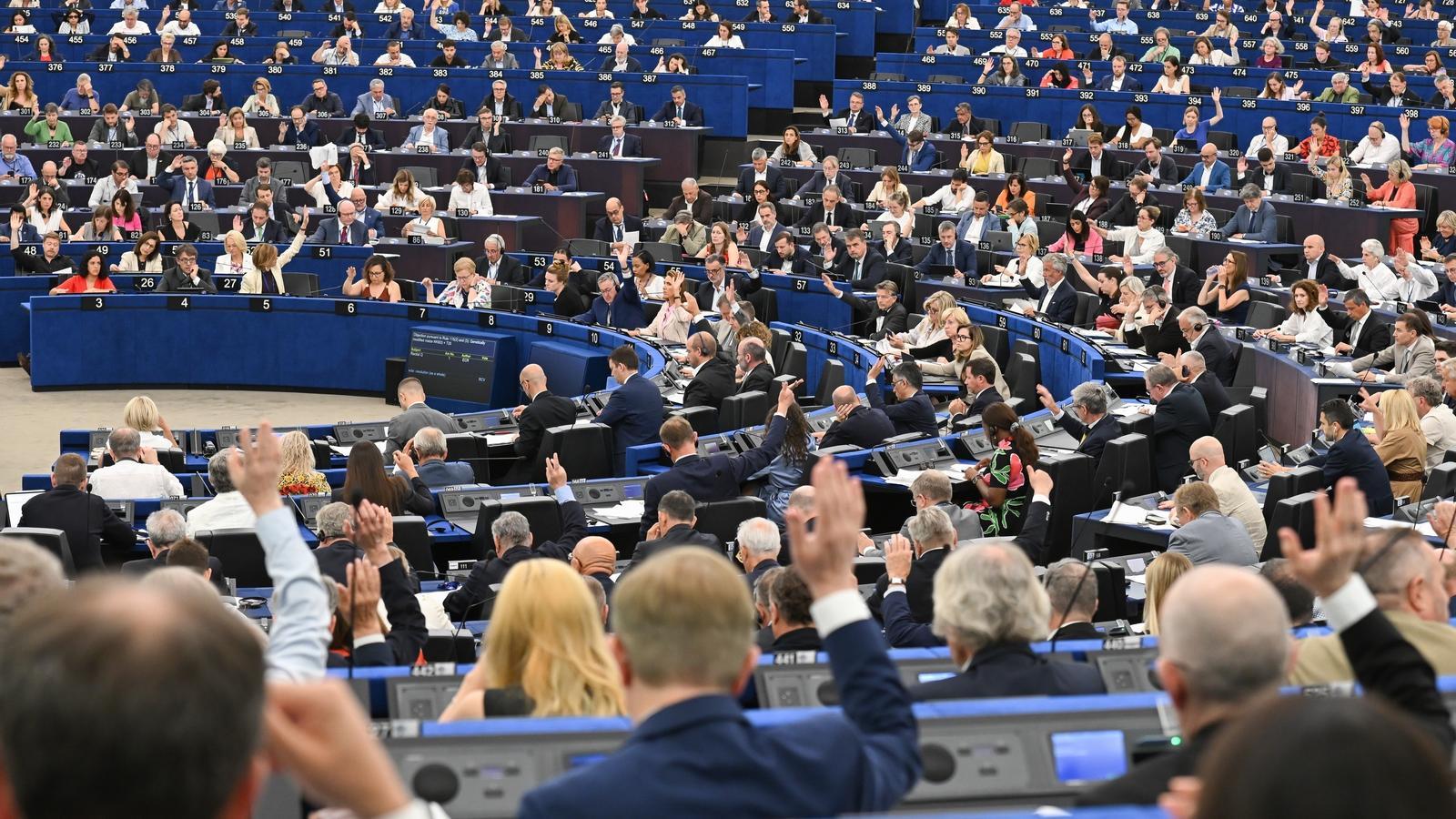
BarcelonaThe European Commission anticipates that the upcoming vote in the European Parliament to ratify the trade agreement between the European Union and Mercosur (comprised of Argentina, Brazil, Uruguay, and Paraguay) will be "hard-fought". While there is still no defined date for the European Parliament to issue its position – it is estimated that it will take at least a year, pending a judicial resolution from the Court of Justice of the European Union–, sources from the community executive highlight the strong "political burden" of the debate and point out that there will be "many factors" that could enter into the equation.
In any case, the same sources indicate that a hypothetical vote against the European Parliament would not cause the provisional text currently in force to lapse. It should be remembered that the European Commission announced last February the temporary and immediate application of the trade agreement, after the four South American Parliaments and a majority of EU countries gave it the green light. In the eyes of Brussels, it is expected that the provisional application of the pact will provide enough arguments to demonstrate that the agreement "works" and that the complaints from sectors such as agriculture and livestock have been addressed. Despite everything, a vote against by a majority of MEPs would also create a complex situation that would require "some political action" on the part of the European Commission and the member states as a whole, as maintained by the community sources.
The materialization of this supposed scenario would leave European institutions in practically uncharted territory, as the formula for advancing such agreements has been based on understanding between the co-legislators. Only one similar case occurred at the beginning of the 2010s, when the European Union was considering signing the Anti-Counterfeiting Trade Agreement (ACTA, by its acronym in English). Then, and despite the efforts of the European Commission – together with other countries such as the US and Australia – to present a text that would satisfy the member states, the European Parliament rejected it due to the numerous interpretations that could be drawn from it. With the opposing position of the European Parliament and also a good part of the countries, Brussels definitively set the text aside.
Message to the agricultural sector
During the negotiations of the pact and also after the implementation of the provisional agreement, the agricultural and livestock sector has warned that the opening of new markets puts its economic viability at risk, in addition to denouncing "unfair competition" and the imposition of sanitary controls in third countries that they consider "ineffective". From Brussels, however, they maintain that the safeguards included in the agreement –those approved by the European Parliament– are adequate to avoid imbalances in the community markets.
According to sources from the European Commission, the executive has not detected, for now, the need to activate any mechanism to deal with unusual deviations in prices and production. As the agreement stipulates, Brussels will open an investigation into a specific product if it observes a drop in import prices of more than 5% and an increase in the volume of imports of more than 5%.
At the same time, the Commission maintains that the percentage of food products exempt from tariffs is "very limited", insufficient for prices in the EU to be affected. By way of example, the sources insist that tariff-free quotas for meats such as chicken or beef from Mercosur barely represent 1% of consumption in the European Union as a whole.
In fact, Brussels wants to emphasize the "opportunities" that the agreement offers to exporting companies on the Old Continent, especially those linked to the food sector. According to the latest data updated until July, during the first six months since the provisional application of the agreement, sales of products such as European wines and spirits to Mercosur have increased by 18% compared to the same period last year.
Looking towards Brazil and Argentina
In a context marked in Brazil by the possible return of the far-right at the hands of Flávio Bolsonaro, Brussels does not fear that the election result will influence the development of the agreement. The sources consulted recall that the South American country has already ratified the pact and, therefore, the policies linked to sustainable development and respect for labor rights will continue to be fulfilled.
In the same vein, the Commission recognizes that the attitude of Argentina, presided over by a Javier Milei who has shown harmony with the President of the United States, Donald Trump, is appropriate. "There are differences between his political pronouncements and his actions," point out sources from the European Commission, who see in the Mercosur agreement a framework of great relevance to address policies on labor rights or the environment.
