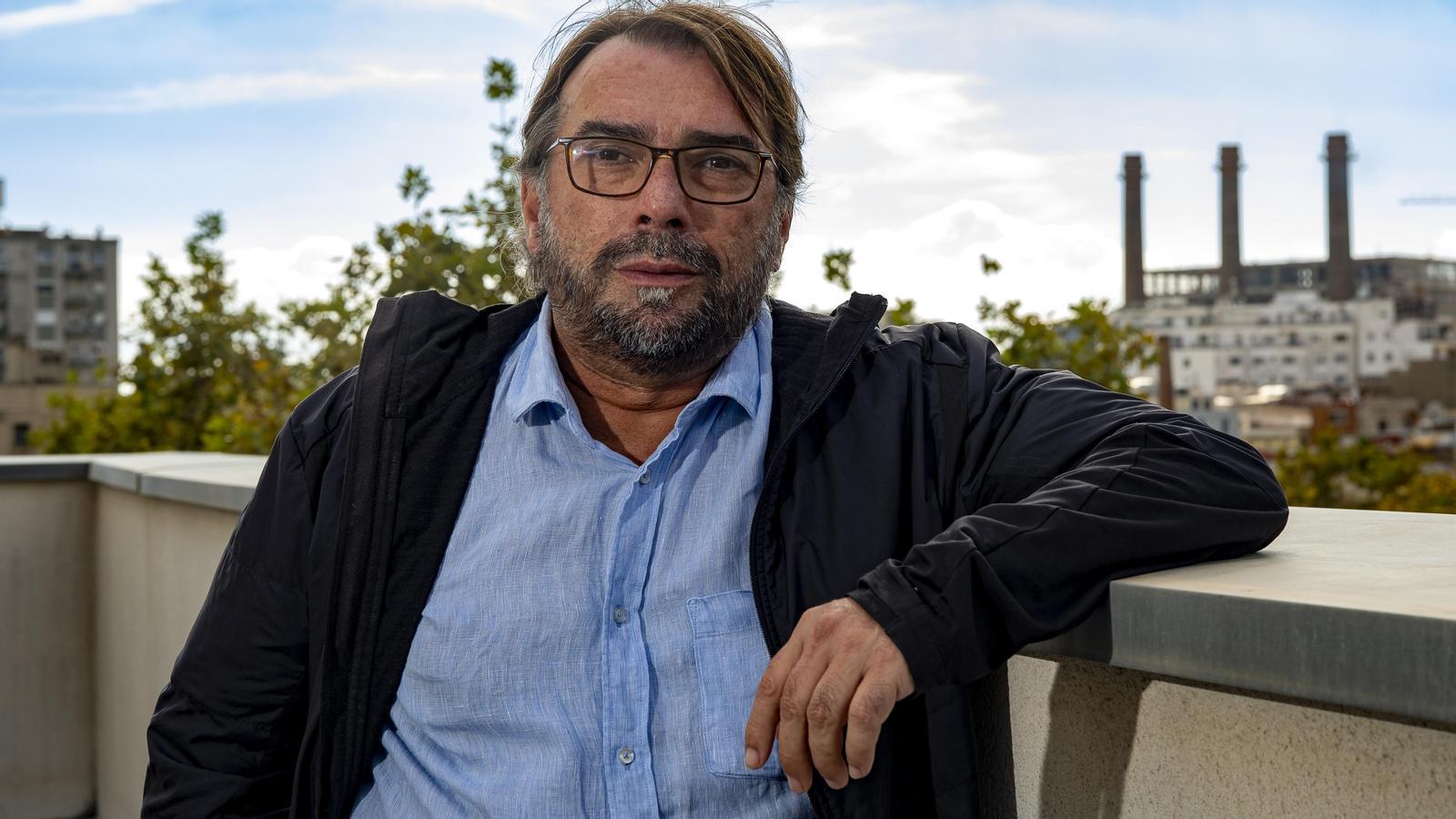
Camil Ros: "The Spanish government is wrong if it does not feel alluded to by the strike"
General Secretary of the UGT of Catalonia

-
CAT -
CAST
BarcelonaIt has been a decade since Camil Ros (Vallromanes, 1972) has been at the head of the UGT of Catalonia. In conversation with ARA, the union leader explains that since he became independent in the center of Girona at 25 years old, he has lived in rented accommodation. At that time, as he says, he earned 175,000 pesetas doing a technical job, and the rent for a two-bedroom apartment cost him 50,000 pesetas a month. "This generational reality is, as of now, unthinkable," laments the union leader.
There hasn't been a major general strike since 2012.
— For a mobilization to be a success, it is key to know how to interpret the moments. Since the strikes of fourteen years ago, there has been no law that goes against workers' rights. At the same time, however, there have been coverages of general strikes like those of March 8th, the one for Palestine, or the country-wide strike of October 3rd. The call has similarities with those made at the beginning of the previous decade, but also with the latest stoppages: the November 11th strike is not strictly against a bill that cuts labor rights, but it is indeed a strike against the government and against the majority as a whole. It is to demand that a response be given to the most important problems currently facing the citizenry, which are housing and purchasing power.
This, however, is a labor demand?
— “Work” and “living” are two inseparable words. It is labor-related. The elements are very clear: wages, purchasing power, housing, and prices. Also pensions, which are a form of wages. Recently, a leader of the employers' association said that there were companies that could not find workers because they could not pay the cost of housing. Therefore, it is a labor issue; it has labor implications.
But, why now? The halt arrives in a complicated political context, at the gates of a campaign.
— We had already been in talks with the Tenants' Union for months, but we were missing the what and the when, as it was an ethereal demand. However, there are situations that, at times, make everything shift. Organizations must know how to adapt to every moment: without Olga's suicide and Maricarmen's eviction, we would surely not be where we are now. These situations are very harsh, and they also have a gender name. In the political sphere, the two housing decrees also failed. Junts could have voted yes like other right-wing parties such as PNV or Coalición Canaria, but it decided to align itself with PP and Vox.
Let's assume the strike is a success, if weeks later the right wing wins, won't the demands be left crippled?
— Well, that will depend on the show of strength we make on the 11th. If it is a success, whoever wins will have to take note of the mobilization. And the strike must also serve to mobilize people, which is the best weapon to ensure the extreme right does not win. I always say that I do not know of any place in the world where the right and the extreme right have governed and people end up living better than before.

If the PP and Vox win, will conflict increase?
— We judge governments according to their policies. And, evidently, if they do everything they say regarding pensions, sick leave, or union rights, there will be mobilization and confrontation. But I find it very hard to imagine a government of PP and Vox. They make people hate each other, and they want those born here to hate those from outside.
A peculiarity of the strike is that the same parties that now govern can try to capitalize on it. Who exactly is this strike against?
— It is against the political majority as a whole, and to put pressure so that the one that emerges from the elections legislates with purchasing power and housing in mind. The Spanish government is mistaken if it does not feel addressed: we have reached this point because not enough has been done over the last few years. And the housing decrees that were being proposed were not the solution either. As the Tenants' Union said, they were a band-aid, which I find to be a very graphic definition.
At what point is the dialogue between social partners currently at?
— Social dialogue, in general, is stalled, although some collective bargaining agreements are being unblocked. Employers' associations are dug in; it seems they are waiting to see if the right wing wins so they won't have to negotiate and so others can implement the cuts for them. This is their game. I would tell the employers' associations not to hide so much behind media microphones and, instead, to go more often to the negotiating tables. I miss the employers' associations that had the capacity to negotiate and take risks. If they continue without raising our wages, in the end, we will not be able to buy their products.
The minimum wage has increased significantly lately.
— Yes, but the current system is experiencing a crisis. Before 2008, the concept of the working poor did not exist. If you had a job, even if it was temporary and precarious, you would make it to the end of the month, just barely, but you would make it. Now, not anymore. Besides, super-rich people have also appeared, a concept that until a few years ago was not even talked about. This is a global problem, not just one of Catalonia or Spain.
