The IMF, on alert for AI: "Without safeguards, the risk may exceed the opportunities"
Georgieva compares large models to a Formula 1 car and holds the developing companies responsible for their control

-
CAT -
CAST
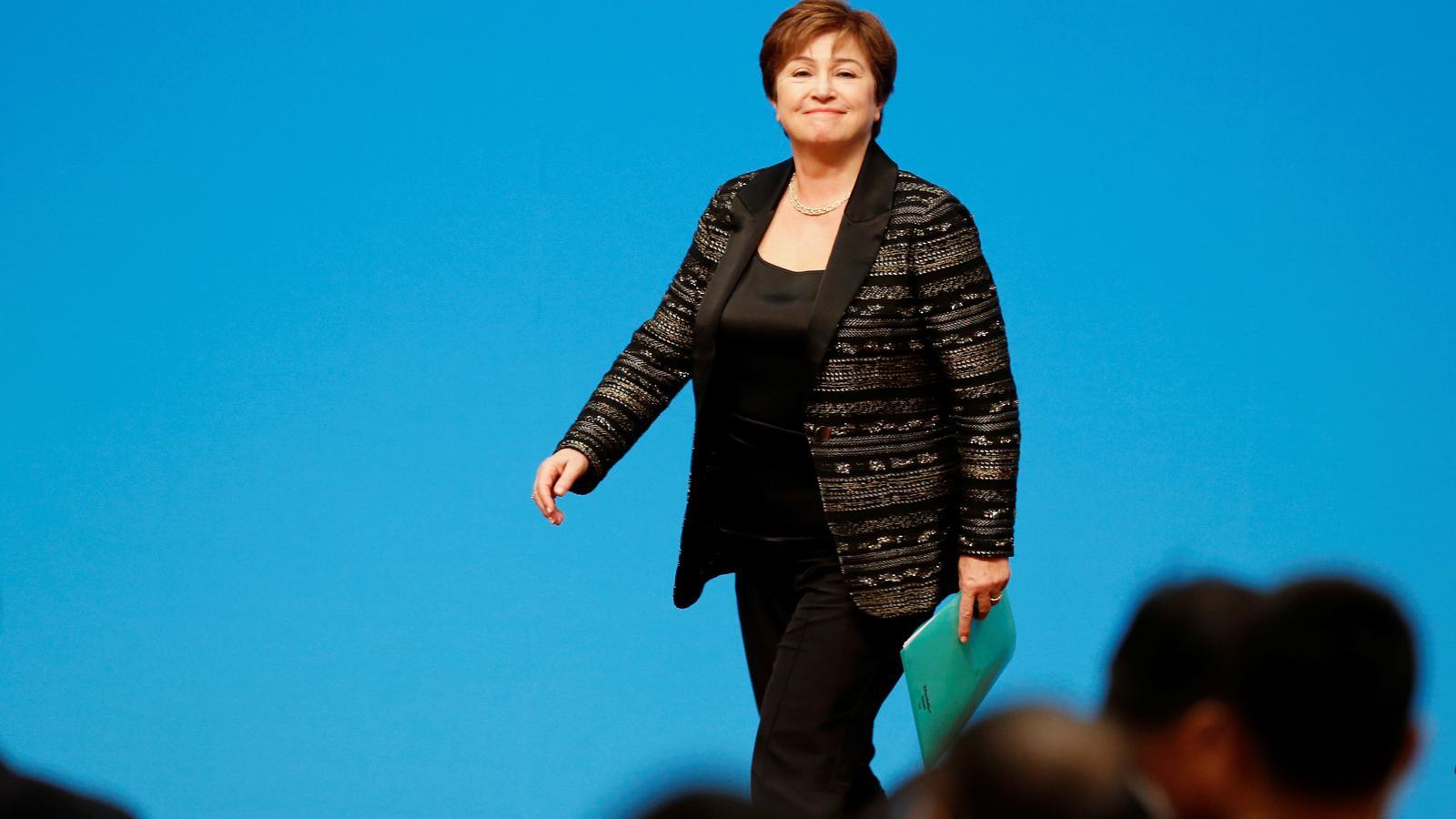
BarcelonaThe main international economic institutions have taken note of the alarms regarding the safety of artificial intelligence that have been unleashed during the summer. The latest to demonstrate this has been the Managing Director of the International Monetary Fund (IMF), Kristalina Georgieva. In a speech during the annual meetings of the monetary institution and the World Bank, which are being held this week in Bangkok, Georgieva called for the regulation and monitoring of the technology by the main industry players. "Without safeguards, the risks may outweigh the opportunities," the director stated.
In a panel discussion in which Jack Clark, co-founder and head of policy at Anthropic –the company behind Claude,now on the verge of one of the biggest IPOs in United States history–, also participated, Georgieva noted that, to ensure the good application of AI, "above all, ethical foundations are needed." "And I am not sure if, as a society, we have them," she added. However, she acknowledged that "productivity increases" linked to artificial intelligence are already beginning to be noticed, although they are not yet being recorded "at a transformative scale."
The Managing Director spoke in line with the latest report World Economic Outlook, published by the IMF itself. In the document, the entity acknowledged that investment in artificial intelligence has "provided momentum to global activity and supported international trade," thanks to massive funding for infrastructure and hardware. However, the International Monetary Fund experts also warned that "it remains to be seen whether this positive demand shock will transform into a positive supply shock in the long term."
AI, a Formula 1
In her speech, Georgieva also discussed the terms under which the industry should regulate itself, and how administrations should monitor it. The problem is the dynamic nature of AI evolution: "How do we put guardrails on a sector that moves so rapidly?" The IMF leader, in this regard, compared large language models to a Formula 1 race. "I have the utmost respect for the industry, I believe it is bringing a great gift to humanity. But if in the middle of the race the car goes off the track and kills people, perhaps the gift is not worth it," she reflected. In this sense, she focused on the responsibility of technology companies, given that "governments cannot regulate something that moves at this speed" because, she says, "they do not know enough about it."
In line with Anthropic's recent strategy, Clark picked up Georgieva's gauntlet and returned it multiplied: "It is worse than you think. It is like a Formula 1 car, at night and without brakes." For the co-founder of Anthropic, before setting regulatory barriers, it is necessary to "establish a common standard" for AI models. And this responsibility, according to the tech giant, lies with the administrations. "We test our systems, we share the test results, all the information, and we do it voluntarily. This should not be voluntary," concluded Clark.
