Jahel Queralt: “The right uses meritocracy to justify inequality”
Jurist

-
CAT -
CAST
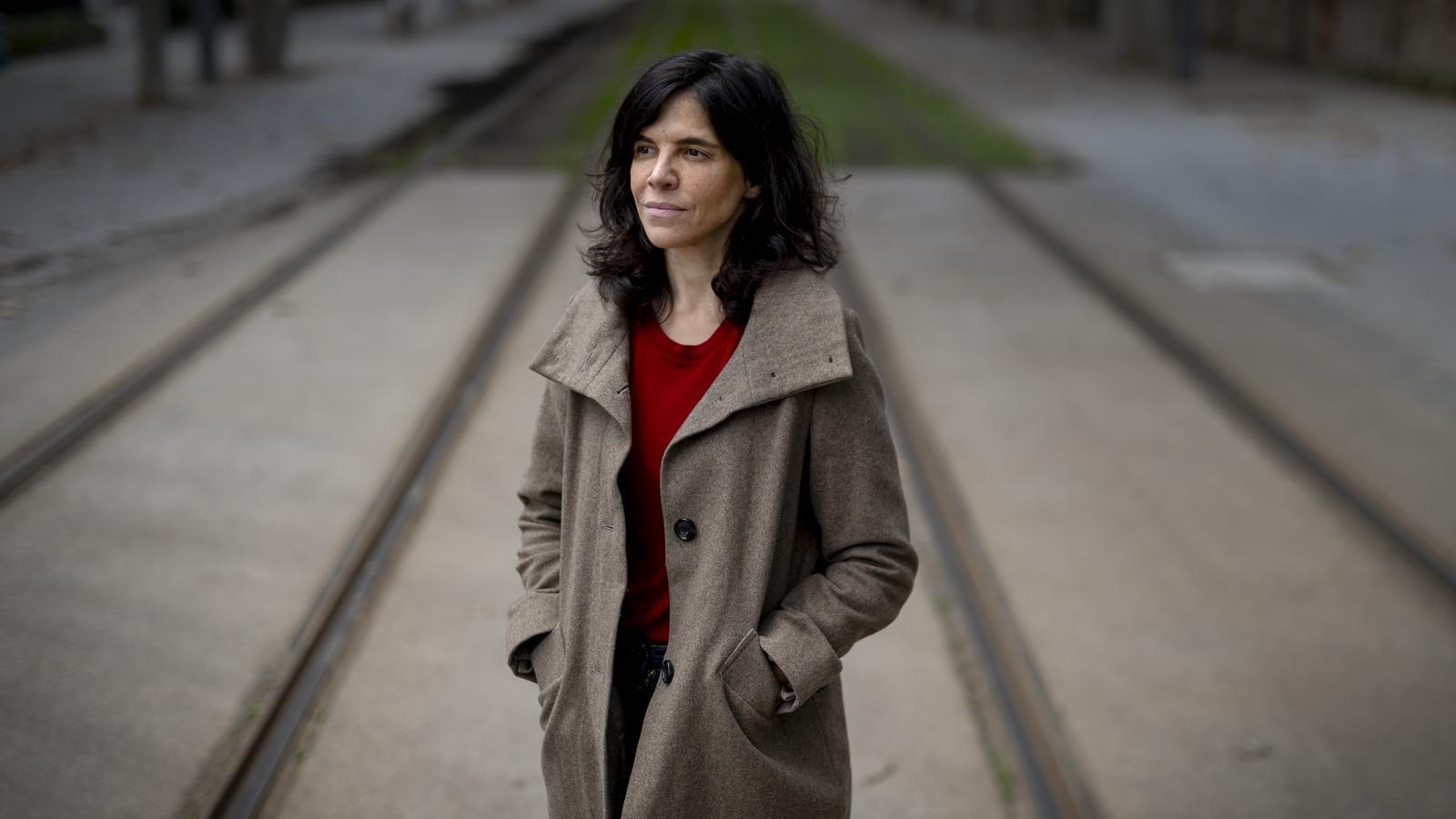
Until recently, she had a photo with her daughter on WhatsApp, but with the publication of the book, she is corresponding with more people who do not know her—for interviews, promotion—and has decided to change it. It is 128 pages titled Nadie merece nada (Quaderns Anagrama) where Jahel Queralt defends and dissects the concept of meritocracy. She, the daughter of an adolescent pregnancy, grew up in a house without electricity or running water, and statistics suggest that as an adult, she should be a low-income person. But she graduated in law, earned a doctorate in political theory, and is a professor at Pompeu Fabra. Far from believing in personal stories of overcoming adversity, she advocates for class consciousness and has specialized in distributive justice.
‘Fucked’. We must start with this word…
— Everyone loves an anecdote.
It explains many things.
— I went to Oxford to meet Jerry Cohen, a very important analytical Marxist, and he took me to the most elitist college: All Souls. There I became aware of the accumulation of privilege, of knowledge, of tradition... that I did not have. And he was so kind that I forgot where I was. In the end, with my precarious self-taught English I said: if you do this in Spain you are fucked (you are fucked).
And you heard people clearing their throats…
— Sometime later, at a conference, someone approached me and said: you are the person who said fucked at All Souls, right? Notice how out of place I was…
Wouldn't that have happened to someone from a good class?
— No, they have something totally antimeritocratic: the intangibles. Everything that has to do with ways of doing things and knowing which doors you have to knock on and how. This largely determines professional success, and it is antimeritocratic and difficult to acquire.
Meritocracy is also affected by which month you are born in.
— CEOs are born in the first months of the year, and so are professional sports players, for example, hockey.
What does this mean?
— When children are young there is a big difference between those born in January or November. The older one is sharper, more physically powerful, and this makes them focus attentions and opportunities. The coach will pay more attention to them, they will play more, etc. That is why it is important to avoid individual stories. If we only look at the individual, we see nothing.
If we look at you, we could say that meritocracy has worked.
— But we would find something different if we look at all my classmates. And there is an interesting thing: Spain is one of the countries with the most educational mobility, where university education has been democratized the most. But there is no social mobility. In other words, middle and lower class people have reached university, but that does not later translate into the workplace.
And why does this happen to us?
— For many reasons, but an important one is that in Spain and Catalonia it remains very important who you know. This is deeply antimeritocratic, because the criteria is not who is the best prepared candidate.
You criticize that the left does not claim meritocracy.
— Before, the ground was well-defined: your surname determined what you could do and what you could not. Now the ground is open, and the right has created a narrative of the ideology of meritocracy. Since we do not live in a caste society and we have meritocratic elements (free education, exams to access the public service...) they can use meritocracy to justify inequality.
How do they do it?
— I have the salary I have because I have worked for it, and when the state comes to say that I have to give it 40%, I will say that I have earned it and that it should not interfere. This serves to maintain the status quo and it is also a balm for the most humble, because it tells them that if they make an effort, they too will be able to live well.
But it's a trap, isn't it?
— In class, I dedicate myself to dismantling the idea that everyone gets what they deserve.
How do you do it?
— With charts, with numbers. If you come from the upper class, you are ten times more likely to end up patenting whatever it may be. Pompeu, for example, is a public university, but a very significant portion of the students comes from charter and private schools. What is happening to us?
That is exactly what I ask: what is happening to us?
— There is an economist I love, Raj Chetty, who tracked many good poor students in the United States to try to see at what point the chain breaks. There are several bottleneck moments where the poor do not get through. And it is important to look at the numbers, identify them to be able to think about policies to correct it. Here, a relevant bottleneck is who goes to university.
Why do the privileged find it so hard to be aware of their privileges?
— Because we live in a society where success and failure are moralized. And if you are successful, a series of virtues are assumed of you. Then we associate meritocracy with morality, the culture of effort, what you do as an individual. I see it as a technical issue.
Technique means….
— Meritocracy emerges from the French Revolution with a very clear idea, which is that we want public positions, mainly, to be occupied by the best-prepared individuals. Beyond someone being able to take another's place, what does it mean to bypass the criterion of the best-prepared candidate from a collective point of view? We would find many disastrous examples in positions of responsibility.
But how can you have the best prepared people and have them not always be from the upper class in a country with inequality and school segregation?
— Here, the positive part is that we are not doing as badly as other places regarding the obstacles to accessing education. In the United States, for example, you already know that certain people will not make it to Harvard or Yale. Here the problem is one of intangibles and word-of-mouth when it comes to accessing jobs. And you could add much more transparency to the selection processes.
About intangibles… Are the rich safer?
— It is a complex question, but I think so, and it has to do with knowing the place you occupy in the world. I remember being aware from a very early age that we were a family with little money. Now perhaps that is measured by extracurricular activities or vacations, I remember it with clothes. We used to go buy tracksuits at Pryca. I know the different restaurants where the girls in town had their communion. And why? Because it has to do with an early conception of status.
You talk about what it means to stop belonging to the social class you were born into. Is there pain in class displacement?
— Yes, and it is not easy to explain. There are feelings that have to do with shame.
Shame of what?
— It is not my particular case, but shame about where you come from, where you live, about your parents' work… And what is in the background is a feeling of inferiority. And if you declass yourself and your family does not, there is a break with the things you do and live and consume. You no longer even speak the same way, nor do you like the same things, nor do you drink the same wine, nor do you dress the same.
If meritocracy does not exist, how can we believe in it?
— What I want to do is defend the ideal. When the United States drafted the Constitution, were they a democracy? Black people couldn't vote, nor could women... but it was an ideal. And when it doesn't work, we don't abandon it, we try to move forward. What we cannot do is give up and say that meritocracy is a myth. With other ideals, we haven't done that.
What is worrying you today?
— The exodus from public to private or charter schools, because ghettos are created that are very harmful to meritocracy. And I am worried about seeing what happens to talented lower-class children. Here they only put the label of high abilities, which I couldn't care less about; what interests me is that children who stand out can continue to stand out and not lower their performance. And we have an equalizing obstinacy that is not good for meritocracy.
