Josep Santacreu: “I will run for reelection to the presidency of the Chamber”
President of the Barcelona Chamber of Commerce
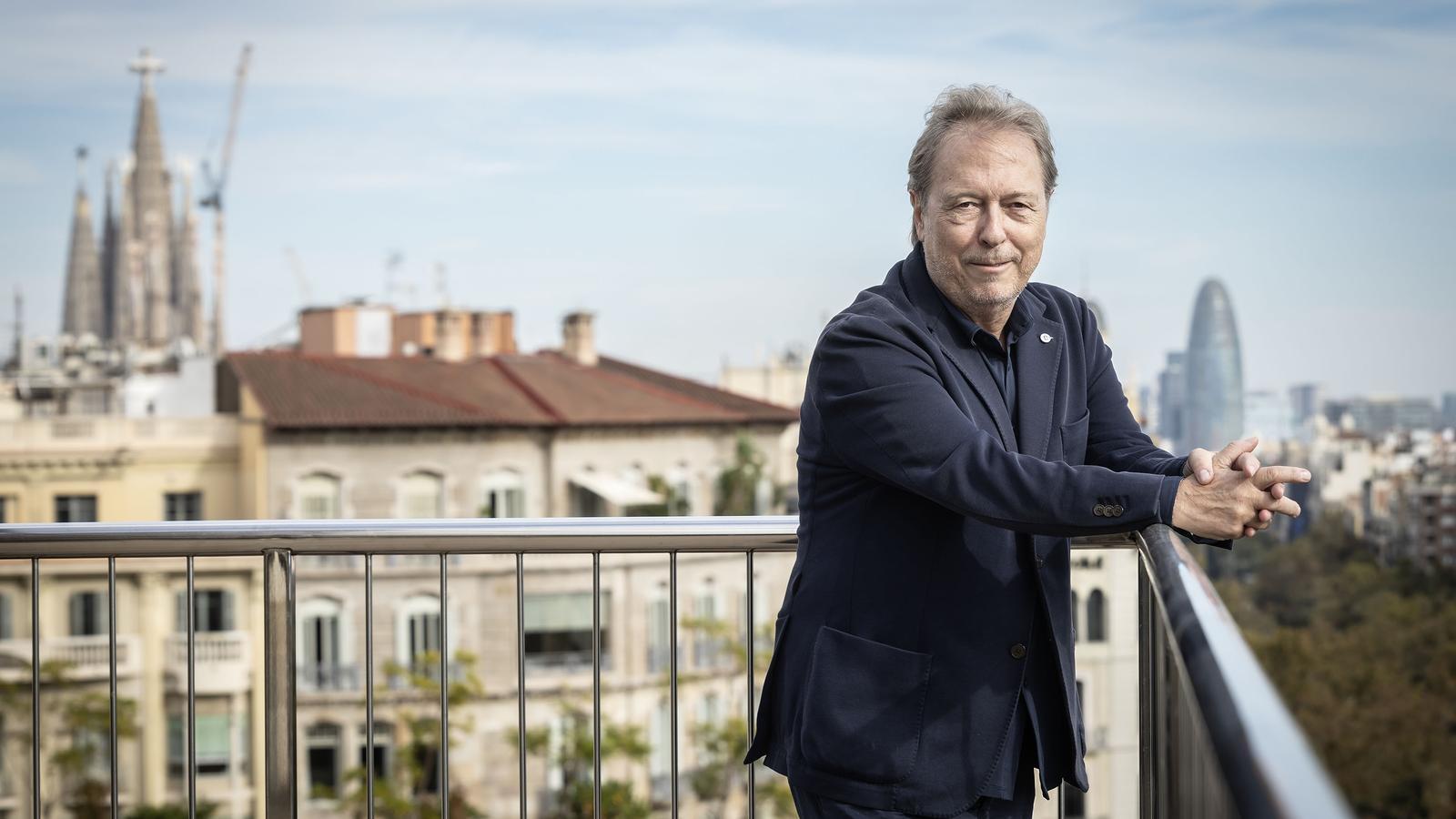
BarcelonaJosep Santacreu (Guissona, 1958) faces the final months of his first term as president of the Barcelona Chamber of Commerce with the work done. Not without difficulties, as demonstrated by the marathon it took to pass the chamber law or the expansion of the silver seats, which divided the plenary in half. Now, however, he faces a 2027 of “project execution,” with the chamber elections in mind.
How will the Chamber close the year?
— The Chamber's goal is not to have a surplus, but to provide services. It must spend everything it earns and balance its budgets, because otherwise, a situation of deficit, asset conflict, and execution capacity issues is generated. Unfortunately, in the four years prior to our arrival, there was a deficit every year, in addition to some investments that were made, and the asset situation was complicated. These first three years we have adjusted the activity, we have tried to increase income and control expenses to have three years with enough surplus to compensate for previous losses, generate reserves, and have a cushion to execute European programs.
At any point was the activity at risk?
— We could not continue with the same dynamic, because there was a very large treasury problem. We would have had to stop. But, with everything we have done, we have already overcome it. I believe that, after the problem caused by the loss of the chamber resource, the Barcelona Chamber and the group of chambers of Catalonia are going through the best moment in our recent history. We have just approved the chamber law, which provides institutional tranquility, a recognition of our role, which is now clear and defined. When we arrived, we dedicated ourselves to tidying up, recovering talent, which had been lost a lot since 2012, and preparing the teams to meet the objectives. Now we are in the project execution phase.
The approval of the law surpasses the differential fact of the Catalan chambers.
— Catalonia should have transposed the Spanish law before the end of 2014. It has taken us a long time, 12 years. But we have achieved it, and furthermore with the support of the four majority parties. The law, above all, clarifies the role of the chambers and normalizes our role: a consultative and representative function, which would be the more institutional part, and a services part, some of which come from public commissions.
Do you understand the criticisms from employers' organizations regarding the role of the chambers?
— With institutional activity, there are sometimes gray areas. A good example is vocational training (FP): some employers' associations, some unions, and some parties considered that the chambers should only have a consultative or collaborative function. But the Spanish law on chambers recognizes the right we have to participate in it. However, I would not give it more importance; it is normal for everyone to defend their own space. Everything is made clear by the law and, above all, by the favorable opinion of the Statutory Guarantees Council (CGE).

What changes have there been in the chamber law regarding previous proposals?
— We have ensured that it is absolutely adjusted to Spanish law and the constitutional mandate. In the previous draft, there were some issues that were in doubt. We have made a very long effort to clarify, several times throughout the text, that the chambers at no point enter into performing social dialogue functions. In the previous draft, this remained somewhat in doubt.
When will the new ‘silver chairs’ begin to be incorporated?
— The change made with these chairs is to normalize the situation. We are not doing anything strange: we are recovering what already existed. They have a double objective: at the beginning, it was intended to secure some funding after losing the chamber resource. But it also seeks to ensure that there is a number of large companies in the plenary. As is natural, guilds and sectoral associations tend to propose SME candidates, which makes it difficult for large ones to access the plenary session. And the Chamber's plenary represents all sectors and all company sizes. It is good that there is a proportionality of representation that approaches the economic reality of Catalonia.
Can any of the institutional partners go on to occupy one of these board member positions?
— We hope so. President Antoni Negre used to say that chambers are the parliaments of businesses, and it is normal for there to be a diversity of sectors and a proportionality of large and small companies. It was a highly disputed issue; we won by a narrow margin. I respect those who were against it, but, thinking of the Chamber's interest, it is much more solid and has much more authority if there is a sufficient presence of large companies.
At the time when the ‘silver chairs’ were in force, the company profile was very clear: Naturgy, CaixaBank, Sabadell, Indra... Do they expect to follow the same line?
— They are the kind of companies that find it very difficult to obtain a seat, and it is the most natural thing for them to be there. They are also the ones we can ask for a voluntary contribution. It is very likely that they will once again be large companies, because they will contribute money that serves, above all, for the activity we carry out for SMEs. But, that said, we hope there will be small and medium-sized enterprises in the rest of the plenary, which are 44 seats plus those contributed by Foment and Pimec. Furthermore, I believe that the presence of large companies also gives us substance. And in the plenary there are 15 large companies, and we got 29 votes. 14 SMEs voted in favor of having some large companies in the Chamber, which we do not have now. The Chamber cannot be the chamber of SMEs, it is the Barcelona Chamber, and it represents everyone.
In 2027 we will have chamber elections again. Are you planning to run?
— Yes, I will run for my section. We have started preparing the Va d'Empresa candidacy, which we will repeat from 2023. The last time we organized ourselves with very little time, and it was a small miracle that we won. Now we have more time, and I am confident that we will win more clearly. I will be there, and most of the current members.
Are you running with the idea of repeating the presidency?
— My intention was to be here for four years. We had planned at Va d’Empresa to prepare a succession; however, this succession, if it happens, will arrive after the elections. Therefore, if I have the support, I am willing to begin the term as president.
And who would take over from him?
— It will depend on his situation, and on his multiple responsibilities, but the person indicated to be my successor is [the executive chairman of Fluidra] Eloi Planes, who is now the first vice-president. I am very much in favor of an institution like the chamber having terms that are not very long.
Do they expect the composition of the Va d’Empresa candidacy to be the same as it was four years ago?
— Our idea is to continue with the same proposal. We are also in talks with Foment and Pimec to have their support.
Is there a good relationship with both employers' associations?
— Yes, yes. There has been tension with Pimec, because they were not in favor of expanding the ‘silver chairs’, but let's turn the page. Over the last three years, we have had a very positive collaboration with Pimec. Even with Eines de País, which was very complicated at the beginning, but for two years now we have been approving practically everything unanimously.
2023 was difficult, but the employers' associations ended up presenting a joint list for the six plenary memberships that correspond to them. Do you expect them to do it again?
— The joint list, I think it can be said, was made at our request. Perhaps it entered into their calculations, but it had not been specified. The most reasonable thing is to reach an agreement. I trust that it will be repeated again.
Are you already preparing the 2027 budget?
— It will go to the next plenary session. In 2027 we will move from the initial stabilization situation to a 2035 plan, how we want the Chamber to be in the long term. A year of moving things forward is coming. One of the most important is to improve territorial presence. We have a very large territorial diversity, but the presence outside the city has historically been very meager. 50% of the companies in the demarcation are outside the city. It is not normal that the resources of the Barcelona Chamber are 90% in the city and 10% outside. We are preparing a territorial reinforcement plan with people, spaces, and proposal capacity to be closer to companies. We have already done the pilot in Maresme; and we will practically triple the presence in the territory in the next two years with territorial delegations.
What is your letter to the Three Wise Men ahead of the November 29th general elections?
— The business world would like none of the extremes of the political spectrum to have too much weight. It is dangerous to break coexistence and we need a pro-business outlook, favorable to economic development, because without economic well-being there will be no social well-being, and this inevitably requires companies to do well. The business world would prefer a sensible election result. That there is no situation of extreme tax burden; but also that for ideological reasons we are not told that there cannot be immigration, in a society without a birth rate.
