"Size matters": European leaders get stuck with the budget
All states are unhappy with Ireland's proposal, which reduces spending by 8% compared to what the European Commission made
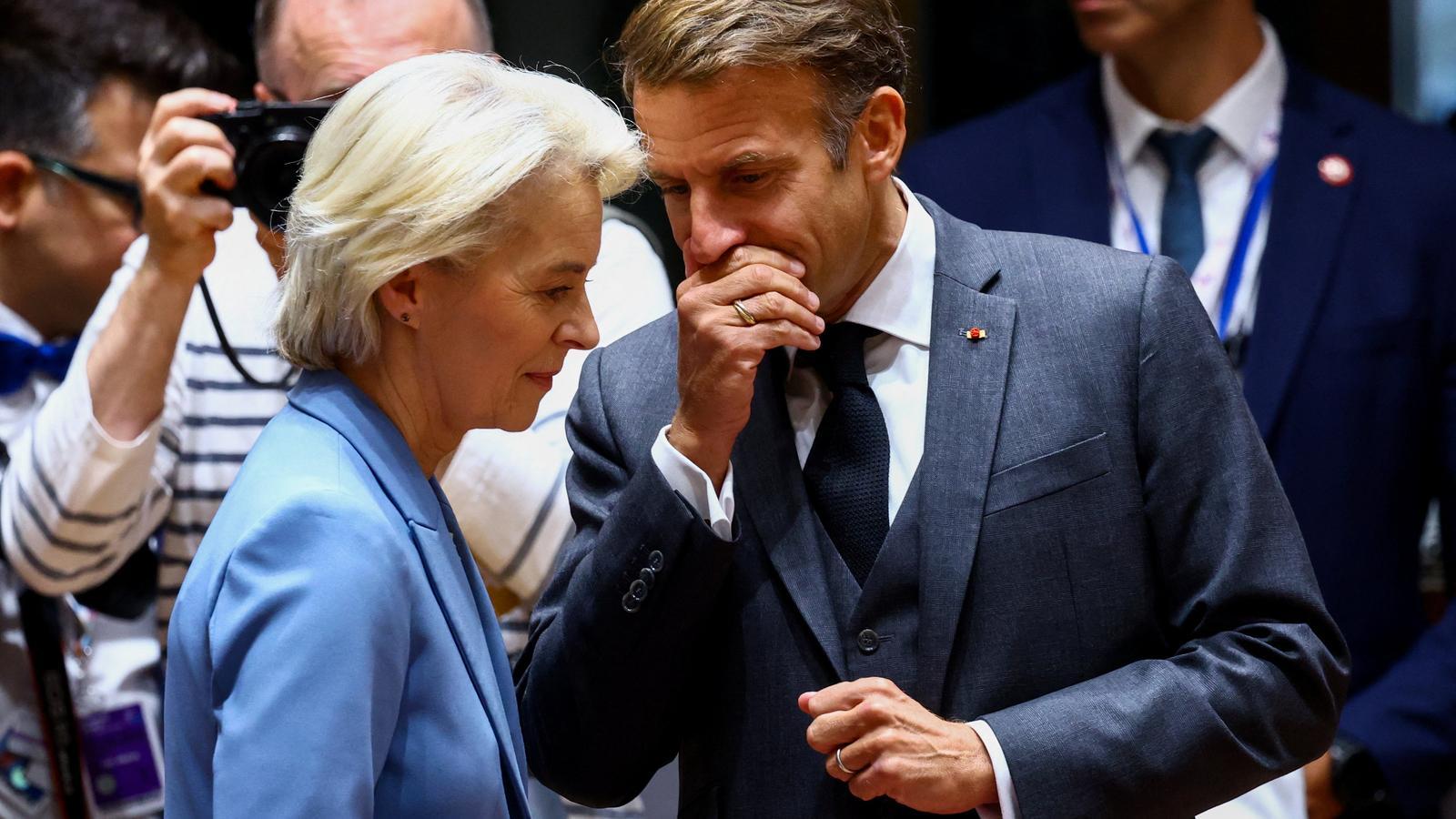

BrusselsWhen it comes to money, states do not budge. The next European Union budget, which will set spending priorities for the 2028-2034 period, remains blocked and, despite the tug-of-war of this Thursday's negotiations—which have been going on for hours—the position of the capitals has moved very little.
The statements made at the entrance to the meeting already predicted little progress. The German Chancellor, Friedrich Merz, a defender of iron-fist austerity, warned that the negotiations would be "very, very difficult." "Our positions are very far apart," he asserted, before quipping that, if they really want to close the accounts once and for all, the leaders would have "to pack a few more shirts than usual" for the December summit.
Despite the objectives set by the European Commission, which aims to have the approval of the states before the end of 2026, the agreement on the budgets still seems like a distant horizon. What are Brussels' reasons for urgency? Mainly, the fear of the emergence of far-right forces in the European Council and, especially, of Marine Le Pen. But not even the threat of an anti-European French government seems to make the states yield, as they remain entrenched in opposing positions. "We are in no hurry," assured the Swedish Prime Minister, Ulf Kristersson, who, together with the Prime Minister of Luxembourg, has lowered expectations of reaching an agreement before 2027.
Ireland, which holds the rotating presidency of the EU, presented this week the proposal for accounts on which the leaders are negotiating. The draft reduces community spending by almost 8% compared to what the European Commission had presented in June 2025, but the cuts are not distributed evenly. Ireland relatively protects the common agricultural policy and cohesion funds, and concentrates more adjustments in competitiveness, defense, and external action. That is why its accounts have not convinced anyone.
"Size [of the budget] matters," summarized the Lithuanian Prime Minister, Gitanas Nausėda. On one hand, states like Germany, the Netherlands, or Sweden, popularly known as "frugal" and which are the ones that contribute the most to the EU budget, want to reduce their contributions. Sweden considers the new budget "totally unacceptable" because it would increase its participation by 60%. "This is a no-go zone," criticized Kristersson.
Berlin and Amsterdam have expressed themselves along the same lines, considering that the proposal "is not good enough." "No member state can afford to pay contributions of this magnitude," Merz disapproved. "There are a number of partners who want more resources. I am clearly opposed to it, especially regarding cohesion policy and agricultural policy," he said bluntly.
Similar proclamations, but with opposing reasons, have been expressed by leaders such as Pedro Sánchez, who already considered the previous budget proposal – which was presented by the Cypriot presidency – too small. Faced with the new approach, with 8% fewer resources, the Spanish president has criticized that Ireland's proposal "is neither assumable nor acceptable" for Spain. He believes that each state should contribute 2% of its GDP, while it is currently proposed that they do so at 1.2% on average.
In agreement with Spain, states like Lithuania, Italy, or Poland consider that the proposed cuts jeopardize the EU's room for maneuver. "It is important to understand that the budget must be ambitious," defended Vilnius, who claims that "it should be similar to the initial proposal of the European Commission."
Energy prices
The leaders have also addressed energy prices, which have skyrocketed due to the conflict in the Middle East. With inflation growing stronger and winter approaching, the Twenty-seven have urged the European Commission to adopt short-term measures to deal with the immediate impact of sharp price hikes.
Member states have agreed that energy prices are a "critical" problem and are calling for a coordinated European response, according to a Council document to which ARA has had access. Furthermore, they welcome the European Commission's intention to extend state aid for industrial sectors, amend the Methane Regulation to postpone requirements for gas and oil imports, and pool energy demand from the bloc's states.
