What became of Pryca? That is how Carrefour, the supermarket giant, was born
The French group landed in Catalonia in 1973 with a hypermarket in El Prat de Llobregat

-
CAT -
CAST
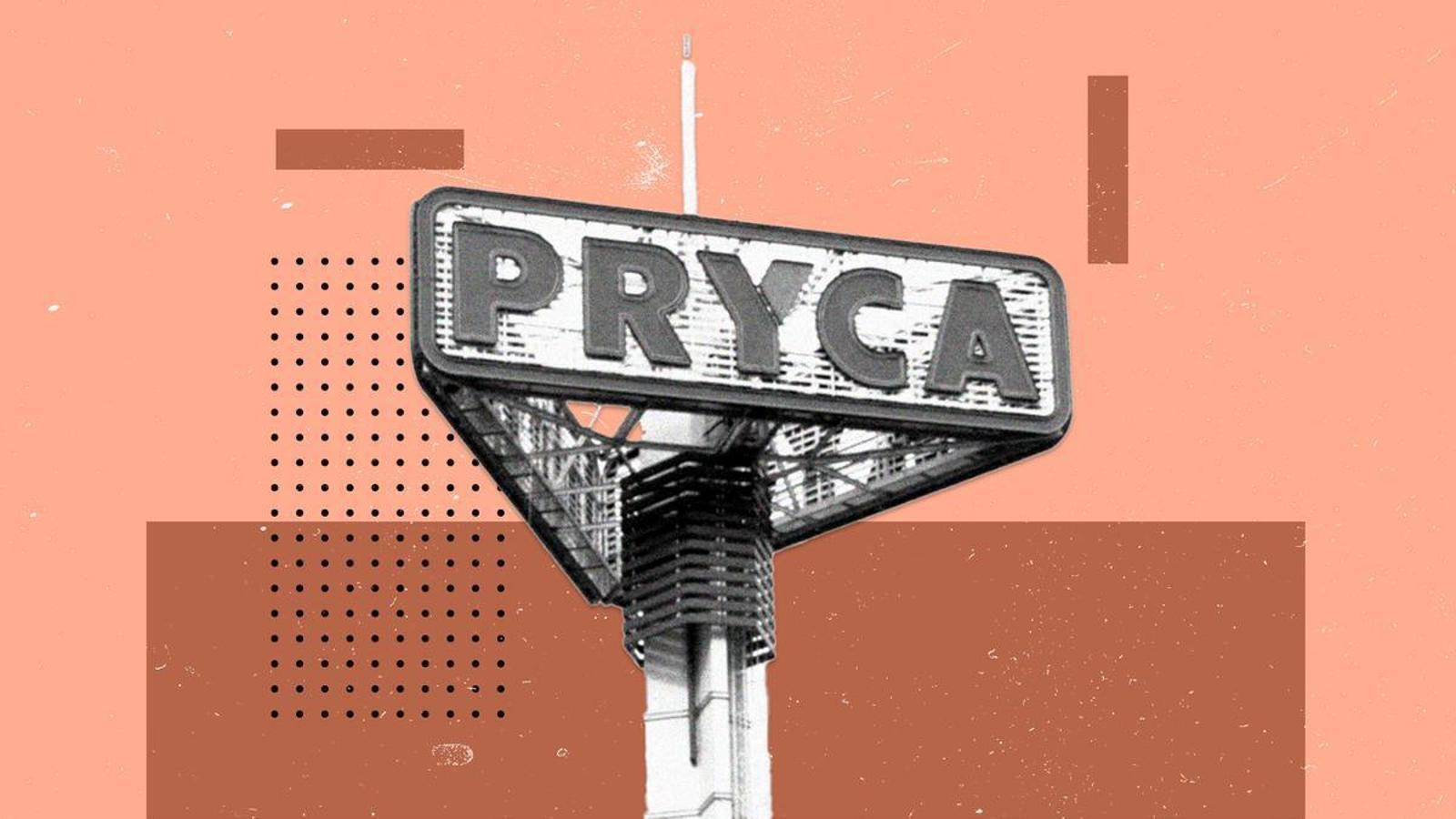
"Let's go to Pryca". For decades, for thousands of families, saying this phrase was equivalent to doing the big weekly shop: taking the car, parking in front of an immense warehouse and walking through aisles full of all kinds of products. In 1973, in El Prat de Llobregat, one of the first hypermarkets of this type in the State opened. More than fifty years later, that establishment continues to operate, but no longer under the name Pryca. On the facade, it now reads Carrefour. What happened to that chain that marked the consumption habits of an entire generation? And what did the French giant that gives the establishment its name today have to do with it?
Behind Pryca was Carrefour, a French group that today is one of the world's giants of distribution. In 2025, it recorded sales of 91.484 billion euros, had nearly 300,000 employees and added up to more than 15,700 establishments around the world. In Spain, where it employs more than 50,000 people, it invoiced 11.903 billion euros and closed the year with almost 1,600 stores. But to understand how a French company ended up turning Pryca into one of the most remembered commercial brands in Catalonia, we must go back to 1959 in the city of Annecy, in the French Alps.
That year, near the border with Switzerland, Marcel Fournier managed a family business dedicated to the sale of fabrics and haberdashery items. He had been looking for a way to expand it for some time and had set his sights on a commercial model that was beginning to triumph in the United States: self-service supermarkets, where customers could take products directly from the shelves and pay for them all together when passing through the checkout. At that same time, the Badin-Defforey family ran a wholesale food company that supplied hundreds of small French businesses. The two businesses had little in common, but they shared a concern: finding new formulas to sell more.
Fournier met Louis Defforey and his son Denis at a meeting of entrepreneurs in the commercial sector. They immediately saw that they could complement each other: the former knew retail trade and was eager to experiment, while the latter brought experience in food distribution. The project gained momentum when they learned that Édouard Leclerc, a businessman who was revolutionizing French trade with low-price establishments, was preparing to open a store in Annecy. If they wanted to get ahead of him, they had to act quickly. Thus, before finishing their first supermarket, they opened a small 200-square-meter self-service establishment to test the idea. In June 1960, they finally inaugurated an 850-square-meter supermarket that they named Carrefour, which in French means crossroads, because it was located at the junction of two of the city's avenues.
The global supermarket revolution
However, the most important step forward came in 1963, when Carrefour inaugurated the first hypermarket in France in Sainte-Geneviève-des-Bois, on the outskirts of Paris. It had 2,500 square meters, 400 parking spaces, and a then-revolutionary proposal: buying food, clothing, and other products under the same roof and at low prices. The idea was inspired by the North American commercial model, which the founders had learned about thanks to the conferences of Bernardo Trujillo, a Colombian executive who advocated for large retail spaces and free parking as keys to the future of commerce. The model worked and the company began to expand. In 1969 it arrived in Belgium and in 1973 it landed in Catalonia, where it would end up popularizing the Pryca brand.

The other great transformation arrived in 1999, when Carrefour merged with Promodès, owner of the Continente hypermarkets. The operation turned the group into the second largest distributor in the world, only behind Walmart. In Spain, the merger led to the progressive disappearance of the names Pryca and Continente, replaced by Carrefour starting in 2000. Since then, the group has continued to grow with proximity supermarkets, franchises, and e-commerce. It has also diversified the business with gas stations and financial services. Pryca disappeared from the signs, but not entirely from the memory of many customers.
