Seat does not have planned to electrify any of its models and its future will depend on the path of combustion
The chief executive officer of the Catalan company assures that the second platform "will end up arriving"

-
CAT -
CAST
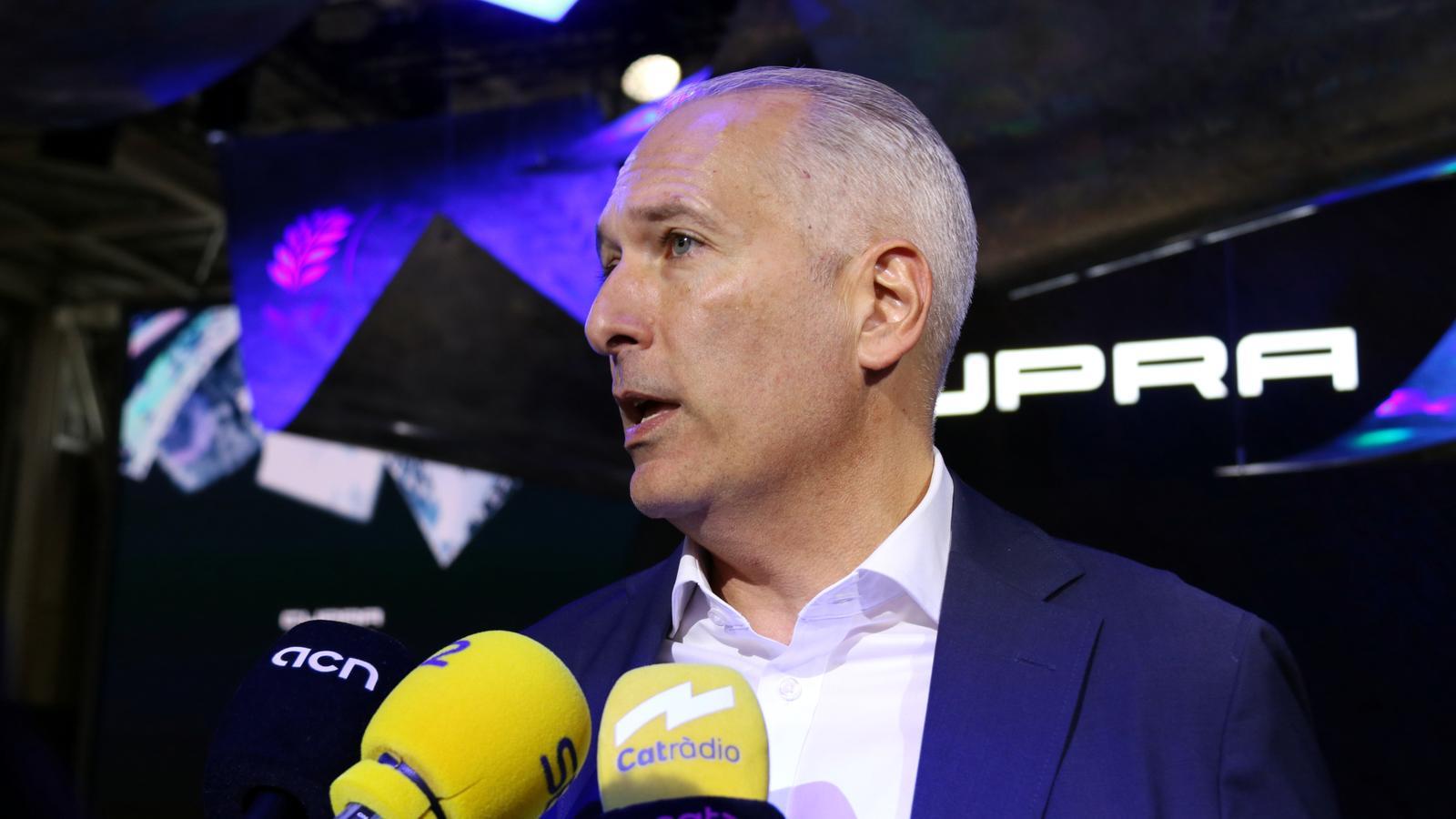
Paris“Right now we have no plans to electrify Seat models”. The CEO of the Catalan industrial company, Markus Haupt, assured this Monday in Paris that the brand does not plan to electrify any of its cars, despite stating that “the future is electric”. Thus, Haupt pointed out that “regulation” will be what dictates the future of the Seat brand in the face of demanding European regulations to decarbonize the automotive industry. It will also be necessary to see what the evolution of the market is, which is increasingly betting on electric vehicles: “Even if there is a second period of flexibility (regarding emission regulations), we have to see if customers in the main markets will continue to buy combustion vehicles”.
“Customer behavior and regulation will dictate what happens and when,” assured the CEO of Seat and Cupra during a meeting with journalists. The future of the Seat model range – which is currently composed of the Ibiza, the León, and the Arona – is in doubt after the Volkswagen Group approved a broad restructuring plan in which it plans to reduce its models by 50%. As Haupt has assured, Cupra is the “bet” of the Catalan company to address the transformation process towards electric vehicles, as it is the one that “brings the most profit per vehicle sold”.
Regarding the allocation of a second electric platform for Martorell, one of the biggest demands from the unions in order to guarantee employment at the plant, Haupt said that “it will end up arriving”, although he indicated that the group has not yet decided anything. “The industrial future of Martorell requires having a second electric platform,” he stated. In fact, from the Volkswagen leadership it is pointed out that the possible allocation will not be resolved for “at least” twelve months. To this deadline, in addition, the time necessary for the line to be able to start production must be added, which is between three and five years.
Martorell will reach maximum production
In statements to the media at the Paris Motor Show, Haupt also said that he expects the Martorell plant to reach its maximum production in 2027, with a capacity of 2,500 cars per day, which is why he predicts that the factory has "good prospects". "We continue on the production increase curve and this is good news for Martorell", he asserted. Company sources explain that the plant is currently working in two and a half shifts.
Regarding the Cupra Raval –the latest model launched by the Catalan firm–, Haupt highlighted that the model is playing an important role in the brand's growth. According to data provided by the company, the vehicle has accumulated, between June and September, 51,200 orders and more than 14,800 units delivered. Thus, the model has far exceeded the objectives that the Catalan company had: at its launch, it was expected to reach 40,000 orders in all of 2026, a figure that has already been surpassed. The executive stated that the goal for next year is to manufacture and deliver more than 100,000 units. The model is one of the company's main bets to boost electrification.
Cupra increases sales
This Monday, the German group also announced its sales from the beginning of the year. Specifically, Seat and Cupra have sold 433,400 vehicles from January to September, which represents a 1.4% decrease compared to the same period in 2025, when the Catalan brands reached 439,500 units. As detailed by Seat via LinkedIn, of these 433,400 units sold through September, a total of 250,600 cars correspond to Cupra, which grew by 2%, while the Seat brand sold 182,800 units, 6% less than in the same period of the previous year. It should be remembered, however, that during the last few months Seat has stopped manufacturing the Ateca model and, therefore, is selling one less model, while Cupra has expanded its catalog by incorporating the Raval.
The negative trend widens if you look at the group as a whole: among all brands, Volkswagen sold 6.01 million vehicles between January and September, 9% less than a year ago, although the brand with the best sales performance within the group is Skoda, with a recorded growth of 6.1% through September.
