Michael Carolan: "Rich countries tend to confuse abundance in supermarkets with food resilience"
Doctor in sociology and expert in global food policy

-
CAT -
CAST
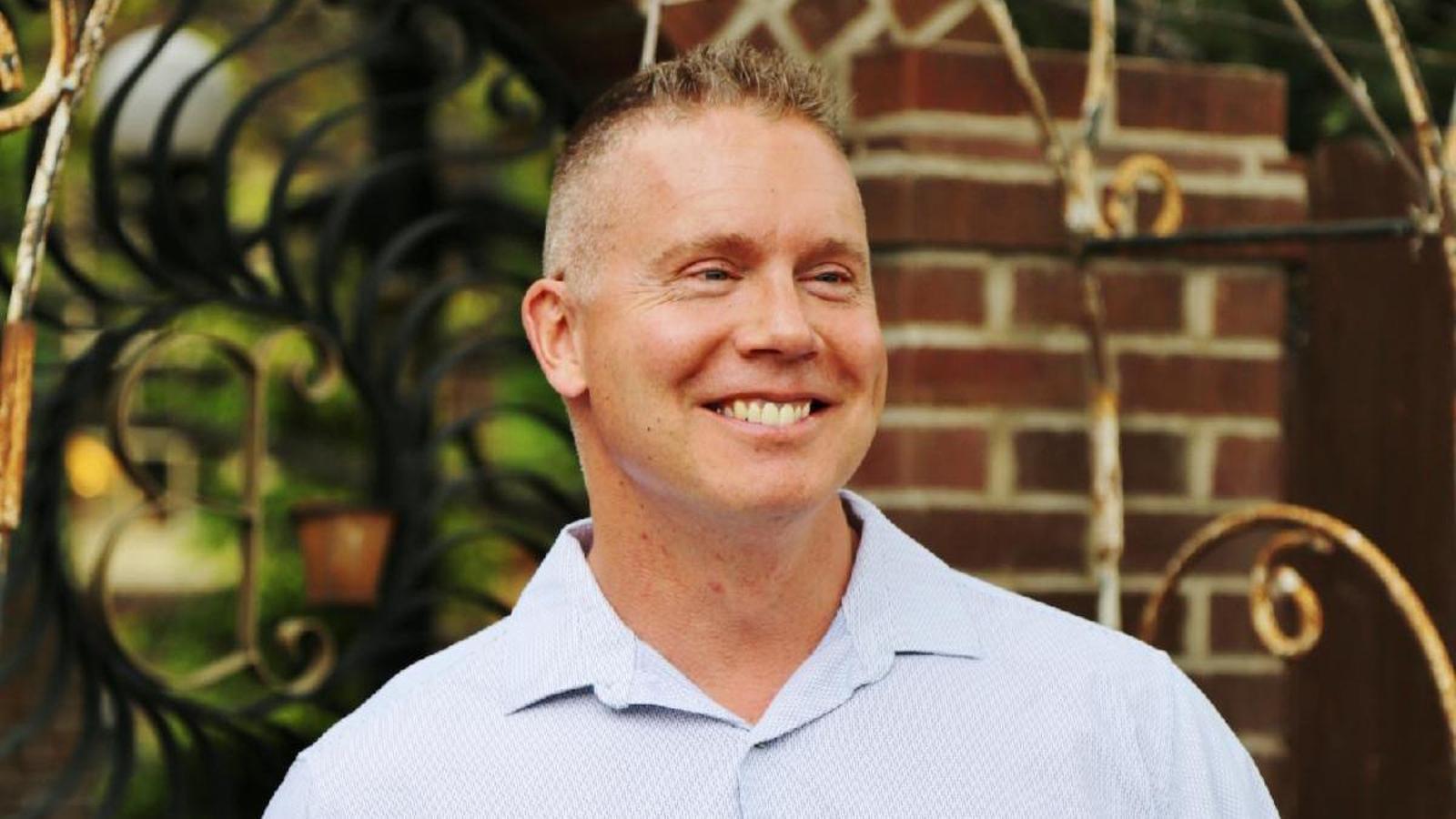
BarcelonaMichael S. Carolan is one of the most influential voices in global food policy. A PhD in sociology and co-director of the Food Systems Institute at Colorado State University in the United States, in 2023 he published the third edition of his book The Real Cost of Cheap Food. The latest version, translated into Catalan by the publisher Raig Verd and distributed starting in 2025, addresses the major challenges of the current food system and the contradictions of a landscape that promises accessibility and abundance, but generates negative externalities that society and the environment end up paying for.
The book was first published in 2011, but in 2025 it was re-edited after new updates. Do the revisions respond to the current geopolitical chaos?
— I would resist saying that the latest edition is a reaction to any particular administration, war, or geopolitical moment. From the moment I started this project, long before the current crises, one argument has remained consistent: low prices are not simply a property of food. It is an achievement of political, social, and economic agreements that decide which costs appear on a receipt and which costs are shifted to workers, farmers, ecosystems, public health, and future generations. What has changed throughout the editions are the proofs and the urgency of this argument. The pandemic, the Russian invasion of Ukraine, disruptions in supply chains, and the growing use of food, energy, and trade as geopolitical instruments expose vulnerabilities that were already built into the system.
In the first chapters of the book, it is discussed how countries with more resources, thanks to globalization, have managed to generate dependencies that low-income countries cannot escape. Is international trade a threat?
— Trade can be beneficial when risks are diversified. On the other hand, it becomes dangerous when countries lose the ability to feed their population, when they cannot afford imports during a currency crisis, or when they depend on an insufficiently varied portfolio of suppliers and crops. And these dependencies have occurred throughout history. The fact is not that the poorest countries have been passive, but that the rules governing their choices have been unequal. A country may appear to have food security when grain is cheap and ports are open, but remain vulnerable when prices, exchange rates, or policies change.
The book also mentions how cheap food policies increase the likelihood of global conflict and disorder. Are some of the active wars the result of these policies?
— Wars have complex histories. My argument is about mechanisms that can increase vulnerability and social unrest. Policies that harm small producers increase farmers' debt or promote the concentration of land and water, and amplify the consequences of drought, inflation, or political repression. And sudden price increases can be catalysts for protests, although they are not the only explanation for conflicts.
What would be the main effects of food dependencies on the poorest countries?
— For low-income importing countries, dependence can mean exposure to price spikes, exchange rate movements, and pressure to obtain foreign currency through exports instead of meeting internal nutritional needs. Small farmers may find themselves competing with imported products whose prices reflect subsidies, economies of scale, or market power elsewhere. Over time, the local ecosystem, seed exchange systems, and agricultural knowledge can weaken. However, imports can also prevent shortages and provide food that cannot be produced efficiently at a national level. The issue is the terms and concentration of dependence, not the imports themselves.
And for the richest?
— These countries have benefited from lower prices for some products and the ability to obtain food during all seasons. But the costs include vulnerability to disruptions, pressure on domestic producers and workers, emissions and ecological impacts that can be shifted abroad, and the tendency to confuse supermarket abundance with resilience. Even within rich countries, low-income households experience a food system very different from that of affluent consumers.
The book also mentions that countries with more resources have protected their agricultural sector, contradicting their idea of global free markets. Why invest so many resources if products can be obtained from other places?
— Because food is not just any commodity. A country that outsources all its capabilities because imports are cheap ends up discovering that reconstruction is slow and expensive. The relevant question is not whether governments should intervene, but what is achieved with this intervention and who it benefits.
In countries with more resources, farmers often complain that the economic support received is insufficient. Is this sector also another victim of the current food system?
— Many farmers find themselves trapped in the same contradictions as consumers and workers. A farmer can be very productive and, at the same time, economically precarious, whether due to rising production costs, the power of buyers, the price of land, and price fluctuations. Let us not forget that the low prices that are so celebrated at the checkout are often achieved by putting pressure on the producer.
Why can it be considered negative that food is cheap?
— What I criticize is cheap food at the expense of excluding costs from the final price. If the price of a product does not reflect soil degradation, contaminated water, low wages, or diet-related diseases, then the cost has not disappeared, but rather has been transferred to another person or to future impacts.
Logic would say that cheaper food is better because more people can fill their fridge.
— It is not contradictory to say that low food prices have helped families with limited incomes. The contradiction appears when we treat low prices as the only path to achieving food security. If cheap food depends on poorly paid labor, it can contribute precisely to the insecurity it claims to solve. At the same time, it would be necessary to differentiate the price of food from the ability to afford a healthy diet.
The book also mentions the Washington Consensus, a program that maintains, among other things, that a global food system will be capable of producing enough food for everyone. And it is added that this creates a false sense of food security.
— The illusion that food is available somewhere at market price does not mean that everyone can obtain it. Purchasing power, infrastructure, and control over resources determine access. And hunger is a failure of the control that people have over food, and not necessarily a simple failure of aggregate production. Trade remains an important tool, but markets alone cannot guarantee food security.
