Hernández de Cos, a prestigious position for the Spanish state

-
CAT -
CAST
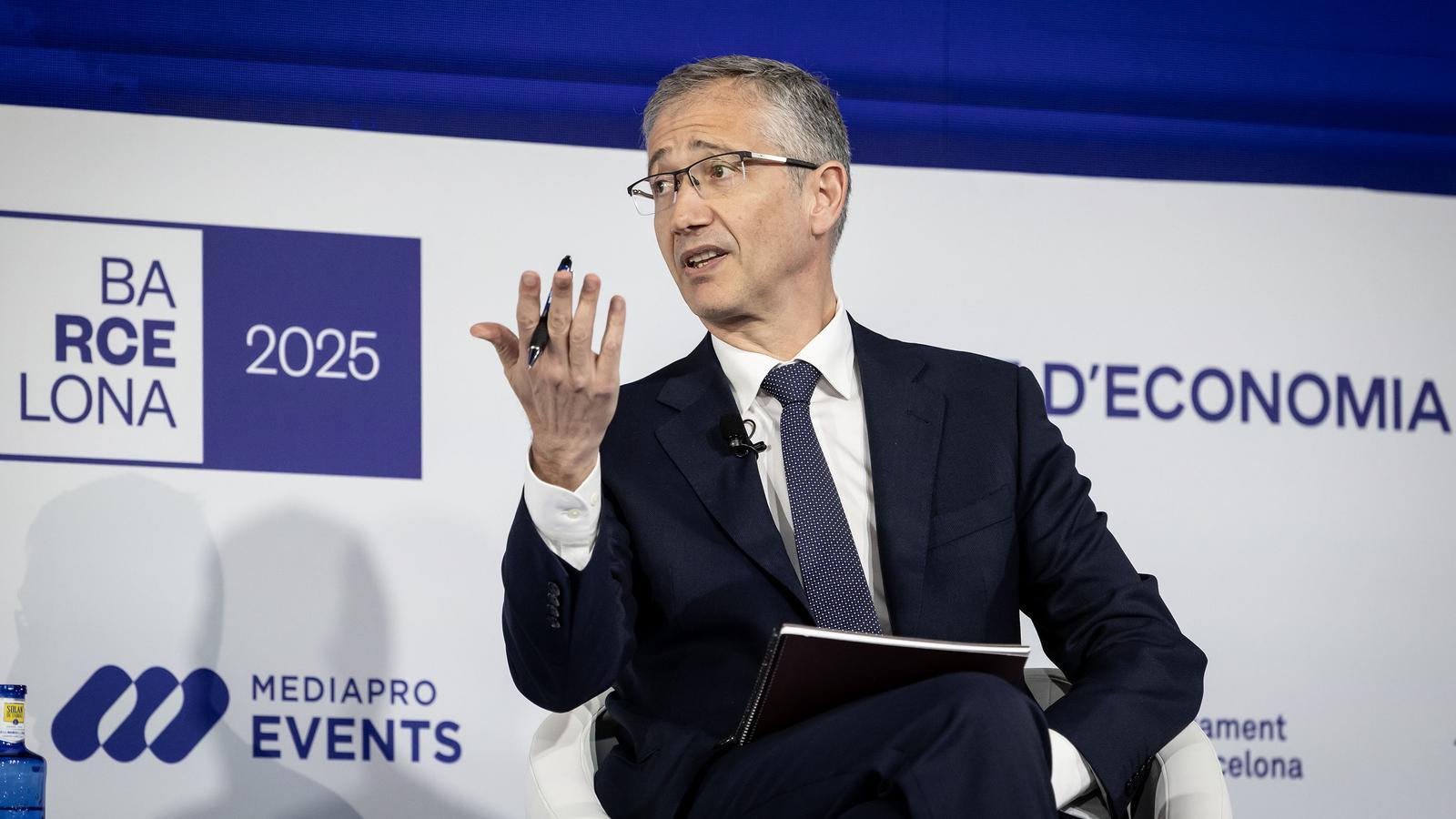
Pablo Hernández de Cos will take over the presidency of the European Central Bank (ECB) starting in February, when Christine Lagarde leaves the post. In this way, the man who was governor of the Bank of Spain from 2018—two days before Mariano Rajoy, of the PP, lost the presidency of the Spanish government through a motion of no confidence—until 2024 will go on to occupy the most important international position ever held by a Spaniard.
In fact, the position of president of the euro zone's monetary institution is only comparable to the secretary generalship of NATO, which Javier Solana held between 1995 and 1999, and to the leadership of the International Monetary Fund (IMF), held by Rodrigo Rato (PP) from 2004 to 2007. And it surpasses the milestone set by Luis de Guindos, former Minister of Economy with the PP, who was vice-president of the ECB until last May.
Hernández de Cos, currently managing director of the Bank for International Settlements (BIS)—which is like a central bank of central banks—is a prestigious doctor of economics, endorsed both by the government of Pedro Sánchez and by the PP's Alberto Núñez Feijóo. It is said that he left a good impression as a member of the ECB's governing council when he was governor of the Bank of Spain. Once he had the endorsement of France and Germany, the two heavyweight EU members, he obtained the unanimous support of the leaders and blocked the path of the candidate from the Netherlands, Klaas Knot, who defended his bid until the last moment. There is one element that must be taken into account: the Netherlands already had the first president of the ECB, when this institution began to operate. Wim Duisenberg was its first president, from 1999 to 2003.
According to those who know him and those who have worked with him, he is characterized by his “discretion” and “accessibility.” His appointment has been met with universal acclaim, given his technical profile and his pragmatic approach that favors consensus. This Madrid-born academic, who began working in the research department of the Bank of Spain in 1997, has climbed the ranks to become a consensus figure to lead the highest European monetary institution.
For the Spanish state, the upcoming appointment of the former governor of the Bank of Spain reinforces the country's role in European institutions. Hernández de Cos joins Nadia Calviño, the former economic vice president of Pedro Sánchez's government, who has led the European Investment Bank (EIB) since January 1, 2024, and also another former vice president of the progressive executive, Teresa Ribera, who has been a vice president of the European Commission since December 2024. In this latter case, political polarization shifted to the European Parliament, where the European People's Party, at the behest of the Spanish delegation, tried to block the appointment by attributing political responsibilities to her for the consequences of the DANA storm in Valencia in October 2024.
In the end, the obstacles were overcome, and the Spanish state has influential representatives in European institutions. It is an important milestone, considering the game of negotiations, trade-offs, and checks and balances played in Brussels. It is not just a question of influence on the economic and legislative agenda, but a way of gaining prestige and international projection, from which not one party or the other benefits, but the country itself.
