Quim Vilamajó: "I have Down syndrome, but I want to let people know everything I am capable of doing"
Writer
-
CAT -
CAST
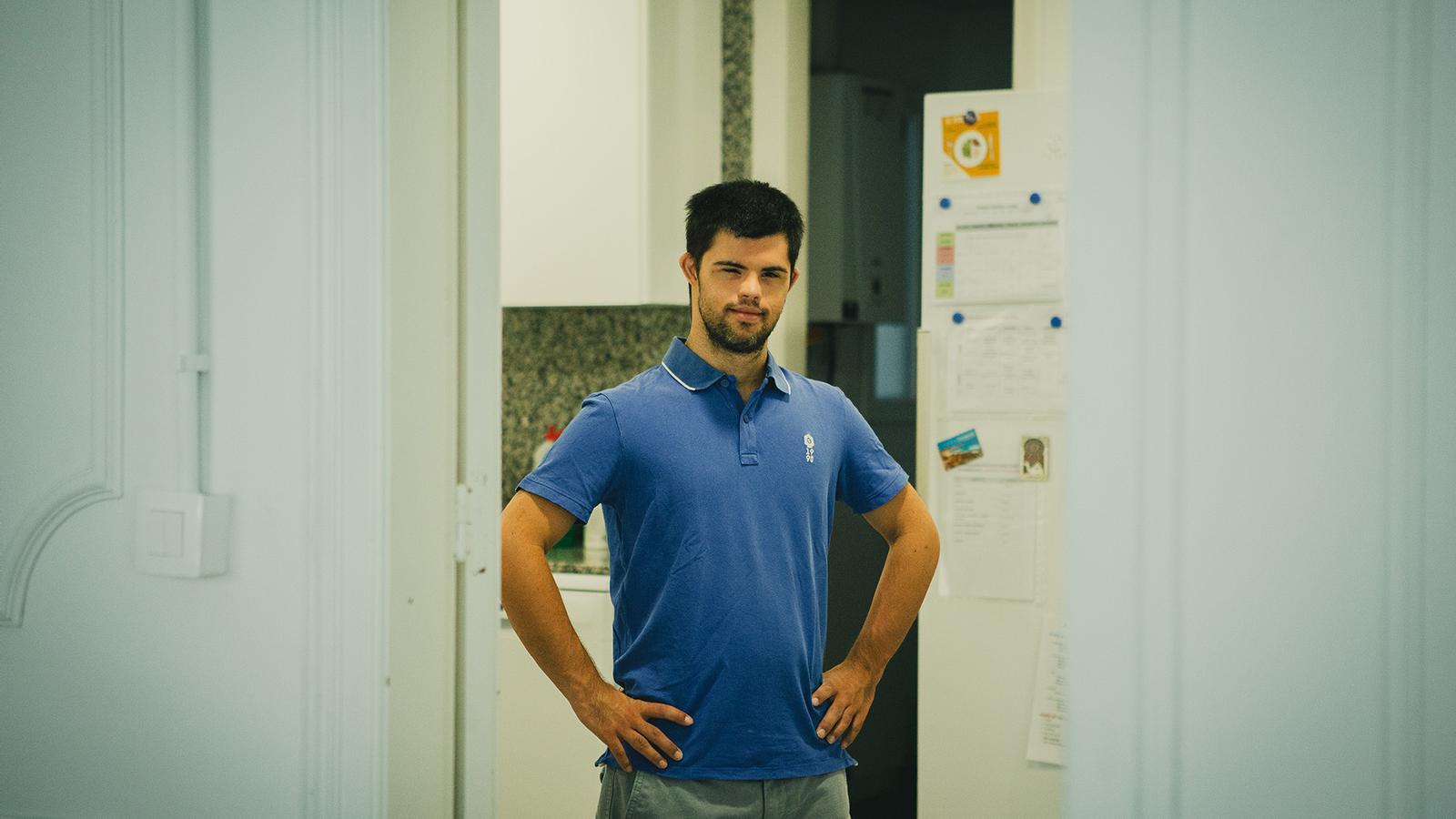
BarcelonaQuim Vilamajó (Tàrrega, 1995) is a writer who has become a true activist for the rights of people who, like him, have Down syndrome. After becoming known with audiovisual content on YouTube, Instagram and TikTok, he has now broken prejudices by writing a book, Sento. Life with an extra chromosome (Editorial Fonoll), which helps to better understand a collective that fights against stereotypes and wants to live autonomously.
Quim, how do you define yourself?
— I am Quim, I am now 31 years old and I always like to say one thing: that I am an adult. I have Down syndrome, but I do not like being seen as a child. This is very important. I work at the Lleida Chamber of Commerce, where I work as an administrator. I am in charge of many things, such as managing materials, running errands, or preparing events. I love any logistical task, but what I like most is helping my colleagues. I have been living in a shared apartment since 2022, which is quite an experience.
How did the idea of writing a book come about?
— This is interesting. I have communication skills and everything starts from here. I am a very communicative person. I like to express what I think and what I feel, my ideas, my hopes, my worries, the things that make me feel happy and the ones that make me angry, the ones that make me sad and the ones that worry me. I also really like talking about my hopes for the future. I have Down syndrome, but I want to let people know everything I am capable of doing. I want to let people know how I like to be helped, spoken to, and seen. Years ago, I created a video blog with my father, who works in audiovisual communication, and later we did an artistic project to express my thoughts and my way of feeling. The artistic project was called I am able (I am capable) and it was so successful that my father asked me if I would be okay with writing a book. I, delighted with life. I started writing. By myself. Everything I have written in the book I wrote myself, and that has a lot of merit. Anna, from Editorial Fonoll, got in touch with us and the project gained momentum. The book is called Sento. There are people who approach me and think that I do not have feelings, but we are all human. If not, I would be a machine. I wanted to explain my reality and it seems that it has been well received, because the book is already in its third edition.

How do the people who interact with you behave?
— Sometimes, people anticipate and approach with a paternalistic attitude. People take for granted what I want without asking me. There is a strong tendency to speak for me without taking me into account and this causes me some concern. They say: Quim will prefer this or that... But nobody has asked me. Many people have good intentions and want to help me, but they step forward and decide for me. I can do things well and also make mistakes, like any other person. I do not like overprotection, nor that we are limited before we are given the opportunity to try to do something.
Have you noticed an evolution in society or not?
— Yes, it has changed. People are increasingly aware of the reality of people with Down syndrome and many attitudes have disappeared. Before, people like me were very stigmatized. People's mentality has evolved and now they understand better that people like me also want to strive to do things. It is good to make things easier, but we also want to strive and feel that we are capable of doing things. Before, some were completely isolated from society, in specialized centers or locked at home. They couldn't even go out or do practically anything. This, luckily, has changed, and I am very happy now. I, for example, have the opportunity to have a job and to share an apartment. I have many more opportunities and I want to take advantage of them. To the fullest. Every moment. But I think there are still prejudices and preconceived ideas.

Do you see yourself as an example?
— I suppose so, because I do many things. Besides the book, I create content on Instagram and TikTok. I try to make the abilities I have and all the things I do well visible. Sometimes, people only see one part. They focus on the difficulties and cannot understand the totality of who I am. I want them to see the full picture, to notice my effort, my perseverance, my constancy.
How do you understand family attachment? What importance do you give it?
— Attachment is a bidirectional bond. From parents to children and from children to parents. Parents often become very dependent on their children and children get used to being told what to do at all times. Families of the past raised them that way and they reproduce it. It is their culture and their upbringing. But then it significantly dilutes the children's decision-making power, as they lose the motivation to do things on their own. I have a need to do things. If you create a dependent child, you limit all of that. It is important that fathers and mothers can advise, encourage, and accompany, but it is not necessary for them to decide for their children. What is needed is to boost the children's autonomy so they can grow up autonomously. They will have more initiative. My parents have helped me a lot, but they have always valued my autonomy and have given me confidence.
