"There are many children who reach 16 years of age without having spoken about sex and death with their parents"
Pep Garrido brings to the cinema 'Tanit', one of the most beloved children's books by the writer Núria Albó
-
CAT -
CAST
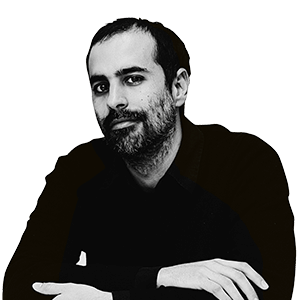
BarcelonaWhile preparing Sense sostre, the film with which he would debut in 2019 as a director, Pep Garrido (Barcelona, 1979) became the father of a girl, Tanit, and a friend gave him the book Tanit, by Núria Albó, which in 1984 won the first edition of the El Vaixell de Vapor Prize for children's literature. For Garrido, it was an exciting discovery: "It is not like children's books today; both the story and the characters are brutal." At just over 100 pages, Tanit revolves around the unexpected friendship between a determined girl and a mysterious old woman who lives in the forest, Perona. "It touched on many themes from Sense sostre, but it was its luminous reverse, and I really wanted to make a film that my children could watch," says Garrido.
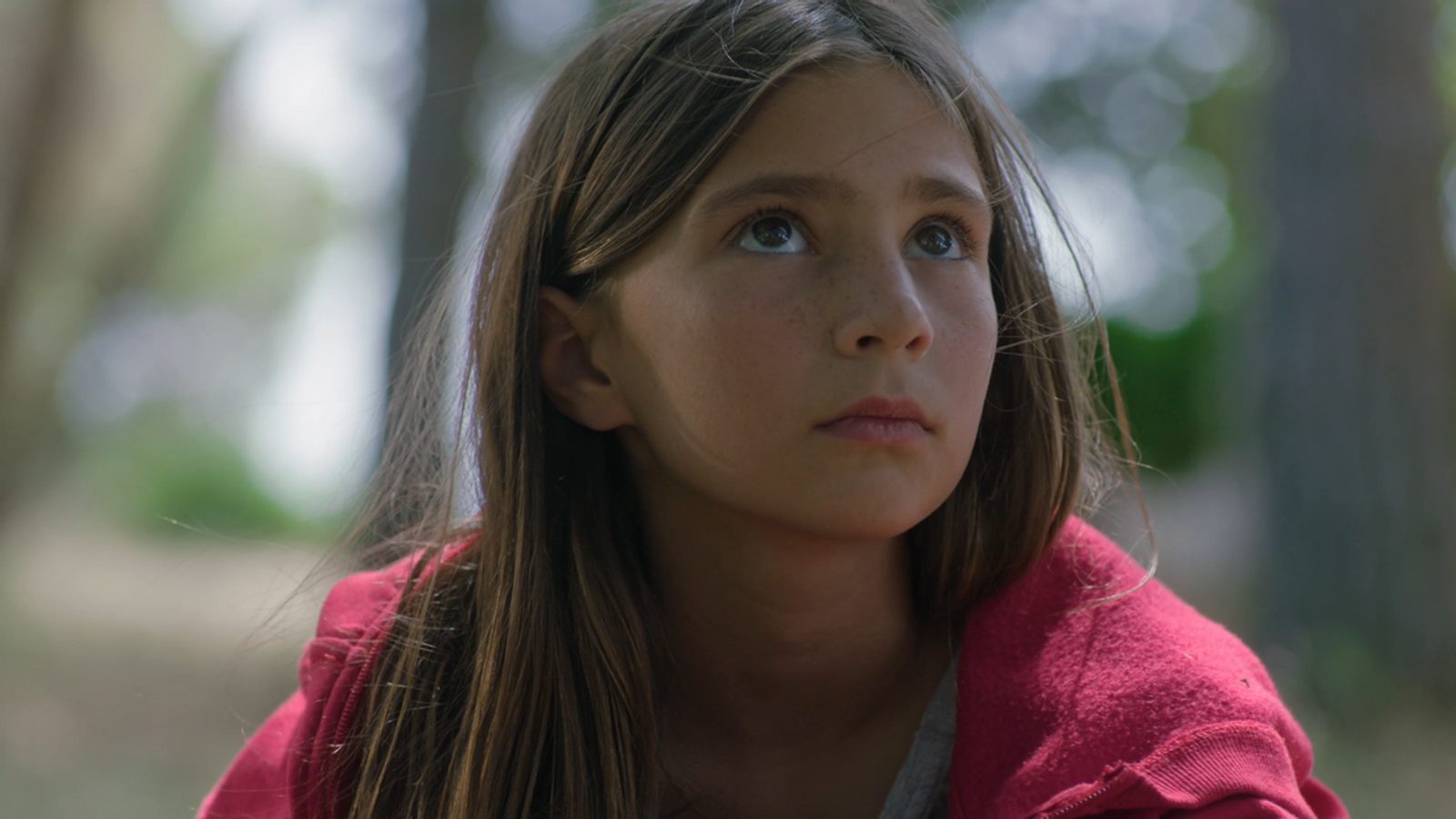
In Tanit, which premieres this Friday, the young protagonist wanders with her dog through the woods while her father works and a high-risk pregnancy forces her mother to take bed rest. Garrido films the spaces and actions with patience and rigor, contemplating the Montseny landscape through the curious eyes of a girl who begins to discover the darkness of the adult world and to come into contact with the reality of death, especially when her future brother dies in her mother's womb. "The theme of perinatal grief already appeared in the book, although in a less dramatic way," explains Garrido, who wrote up to thirteen versions of the script before finding the way to bring the story to the cinema. "The film emphasizes the revolt against the adult world, which is not central in the book, and also the magical sensitivity or sixth sense that Tanit and Perona share," explains Garrido. "In some aspects, the adaptation is very literal, but in others, it is not at all.

Despite the changes with respect to the book, Núria Albó has supported the adaptation and attended the première of Tanit at the D’A Festival –she will also be at the screening on September 20th at the Cinema Alhambra in La Garriga, where she was mayor from 1979 to 1987. “At first, Núria was perplexed to see things in the film that she hadn’t imagined, such as the weight that perinatal grief has, but she quickly surrendered to the game of this new Tanit and enjoyed it a lot, especially the way in which nature is filmed –explains Garrido–. Both Núria and her family left almost crying”. For Garrido, the complicity of the author, whom she contacted before starting the project, was essential. “About eight years ago, I called her to explain that I wanted to adapt the book, and in that same call, she told me: «I knew that before I died, someone would propose turning this story into a film». It took us a long time to make the film, but she was able to visit the set and, finally, has been able to see it in the cinema”.
A film daughter of Cinema en Curs
For Garrido, a “total” influence on the way of filming Tanit –and, in general, of understanding cinema– is his work on the educational project Cinema en Curs, of which he is one of the founders and an active collaborator. “Cinema en Curs is my film school. I have learned practically everything I know there –he states–. In Tanit there are entire sequences inspired by viewings we do at Cinema en Curs. And we embrace an idea that we repeat a lot: films are not invented, films are sought out. The faces and the world are sought out, and the film starts to appear”. Garrido gives as an example the character of Tanit's aunt, played by Núria Molas, a shepherdess they discovered while looking for locations in Montseny. “She had a flock of sheep and made cheeses, and I saw that she was an absolutely dissident woman, like those in the film –he says–. I proposed that she act. Although she was very afraid, she accepted, and I transformed the script so that it would fit”.
In Tanit there is a clear desire to demonstrate that another type of children's cinema is possible: one that is more formally rigorous, demanding of the viewer, and with themes that are a priori uncomfortable. The great obstacle that this cinema faces is often not the children, but parents who resist letting their children watch stories that talk about death or perinatal grief. It exasperates Garrido: “Do you let your children watch a demented amount of audiovisual trash on TikTok and you are worried about sharing films with them that touch on some slightly dangerous subject? It is the world turned upside down. We have many problems as a society communicating with our children. There are generations of children who reach the age of 16 without having talked about sex or death with their parents”.
After twenty years of screening film clips by Truffaut, Bergman, or Carla Simón to students of Cinema en Curs, Garrido asserts that, with the help of adults, children are “perfectly prepared” to face any subject. “Having a difficult subject appear that is hard to manage, and as a parent, having to talk about certain things that you yourself have not fully processed, is actually the best thing that can happen to you,” he says. “That is what cinema is for, really.” It is also for discovering new faces like that of Dolça Salvans Portell, the 10-year-old girl who plays the protagonist, whom the film's team discovered at a casting in Montseny through which more than 300 girls passed. "She has a magical way of looking and being, so much so that I rewrote the film based on the type of person she is," explains Garrido.
