The homeless person that Eugeni Forcano was not supposed to photograph
LaFACT of Terrassa claims, in the centenary of the photographer, the Parisian series of 1962

-
CAT -
CAST
- LaFACT | Terrassa Cultural Factory. From Monday to Saturday, from 4 p.m. to 9 p.m. Sundays and holidays open on performance days. Until November 8th.
Many times the artists' desire to maintain creative freedom can exceed the expectations of an official commission. When the French General Tourism Commissioner, Charles Duprat, invited eleven Catalan and Spanish photographers to spend time in Paris, his goal was to obtain "artist images," but it backfired. Those artists, among whom were Joan Colom, Gabriel Cualladó, Eugeni Forcano, Paco Gómez, Ramon Masats, Oriol Maspons, and Xavier Miserachs, did their own thing rather than the pleasant photographs he expected. In the midst of the Franco regime, those artists were captivated by the life and freedoms of the Parisians, who could kiss in public, which captivated Joan Colom, and protest, a sovereign activity that caught the attention of Ramon Masats.
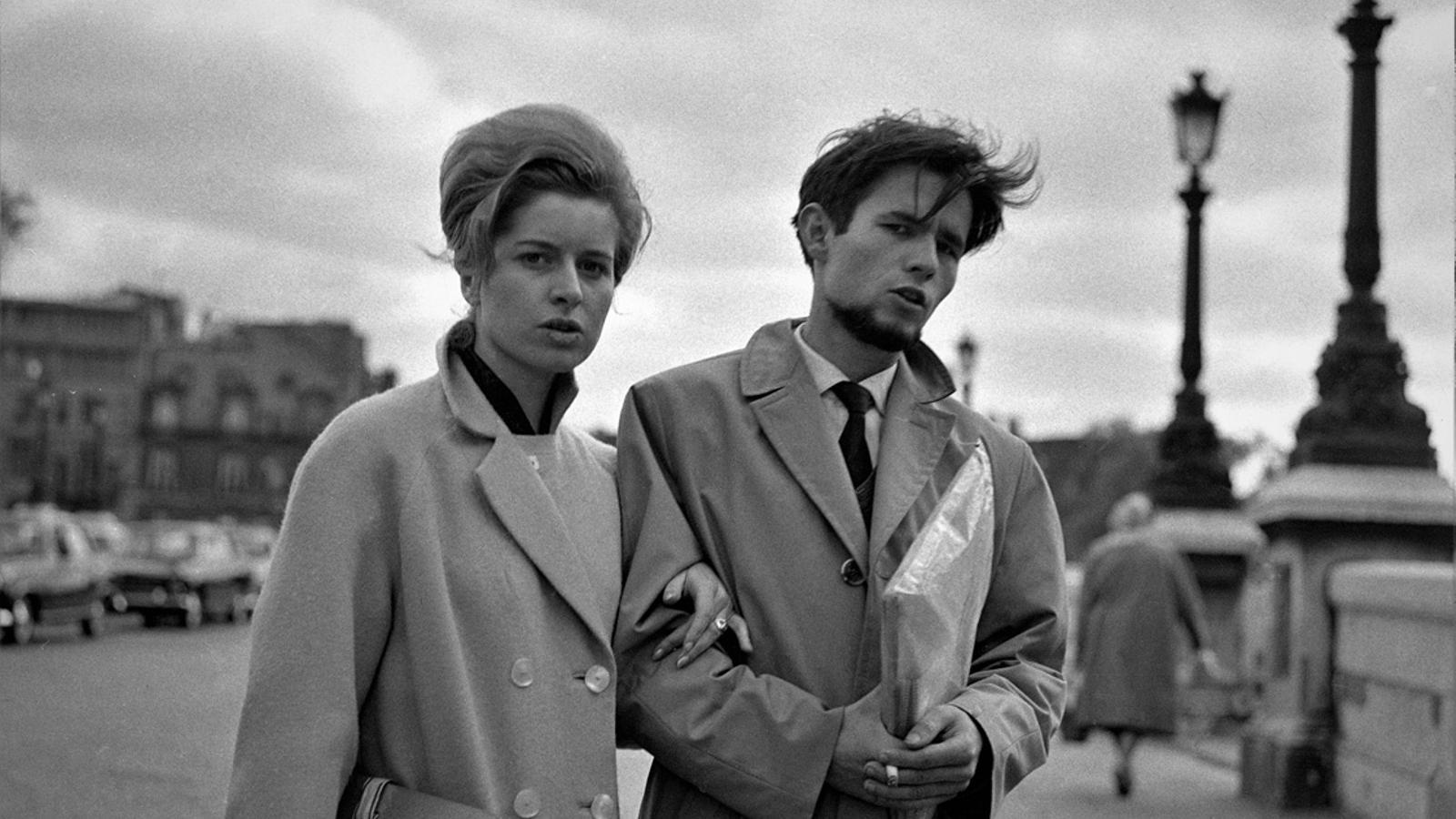
A red line that Duprat drew for them was portraying theclochards: they were forbidden from photographing the homeless of Paris. But Eugeni Forcano (1926-2018), as can be seen in the exhibition dedicated to him by LaFACT in Terrassa, titled Eugeni Forcano. Paris 1962, defied the prohibition and took a magnificent portrait of a homeless man asleep on a stone railing. On the left of the image, a bottle acts as a counterpoint to the composition and, at the same time, points to why he is sleeping off a drunk. As always happens with Forcano's photographs of vulnerable people, the image overflows with dignity. Furthermore, at the beginning of the exhibition, The Clochard's Dream is part of a triptych full of life that also includes a beautiful portrait of two children, one of them smiling, titled Friends Without Problems, and Couple at the Pont Royal, the latter an anticipation of May '68. "This couple represents a youth that was more alternative than the Spanish one of that time," says Laura Terré, the curator of the exhibition together with Josep Guindo and the artist's son, Josep Maria Forcano.

Eugeni Forcano. Paris 1962 includes 40 vintage photographs and 15 more unpublished ones, selected by Josep Guindo from more than 150 negatives in his archive. The exhibition coincides with the centenary of Forcano's birth, however, although he was highly recognized during his lifetime, the institutions have not embraced the centenary and the exhibitions that have been seen this year have been organized by forcanistes unconditional to the Photographic Association of Catalonia, to the Friends of the Arts and Musical Youth of Terrassa and to the Lluís Domènech i Montaner House Museum of Canet de Mar, where the Eugeni Forcano Room is located.
"Forcano won the Gold Medal of Artistic Merit from the Barcelona City Council, the Creu de Sant Jordi, and the National Photography Award, but afterwards he hasn't been very recognized. Sometimes it's hard to find him in anthological exhibitions about his era. His trail has been somewhat lost," laments Terré. Above all, because Forcano is an extraordinary photographer. "He is a very important photographer because he taught people how to look, how to turn reality into an image through the covers of Destination, which was the most important and, at that time, progressive graphic magazine, with photographs of Ramon Dimas and Eugeni Forcano, who in the images of Barcelona introduced themes more committed to reality that had not been seen before," assures the curator.

All the faces of Paris
Among his colleagues, Forcano's Parisian work stands out for its heterogeneity: there are portraits, street photography, and other more conceptual photographs. They all have a common denominator, an "excellent" technique, as Terré says. "He focused a lot on people," he explains. In fact, one of the portraits corresponds to a painter who was on the street and who, when he saw that Forcano was photographing him, wanted to beat him up. "Forcano did a colossal job in about twelve or fifteen years," says Guindo. "When he found a subject, he exhausted it; he was like Picasso."
Each of the photographs exhibited at LaFact could be made into a cover. At that time, he had been making covers for Destino for two years, and he was already very aware of the power that a single image could have, not a sequence or a series. "Forcano was practically unknown until he started working for Destino. Although he was a member of the Photographic Group of Catalonia, he had no relationship with the group of photographers of Oriol Maspons and Xavi Miserachs," explains Terré. Is this lack of relationship due to a class issue? "More than social class, Forcano was in another story. He always said that he was a professional and that he did not have time. In part, it was also a matter of disinterest," says Terré.


Forcano's photography often has an ironic and even humorous character. The exhibited photographs had been titled by Forcano, in the way that Destino titled the photographs it featured on the cover. But Terré wanted to exhibit them free of literature so that everyone can make their own interpretation. "He believed that the text was what gave meaning to the image, and that is not the case," points out Terré. Eugeni Forcano. Paris 1962 will be open until November 8. Afterwards, the same center will dedicate another exhibition to him, focused on his experimental color images. And the publisher La Fábrica will publish a monograph of his work.
