Carme Portaceli says goodbye to the TNC with a work by Rodoreda “of a brutal violence”
Clara de Ramon, Cristina Genebat and Pepa López star in ‘L’hostal de les tres Camèlies’ at the Sala Gran
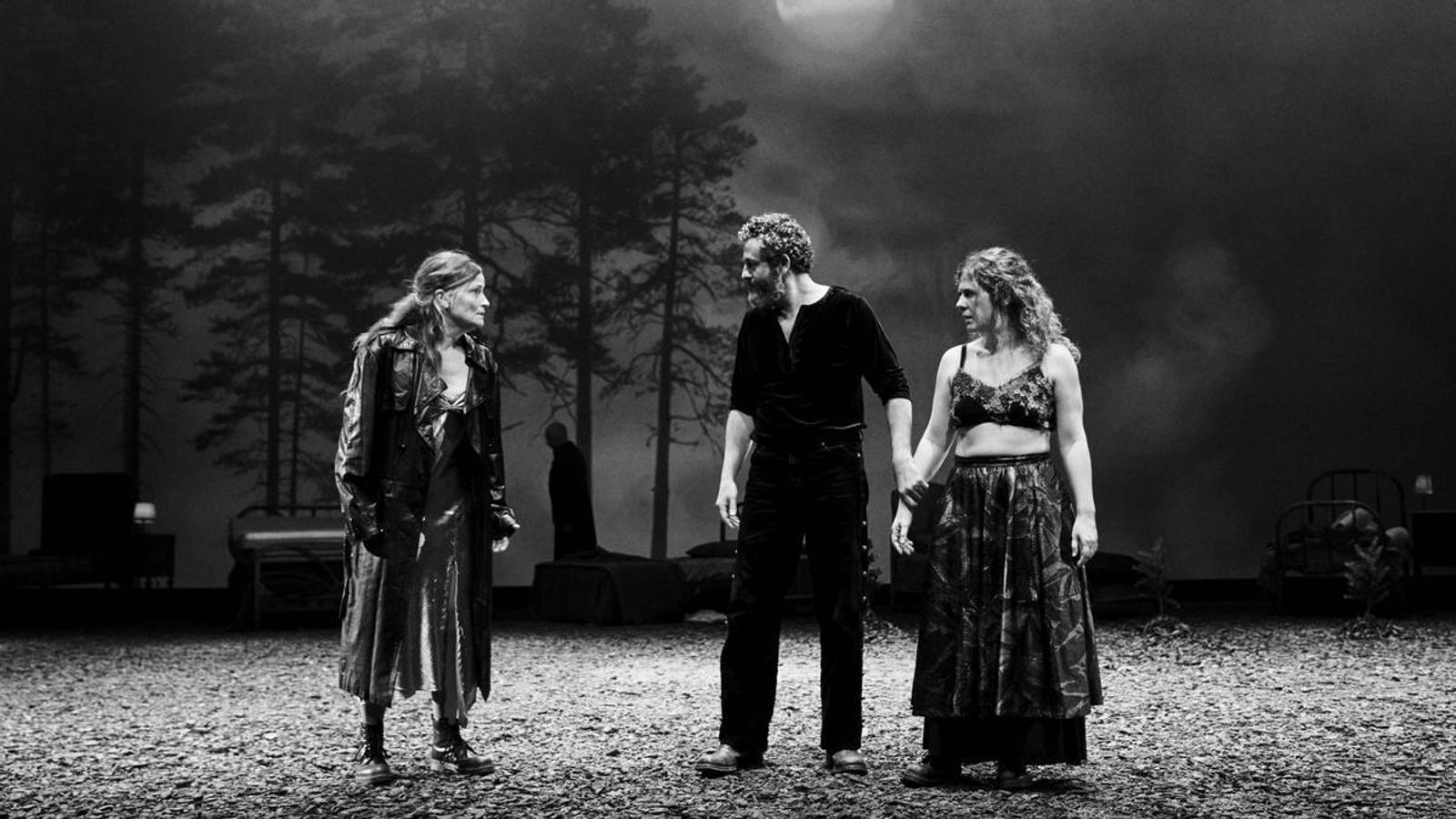

BarcelonaMercè Rodoreda (1908-1983) wrote The Hostel of the Three Camellias in the early seventies, at a time that also marked the end of her long exile in France and Switzerland. The writer poured into the text a profound pain that mainly affects the three great female characters of the work – Camèlia, Magdalena, and the Old Woman – and which would lead shortly after to the darkness of Death and the Spring. It is precisely with this show that Carme Portaceli has decided to close her tenure as artistic director of the National Theatre of Catalonia (TNC). She does so at a time when “choosing a text is very difficult,” she says, emphasizing Rodoreda's presence at the National Theatre in recent years. “She is the most represented woman at the TNC since I have been here,” underscores Portaceli, who in 2023 already directed The Time of the Doves and opened last season with Death and the Spring by La Veronal. The Hostel of the Three Camellias will premiere at the Sala Gran on November 26 and will be on view until January 3. The show is a co-production with the Teatre Principal of Palma, and in March there will be four performances in Mallorca.
“We knew this was a violent play, but as we delved into it, we found that it has a brutal and extreme violence against women. Rodoreda portrays an oppressive world where there is no possibility of being happy, of smiling, for each person to be who they are,” the director points out. The exercise of exploring this dark well falls to Clara de Ramon (Camèlia), Cristina Genebat (Magdalena), and Pepa López (the Old Woman). Each embodies a woman silenced and trampled by patriarchy, which takes shape through the owner of the hostel (Isak Férriz). Camèlia is the maid and has an affair with the owner, Magdalena is his wife and suffers constant humiliations and aggressions from him, and the Old Woman is the mother, a woman who has been silent for decades because it is the only way she has to survive the violence of her husband and son. The cast is completed by Ferran Carvajal (who also signs the movement), Judit Farrés (who also created the music), Xavier Frau, and Toni Gomila.
The performance, which lasts one hour and twenty minutes, takes place over one night at the inn and has practically no gentle scenes. “It is exhausting, emotional, and filled with very profound mistreatment,” says Genebat. The work mirrors the rural dramas of Guimerà and Sagarra, and although the three women suffer because of sexism, there is no sisterhood between them. “My character has learned to use the patriarchy to her advantage. Seen through today's eyes, we would judge her harshly, but I have learned that I must not do that; I must understand her, even though she is so far removed from me,” says De Ramon. “The text is framed within French existentialism and is a reflection of what Rodoreda lived through. After the two wars, Francoism, and exile, she has no choice but to have a bleak view of the world,” explains the playwright Pablo Ley. His task has consisted of pruning the work of fragments that, according to him, hindered its rhythm and, in parallel, incorporating some capsules that connect the story to Rodoreda’s life during those years.
Symbolic and agonizing
The first time that The Hostel of the Three Camellias was performed was in 1979 at the Sitges Festival, under the direction of Araceli Bruch. “Rodoreda attended that performance and did not like it at all. In fact, the show was very poorly received,” explains Ley. In the new version that is now being staged, the symbols and the agonizing universe of the writer gain strength, and the story moves away from traditionalism. “As we have been discovering it, we have seen how the work took a journey towards the poetics of Death and the Spring and the choreography has also headed in this direction. Furthermore, we have incorporated a new character, the Other, who gathers and absorbs the violence, memory, and desire of women. We are trying to open up a more metaphorical field that helps to expand the vision of the work,” explains Ferran Carvajal.
The audience will discover at the end whether The Hostel of the Three Camellias is a story of empowerment or submission, a question about which the company itself has discrepancies. “The women in the show stop being silent and say what they think. Sometimes, however, to find dignity, the break must be very brutal,” reflects Genebat. The work can also be read, as Farrés points out, as an empowerment of Rodoreda herself: “She wrote it in a time very different from the current one, and she made a critique of the clichés of patriarchy, of this political and emotional violence that we all suffer for belonging to our society. The empowerment is, clearly, Mercè Rodoreda's”.
