The Government commits to negotiating the transfer of hospitals that an ARA report uncovered
The Minister of Economy, Alícia Romero, responds in Parliament that she will take to the Bilateral Commission the ownership of 112 properties of the TGSS
-
CAT -
CAST
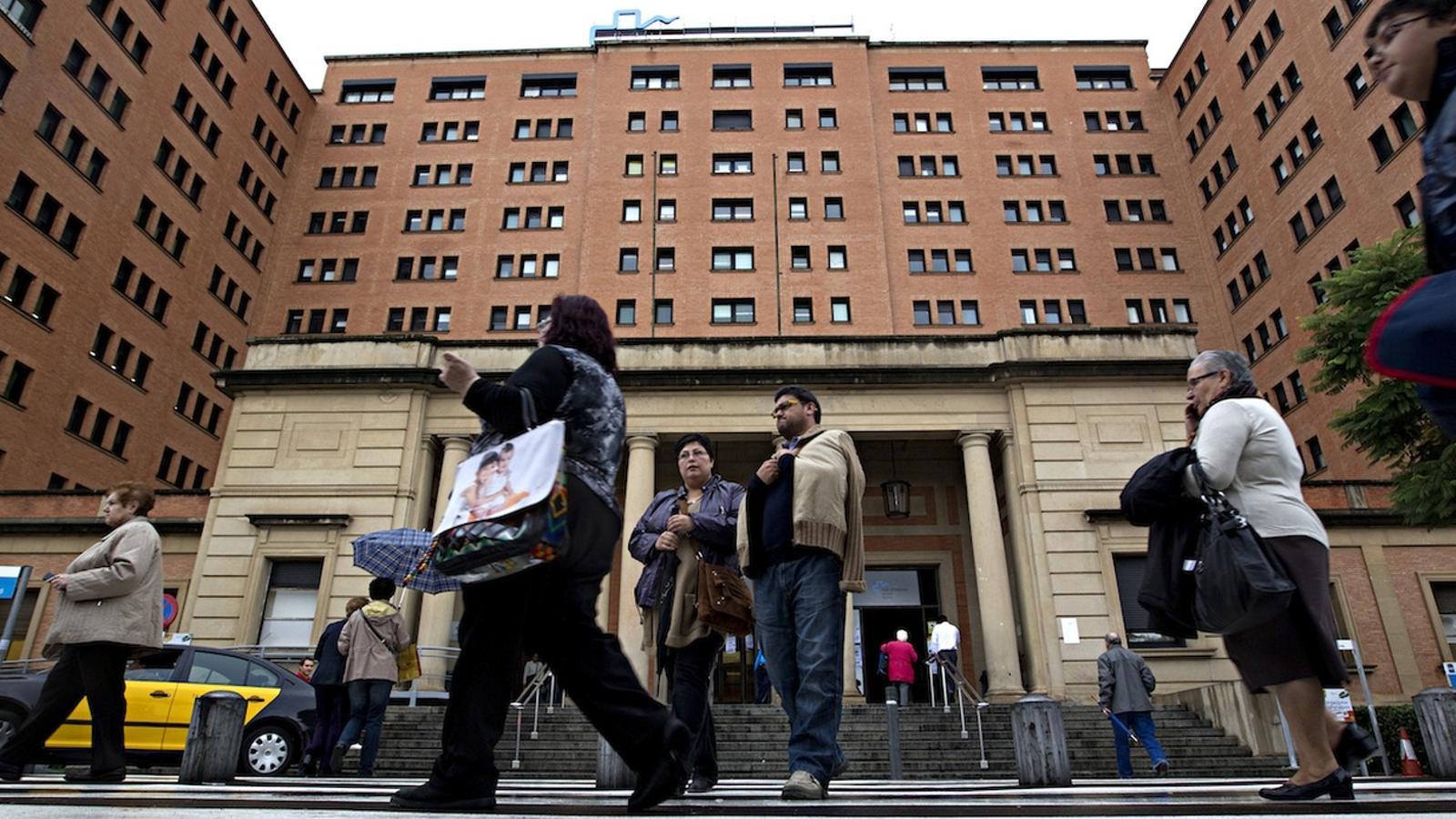
BarcelonaA few weeks ago, ARA published a report that highlighted that all the major public hospitals of the Catalan Health Institute and the historic primary care centers (CAP) are attached to the Generalitat. However, in many cases, ownership does not belong to the Catalan government, but to the General Treasury of Social Security (TGSS). This situation forces the Generalitat to assume the maintenance, renovation, and investment costs of facilities it does not own. This Wednesday, ERC deputy Carles Campuzano, following the ARA article and the research by historian Neus Morán, brought this issue to Parliament, and the Minister of Economy, Alícia Romero, has committed to negotiating with the state for the transfer of ownership of the buildings.
Campuzano reminded Parliament that 112 properties managed by the Generalitat are in the hands of the State. Among them are the major reference hospitals in the system — such as Vall d'Hebron, Bellvitge, Arnau de Vilanova de Lleida, Josep Trueta de Girona, or Joan XXIII de Tarragona — and some CAPs. As Morán's study detailed, the State protected the health heritage resulting from Francoist spoliation before the transfer of powers.
"All the ministers, from Xavier Trias and Marina Geli to Josep Maria Argimon and Manel Balcells, have raised this issue with little success," lamented Campuzano, who wondered why this problem, which has been ongoing for 46 years, has not yet been resolved. "Beyond symbolism, the situation has a direct economic impact on the Generalitat's finances. The Government is the one that finances 100% of the renovations, expansions, maintenance, and energy efficiency improvements of buildings that are not theirs," he added, and requested that a study be carried out on the cost this has entailed and also how it has contributed to increasing the value of this heritage. "This is relevant from a financial point of view: it increases the value of this heritage [of the State], but it weakens the consolidated public balance sheet and reduces the Generalitat's room for maneuver," said Campuzano, who recalled that every time the Government carries out works, however small, it must request permission from the TGSS. A procedure that has generated more than one bureaucratic problem.
Romero's commitment
"It is true that when health competencies were transferred to us, the ownership of the facilities was not transferred," Romero acknowledged, recalling that this problem also affects the rest of the autonomous communities. "It would be much better if these facilities belonged to the Generalitat, since we assume all the improvement and maintenance work," he admitted. "The closest we came to achieving this was in 2011, when there was a legal provision resulting from an agreement between the State and the Generalitat, but which was later repealed by the PP".
According to Romero, part of the path taken in 2011 should be retraced: obtaining a new legal provision in Madrid and closing a definitive pact. The minister expressed optimism regarding the current political context between Moncloa and the Palau de la Generalitat: "In recent years, we have seen that there is a clear will for agreement between the Spanish government and Catalonia. The will is there and I am sure we will be able to achieve it," she said, and committed to bringing the proposal to the next Generalitat-State Bilateral Commission.
