The centenary that claims one of the masters of the Catalan avant-garde
The Carmen Thyssen Space of Sant Feliu de Guíxols commemorates the 100 years of Modest Cuixart's birth with the exhibition 'Vincles', which can be visited until October 18

-
CAT -
CAST
Saint Feliu de GuíxolsModest Cuixart, a founding member of the legendary Dau al Set group, is one of the key figures of the Catalan avant-garde of the second half of the 20th century. Often overshadowed by names like Joan Brossa or Antoni Tàpies, his contribution is equally decisive in the renewal of post-war plastic language. Born in Barcelona in 1925, but settled in Palafrugell since 1970, he developed a large part of his creative career surrounded and inspired by the landscapes of Empordà. This summer, coinciding with the centenary of his birth, the Espai Carmen Thyssen in the monastery of Sant Feliu de Guíxols dedicates the exhibition "Links, organized in collaboration with the Cuixart Foundation, which can be visited until October 18.
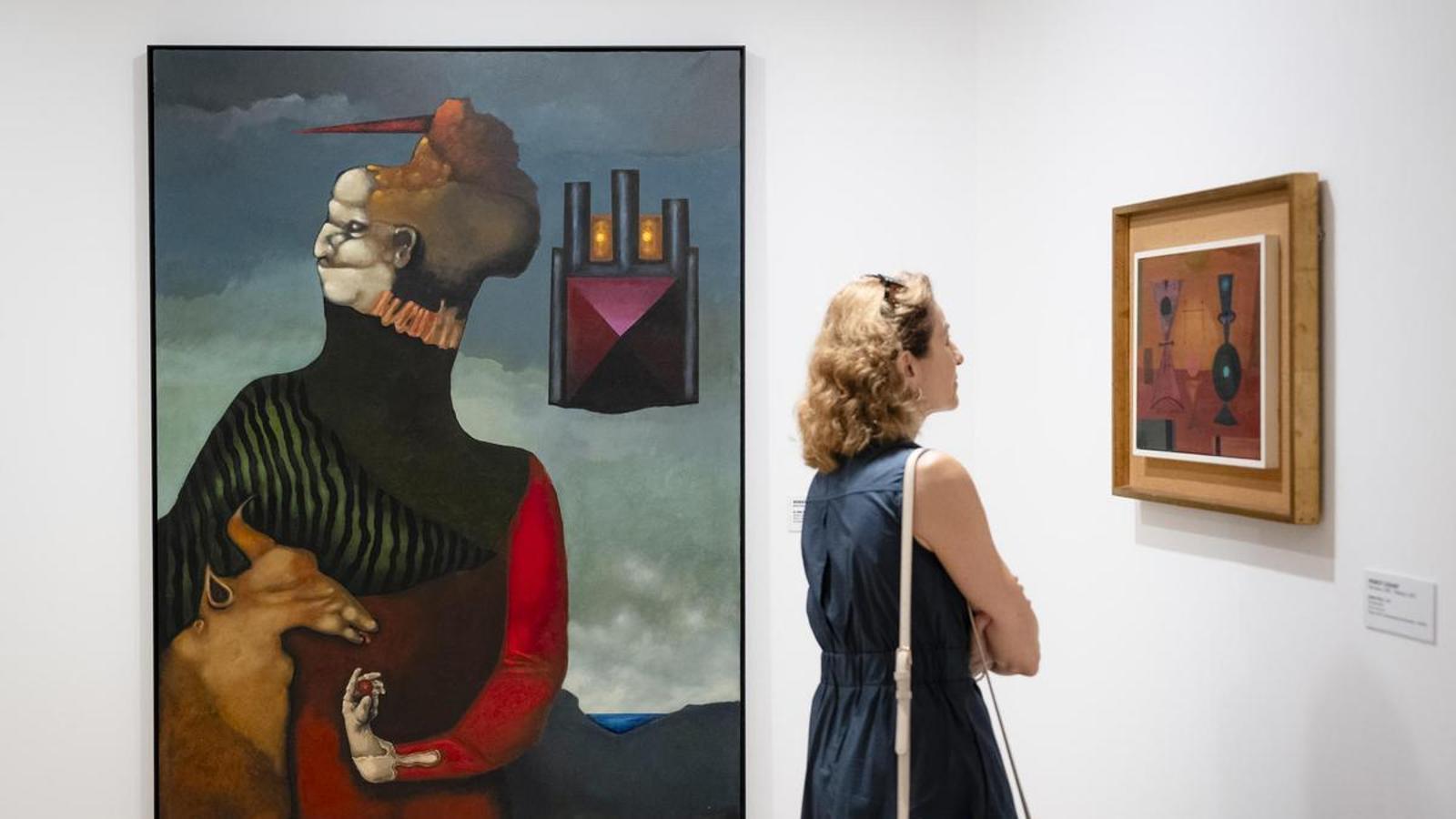
The exhibition is not a conventional retrospective nor a strictly chronological journey, but rather, as the title suggests, it is articulated through the dialogues, correspondences, and affinities of Cuixart's work with that of other creators in art history, especially from the 19th and 20th centuries, such as Joan Ponç, Pepa Poch, Olga Sacharoff, Luis Feito, Modest Urgell, Emili Grau Sala or Eliseu Meifrèn. The relationships are established through color, line, material, symbols or conceptual concerns, making Cuixart the epicenter of a transversal journey around his six decades of artistic creation.
The curator is art historian Pilar Giró, who worked for two decades alongside Cuixart. "This exhibition is, firstly, to fall in love with art history and, secondly, to discover Cuixart. That eclectic Cuixart, with a pictorial production based on unity within diversity and capable of assimilating the great masters to adapt them to his contemporary conceptual needs," she explains. Cuixart was Giró's mentor and opened the doors to the art world for her: "I visited many museums around the world with him, and his way of looking at classical works, of understanding what he was looking for in them and what he discovered, is what I have wanted to convey in Links", add the curator.

Cuixart next to Modest Urgell, Emili Grau or Eliseu Meifrèn
Cuixart's works are exhibited alongside those of other artists in the form of diptychs or visual constellations in the style of Aby Warburg, side by side, inviting the visitor to establish their own connections. No prior knowledge of art history periods or movements is required; any interpretation based on the juxtaposed works is valid and possible. Next to a seascape by Modest Urgell, Cuixart's dreamlike El pescallunes (1949) stands out, with Dalinian resonances and intense chromatic freedom. The monumental Helena (1974), with deformed shapes and great expressive force, is contrasted with Senyoreta al balcó, by Emili Grau Sala, with its bourgeois, impressionistic air. Equally suggestive is the relationship between the rough, material plate But de source (1958) and the luminous, French-style gardens of Malvarosa by Eliseu Meifrèn. And, as a grand finale, the precious artist's book Geometria de l'onada, Cuixart's artistic testament, created in 2005 in collaboration with Pilar Giró herself, author of the poems accompanying the drawings.
The works are structured into nine exhibition areas separated by themes that function more as symbolic and poetic territories than as chronological chapters. The route allows us to follow the evolution of an experimental artist who moved with absolute freedom between the magic surrealism of his early period, material informel, lyrical abstraction, and a profoundly symbolic and visionary figuration. In total, Vincles brings together 34 works by Cuixart and eighteen other artists, many of which have not been exhibited for years, from the Carmen Thyssen Collection itself, as well as loans from museums, foundations, galleries, and private collections.
