How to build a "healthy media diet", according to psychologists and experts
Experts recommend setting a limit on news consumption to avoid falling into mental exhaustion

-
CAT -
CAST
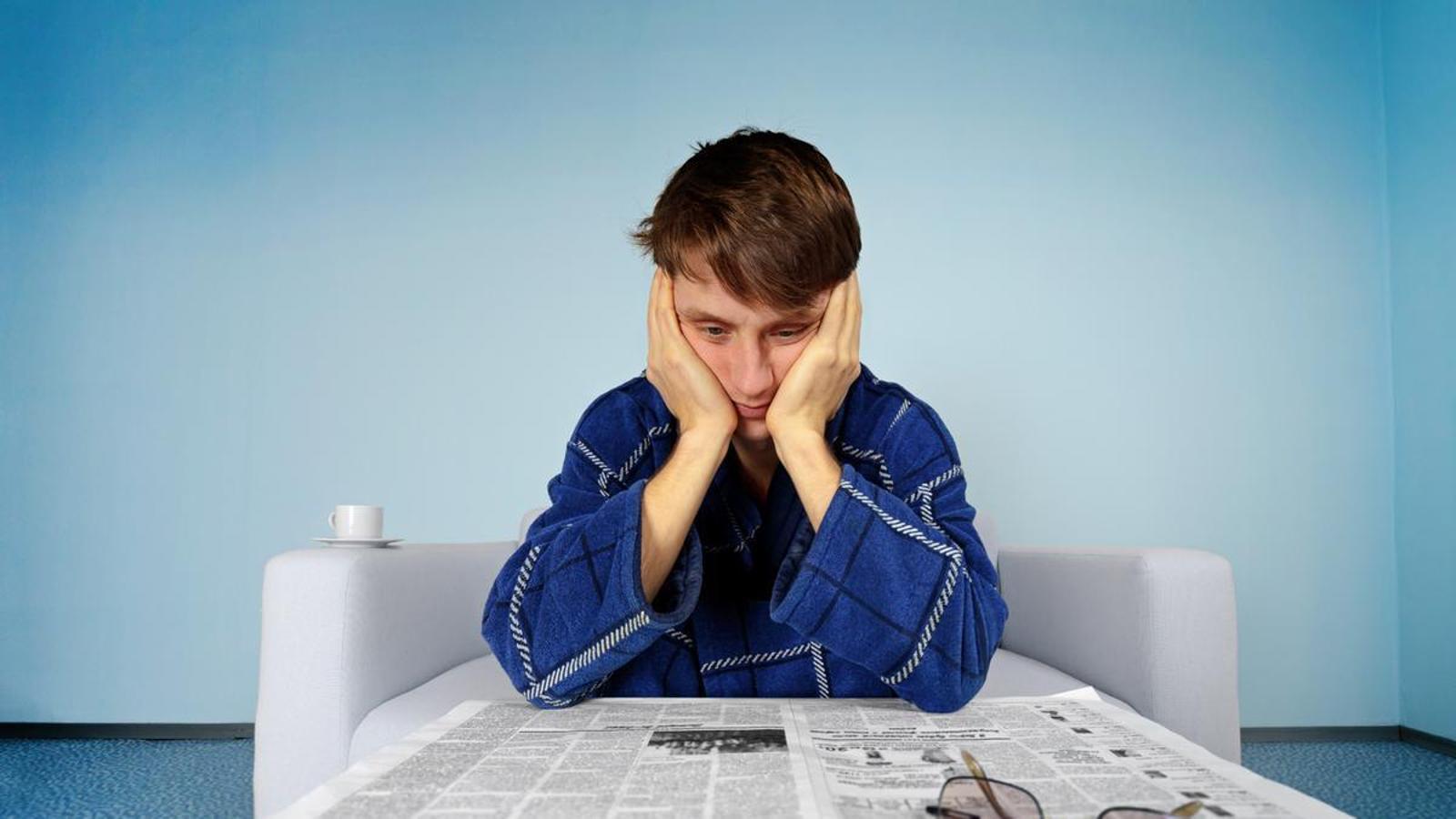
BarcelonaSocial networks, alerts, digital newspapers, but also paper editions, televisions, and radios. Currently, information can arrive through many channels and practically non-stop. Although being informed is essential for participating in democracy, in recent years it has been detected that excessive news consumption can take its toll. Psychologists call it information fatigue. ReachLink, a platform dedicated to mental health support, defines it as "a state of cognitive and emotional exhaustion that develops when exposed to the media continuously over time. It's not just about feeling tired of hearing bad news. It's a specific psychological response to the incessant flow of information that characterizes modern media consumption. You may experience it as a feeling of anxiety, numbness, or simply being unable to process one more headline."
For psychologist Mireia Cabero, director of the public emotional culture cabinet, the phenomenon is like having "a plate that is always full of varied, attractive, magnetic, delicious food tailored to my tastes, and which automatically refills constantly, without my will to eat mattering." She points out that fatigue has increased in recent years due to the creation of a "very effective digital system that constantly appeals to you because the algorithm sends you strategically and personalized content," and adds that she has treated cases in people who "due to their position, field, and daily professional demands, need to be hyperconnected."Psychologist Laura Esquinas has also treated people who claim to suffer from media burnout, even though they do not seek consultation for this reason. "In recent years, we have experienced a succession of events that have had a great emotional impact: the covid-19 pandemic, the war in Ukraine, the situation in the Middle East, economic instability, and the climate crisis. All of this has caused anxiety, tension, anger, sadness. The fact that we hardly have time to process these emotions before receiving a new impact causes a situation of saturation and exhaustion: my body and my mind cannot keep receiving this type of information because everything is bad and distressing," reflects the psychologist. A study published in 2021 in the International Journal of Environmental Research and Public Health that followed 2,251 adults during the spring of 2020, concluded that the more information was sought about covid, the more likely one was to suffer emotional stress. One of the study's lead authors, Dr. Markus Brauer, a professor of Psychology at the University of Wisconsin-Madison, explained to the American Psychological Association that uncertainty "is a difficult psychological state" for humans. Therefore, having more information about any issue should serve to provide us with security. The problem is that, with some issues, this certainty cannot be achieved because the person feels that these are problems that are beyond their scope of action. And helplessness degenerates into a state of hopelessness and exhaustion. The stress caused by the avalanche of news also has a biological explanation. "When a person begins to feel intense discomfort, this is related to a hormone we call cortisol. In fact, whenever a reaction of great tension or anxiety occurs, cortisol can play a role. Likewise, when we experience anxiety or anger, often what happens is simply that adrenaline is released into the bloodstream. This response of the sympathetic nervous system is the underlying reaction that leads to an increase in anxiety and panic," pointed out clinical psychologist Sam S. Anderson, from the Mayo Clinic, on the podcast Health Matters. He adds that, in a normal situation, our body is specifically programmed to manage this intensity and calm down, but the constant bombardment of information can make it impossible or difficult to achieve. Tools to manage information
Faced with this scenario, many people choose to systematically avoid the news. Psychologists, however, do not recommend stopping informing oneself altogether, but rather creating a system that is positive for mental health, known as a "healthy media diet." In this regard, Cabero assures that one can consume news without falling into fatigue in the same way that "we can eat and drink without overdoing it."Esquinas manifests himself in the same line as Cabero. "It may be that the person who feels this way simply needs to build a healthier relationship with information. It is important to decide and construct the moments of the day when news is consumed and to have a more active position regarding choosing information sources. Doing scroll puts us in a passive position," he reflects. He recalls that a very common situation is that we check our mobile phones and do scroll during relaxation moments, and this contrasts with the type of information we receive during these supposedly restful moments. "If what we are looking for is a moment of relaxation and what we are receiving is news that generates a lot of emotional impact, in the long run it can cause more exhaustion," he points out. Among the practical tips to curb this exhaustion, Cabero points out two actions that can help people who feel more overwhelmed: disabling notifications and maintaining spaces for mental oasis and self-protection, especially from 9 PM onwards.
