The erotics of touch, protagonist at the Locarno Festival
Three Catalan directors compete in Pardi di Domani, the section dedicated to short films
-
CAT -
CAST
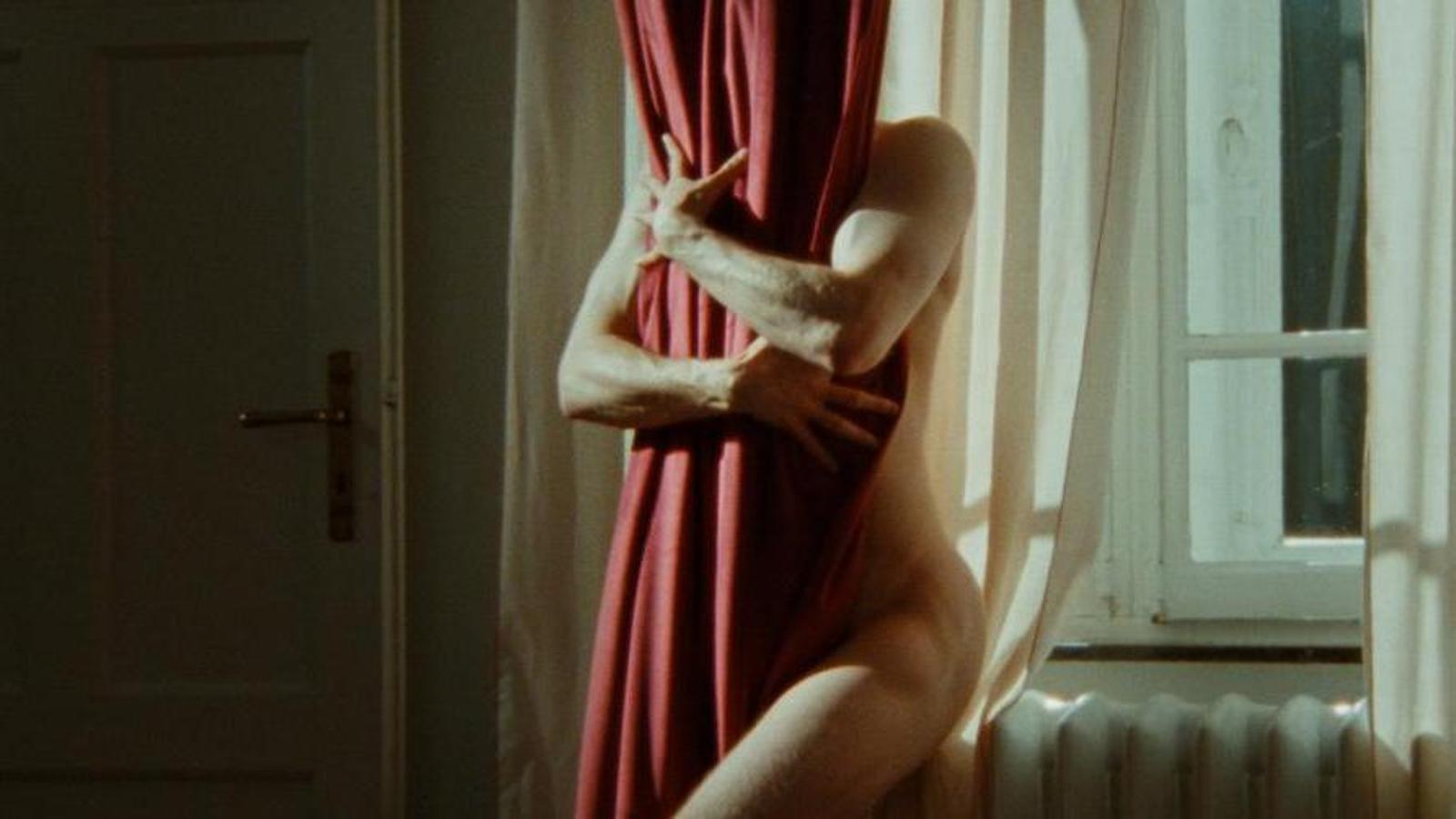
LocarnoFew famous names in the international competition for the Golden Leopard at this 79th edition of the Locarno Film Festival, which allows for prominence to be given to less recognized filmmakers. Touch is key in Objet A, the second feature film by Ann Oren, a director who also made a name for herself in Locarno in 2022 with Piaffe, a film focused on the cinematic sound device and its ability to reveal unexpected erotic dimensions. In Objet A, the two protagonists, surgeons specializing in hands, maintain a relationship tied to domination-submission dynamics and are obsessed with objects: she is a kleptomaniac, and he allows himself to be objectified sexually.
Shot on 16mm, with impeccable taste for framing and details, and channeling Luis Buñuel, Objet A celebrates fetishism from the perspective of eroticism and artistic practice. Because the film ultimately speaks of a type of cinema, closer to experimental and visual art, that restores to objects a unique artistic dimension that they lack in commercial films, where they are reduced to mere props or a specific functionality within the narrative. The fetishization of the object in Ann Oren's work denotes analog resistance in the face of a new digital world to celebrate the pleasure of connecting through touch with works of art... and with people.
Youth is the protagonist of other remarkable titles in the international competition. In Manhunt, Wayne Wapeemupkwa traces the itinerary of two young assassins in the deep Canada in a lucid portrait of the aggressive and displaced masculinities of today's world, which connects with titles like Gust Van Sant's Elephant or Truman Capote's In Cold Blood, also in the fascination, probably involuntary, that its protagonists generate in him. Giovanni Tortorici, an accomplished disciple of his producer, Luca Guadagnino, confirms himself with Ketticè as one of the key names in contemporary European cinema with his youthful portraits with their own identity. In his second film, he continues the exploration of youthful anger that he began with the stimulating Dinou (2023), this time with a very fine-tuned approach, neither sensationalist nor comical, to the progressively dependent bond of a young Sicilian with weed. And German Isabelle Stever, along with Ukrainian screenwriter Anna Melikova, creates an unexpected approach to the war in Ukraine from a queer perspective by explaining the conflict from the point of view of a young couple, Olya and her husband, Oleh, a trans boy, in a country where the war experience also has a gender: only women can leave Ukraine, while men must be available for the army.
Catalan directors in tomorrow's Leopards
Three Catalan directors compete with two shorts for the Golden Leopard in the Pardi di Domani section. Blanca Camell Galí, who already competed there with Castells in 2022, has presented Primer foc, in which Bruna Cusí makes her debut speaking in French. The film connects with a new wave of motherhood cinema that breaks with the idealization of this practice to bring it closer to real experience. Camell Galí was inspired by her first childbirth to show the tribulations of a new mother who cannot enjoy or care for her baby because she has suffered a very painful tear. A wound that, however, seems like a taboo: doctors dismiss it, her mother doesn't want to give it importance... As often happens in Camell Galí's cinema, the film takes place between France and Catalonia, and culminates in a new explosion of popular culture.
Sofia Esteve and Isa Luengo also highlight a little-known experience in Los andares: that of the excursions outside of Barcelona that queer groups organized during Francoism to enjoy sexuality far from repressive environments. The film, shot in La Selva, in Girona, without any urban elements, is set in Catalonia in the fifties. The period markers are determined by the costumes, the objects (the coin with Franco's effigy) and the conversations of the main group, a series of young people who have gone away for the weekend to say goodbye to one of the group's members, who is leaving the country. Esteve and Luengo address repression (also the theme of the short film they co-directed with Marina Freixa, Els buits, 2024) and its consequences (fleeing the country, confinement in psychiatric hospitals, prison, hiding one's sexuality...) metonymically, through some dialogues or a letter that the whole group writes to a jailed friend. Los andares does not want to be a period drama in service of a capital-T Theme, but rather a film that recreates more emotionally and sensorially a shared experience of repression, but also of liberation, collective resistance, and sensuality. Coherently, the camera caresses, rather than focuses on, the characters.
