The day that Mercè Rodoreda went to see 'Emmanuelle'
'Letters to the rediscovered friends' allows reconstructing the relationship of the author of 'The Time of the Doves' throughout almost two decades with Susina Amat, Julieta Franquesa and Carme Manrubia

-
CAT -
CAST
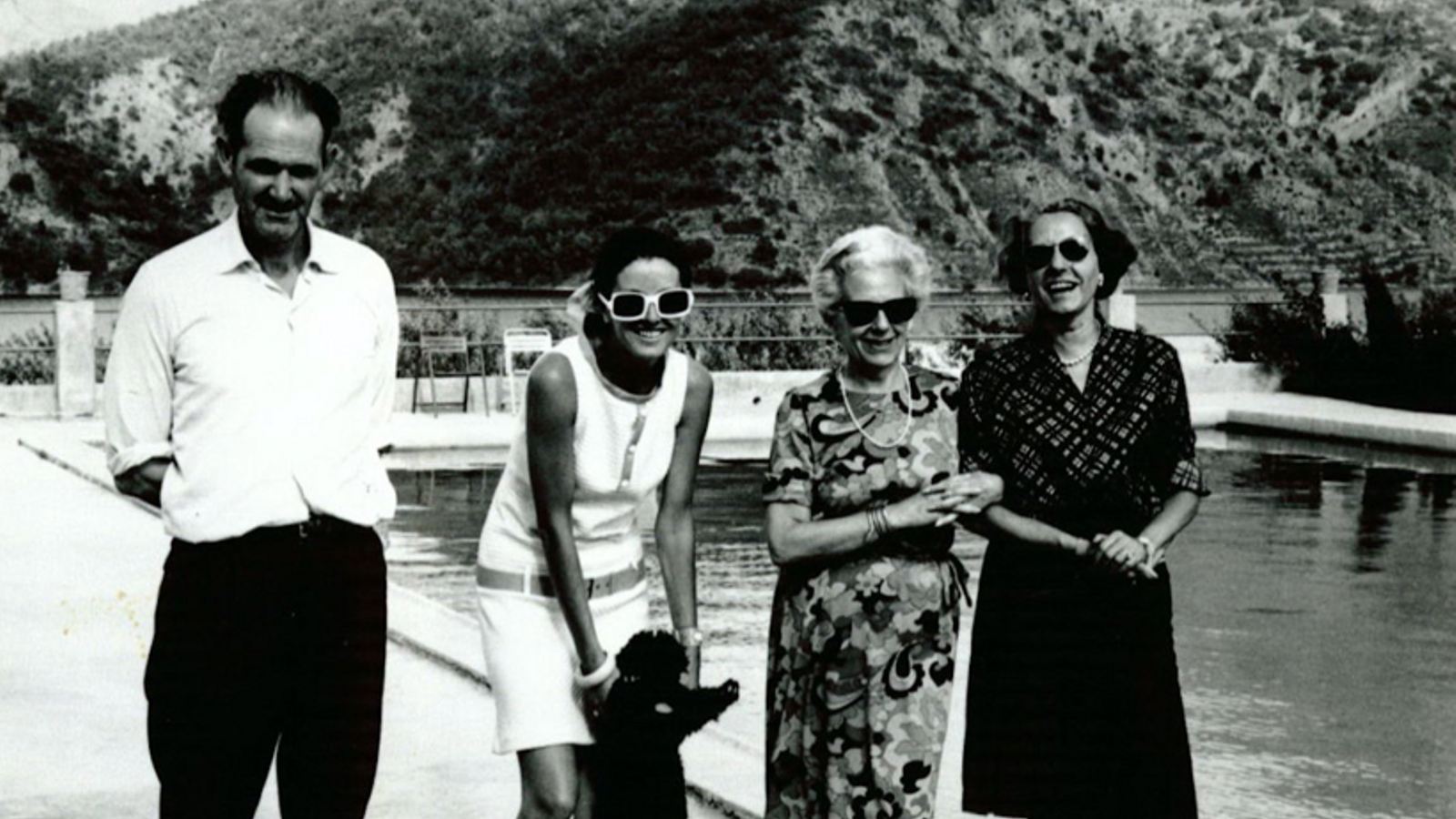
Barcelona"Dear Mercè: it has been a long time since we heard from you. What are you doing? Where are you? How are you? [...] As you can see I am [sic] in La Molina where I am taking a rest cure of chilling". This is the postcard that the painter and pedagogue Susina Amat i Juvé (Barcelona, 1912-1983) sent on July 20, 1971, from the Catalan Pyrenees, to Mercè Rodoreda (Barcelona, 1908 - Girona, 1983), whom she had become friends with when they worked at the Propaganda Commissariat of the Generalitat, in the middle of the Civil War. The author, who at that time was finalizing one of her most emblematic novels, Broken mirror (1974), he replied to her from Vienna three weeks later to let her know about the difficult time he was going through: "I have been [sic] in Vienna for about four months, where a person very dear to me is dying little by little after a couple of brain surgeries".
Rodoreda was referring to Joan Prat (Sabadell, 1904 - Vienna, 1971), her partner. Since they met, shortly after going into exile in France, at the castle of Roissy-en-Brie, Prat –who had signed his articles and literary texts with the pseudonym Armand Obiols– and the writer began a controversial relationship that lasted more than three decades. In Vienna, Prat was dying as a result of cancer. "I have few things to tell you; I spend the day at the clinic, where every day is dreadful –continues Rodoreda in the letter sent to Susina Amat, one of the 170 collected in the volume Letters to rediscovered friends (Sidillà), by Anna Maria Saludes Amat and Araceli Bruch Pla–. If one day I find myself having to undergo brain surgery, I will do everything I can to end my life in whatever way possible".
The author's last two decades
The writer was at a decisive moment in her life: in addition to being on the verge of losing her partner and the first reader of many of her books, she was suffering over the outcome of the inheritance of her first husband, Joan Gurguí, who had died in 1966. As can be read in the notes by Saludes and Bruch in a letter dated November 5, 1971, also sent to Susina Amat, Rodoreda's only son, Jordi Gurguí, "intended to annul his mother's right to her legitimate share, invoking laws that were meant to penalize her". In the letter, the author also recalls the five "asylum letters" that Joan Sales, her editor, had sent her when she returned from Vienna after having buried Prat. In the last one, he said that, "thanks to him, Jordi withdrew that letter he had sent to the bank to deprive me of the ability to withdraw the assets".
These intimate and heart-rending details are not scarce in the correspondence that Sidillà has just put into circulation, which also addresses literary questions and, from time to time, offers the reader a phrase that seems taken from a work by Rodoreda. "I know that you have to live overcoming sorrows –she writes on January 2, 1969–: life usually treats the best people very badly". "Tranquility is already a kind of death –she asserts on February 28, 1972, still from Geneva–. But perhaps good peace is worth more, especially when one has already gotten used to everything, than great turmoil".
A troubled edition
The existence of Letters to the Rediscovered Friends has been the result of the long dedication to the study of Mercè Rodoreda by the two editors of the volume. Anna Maria Saludes (Baiona, 1939 - Santa Cristina d'Aro, 2025), in addition to having translated the bulk of the writer's narrative work into Italian, collected for years the correspondence that Rodoreda maintained with her mother, Susina Amat, consisting of a hundred letters, which start in 1964 and continue until January 1983. Araceli Bruch Pla (Manlleu, 1953) has been a pioneer in making known the theatrical facet of the author of Death in Spring: since she directed and adapted The Inn of the Three Camellias (1979) she has not stopped championing the lesser-known side of her literary production, consisting of five plays and two unfinished manuscripts that are due to be published soon in the corresponding volume of Rodoreda's complete works by the Institute of Catalan Studies.
In the prologue to Letters to the Rediscovered Friends, Bruch explains that her involvement with the project began at the end of 2022, when Anna Maria Saludes –who was 83 years old at the time– asked her if she could lend a hand. "Rodoreda was the keystone that united us and the epistolary genre one of my weaknesses," she writes. Shortly after starting to work together, the death of Araceli Bruch's husband and Anna Maria Saludes's health problems began to delay the task. "The work dragged on, it became difficult for us to meet, inconveniences of all kinds arose," recalls Bruch. In 2025, when they had already decided that Sidillà would publish the volume, Saludes had to be admitted to the Clínic hospital and spent the last weeks of her life at the Palamós Senior Center. "You hadn't signed the contract, we couldn't access your house to look for material, information had remained pending that only you knew and that you could no longer give us," continues Bruch. Thanks to Montse Ardiaca, who became the "symbolic executor" of Saludes's "intellectual inheritance," Bruch and the editors were able to enter the apartment and complete the project, which has just arrived in bookstores and will be one of the most prominent novelties related to Rodoreda of the year.
For the duo of editors of Cartes a les amigues retrobades, the book recovers "the first friends Rodoreda had, already married and with a child, outside the usual circle of neighbors and relatives". When she began working at the Commissariat of Anti-Fascist Propaganda in 1937, Rodoreda had already published four novels, the last of which had been Crim (1936). At the Generalitat office, she met Susina Amat, Julieta Franquesa (Barcelona, 1910 - Geneva, 1987), and Carme Manrubia (Almeria, 1916-1998). The four forged "a friendship that must have been solid enough to pick up the thread so many years later". The epistolary exchange between Rodoreda and Amat spans almost two decades and is the most complete in the volume. The one she maintained with Franquesa started in 1974 and ended in 1982, and the relationship by letter with Manrubia began in 1972 and ended in 1978.
Luis Buñuel's "blunder"
The first letter from Rodoreda to Julieta Franquesa, dated October 12, 1974, serves to confirm once again the writer's passion for cinema. She explains to her that she has seen, in Paris, the adaptation of Arabian Nights by Pier Paolo Pasolini, "full of beauty and poetry". The other two films she comments on did not impress her: there is Emmanuelle, "more erotic than I don't know what" and which "cannot even be explained", and The Phantom of Liberty, "the latest from [Luis] Buñuel, which rather seemed like a mess to me". "It's too obvious that he wants to shock", she adds.
Later on, Rodoreda discusses with Franquesa the back-and-forth of the administration regarding accepting education in Catalan, complains about the day a television crew interviewed her ("These things not only bother me but they unnerve me and throw me off balance", she admits), comments on some of the translations of her work that are being published, and shares the news of the death by being run over of the dog that Carme Manrubia and she had in Romanyà, where Rodoreda spent periods of time, first at her friend's house and, starting in 1979, at the chalet she built just above Manrubia's property. "Up here we hear echoes of strikes, labor conflicts, cries for amnesty and freedom, but it seems the government has a firm grip on the helm and everything is moving forward with the king at the helm", she writes to Julieta Franquesa on January 19, 1976.
The volume includes 23 letters from Carme Manrubia to Mercè Rodoreda and a single missive from the writer. While the book that Mariàngela Vilallonga, professor emeritus of Latin philology at the University of Girona, is finalizing about the peculiar relationship between the two friends is yet to arrive, in the volume published by Sidillà the reader will be able to get a first taste of the love they both shared for nature and, specifically, for flowers; they will find passionate declarations of longing, and will also discover Manrubia's taste for the dreamlike, spiritual, and mysterious world – she practiced the philosophy of the Rosicrucians –, which in some cases becomes enigmatically linked to Rodoreda: "One day I told you that I could tell you difficult things with the certainty that you would understand them well, but I never thought I would tell you such delicate things, so secret that no one should know. That are kept secret because of how important they are and no one can touch them".

FOUR ESSENTIAL VOLUMES OF LETTERS
Edited by Montserrat Casals
Club Editor, 2008

The most extensive correspondence of Mercè Rodoreda is the one she maintained with her editor, Joan Sales, between 1960 and 1983. In addition to commenting on the literary scene of the era –often, in a not very flattering tone– and discussing the language that should be used to convert The Time of the Doves in the author's most read and translated novel, the exchange of letters following the first version of Death and the Spring, written in the early 60s. Sales is very critical of the detachment from reality in that novel, and ends up demanding that she write "another Colometa". "Hewas asking that prostitute her creative project and Rodoreda, who was very skilled, handed it to him The Street of the Camellias, in which the protagonist, Cecília Ce, ends up working as a prostitute", she recalled years later Neus Penalba following the publication of the essayHunger in the eyes, cement in the mouth (3i4, 2024), focused on Death and the Spring.
Armand Obiols
La Mirada Foundation (2011)
Convinced that Armand Obiols "deserves a place of merit within the" epistolary genre, Anna Maria Saludes made known three books signed by the author, all of them for the La Mirada Foundation, in charge of disseminating the legacy of the authors linked to the Colla de Sabadell. The first was Bordeus 45 (2004). The second, Lectures del romanticisme (2006), is a collection of letters addressed to his first wife, Montserrat Trabal. The third, Cartes a Mercè Rodoreda (2011), is made up of 319 documents by Obiols, including postcards, letters, cards, and some telegrams. Saludes explained in the prologue that the writer's response to any of the published missives is not preserved, although 39 letters and 9 cards and postcards addressed to his partner that she decided not to include in the volume have survived. Even though the Sant Jordi jury did not want to award La plaça del Diamant, Obiols assures Rodoreda that the novel "will still be read 300 years from now [...] if there are still Catalans left," and adds that "since the Catalan golden age, nothing of this category has been done in creative prose".
Mercè Rodoreda
Edited by Carme Arnau
Institute for Catalan Studies, 2017
The volume, which is part of the ongoing project of Rodoreda's complete works by the Institute for Catalan Studies, proposes a return to crucial years in the writer's life through the letters she sent to authors such as Carles Riba, Josep Carner, Anna Murià and Rafael Tasis, to editors such as Josep Maria Cruzet and to politicians such as Josep Tarradellas. “These letters allow us to follow a tumultuous life, of a «rolling stone», as Rodoreda herself said,” recalls Carme Arnau, editor of the book, in relation to the author's itinerancy, who went from Roissy-en-Brie to Limoges and Bordeaux before settling in Paris and, later, in Geneva. Arnau is preparing a second part of the correspondence, which will start in 1960 and will reach 1983, the year of Rodoreda's death.
Mercè Rodoreda
Club Editor (2021)
With a prologue and annotations by the poet Blanca Llum Vidal and the editor Maria Bohigas, Letters to Anna Murià (1939-1956)makes available to readers the letters that Rodoreda sent to Murià during her exile. Published for the first time by La Sal Edicions in 1985, it only contains the letters from one of the parties. For whatever reason, Rodoreda did not keep anything that her friend sent her, with the exception of three letters that she never managed to send to her. The topics are mixed in a rushed manner –the complex love with Armand Obiols, the day-to-day life in Paris and Bordeaux, the readings and the sometimes sickly desire to write, the gossip about other writers in exile, the comments on the most thorny family matters– and only allow a glimpse into a part of the truth of the exiled Rodoreda.
