The writer who found a colossal moose in front of her house
Claudia Ulloa Donoso publishes a collection of stories crossed by the presence of animals and by identity conflicts
-
CAT -
CAST
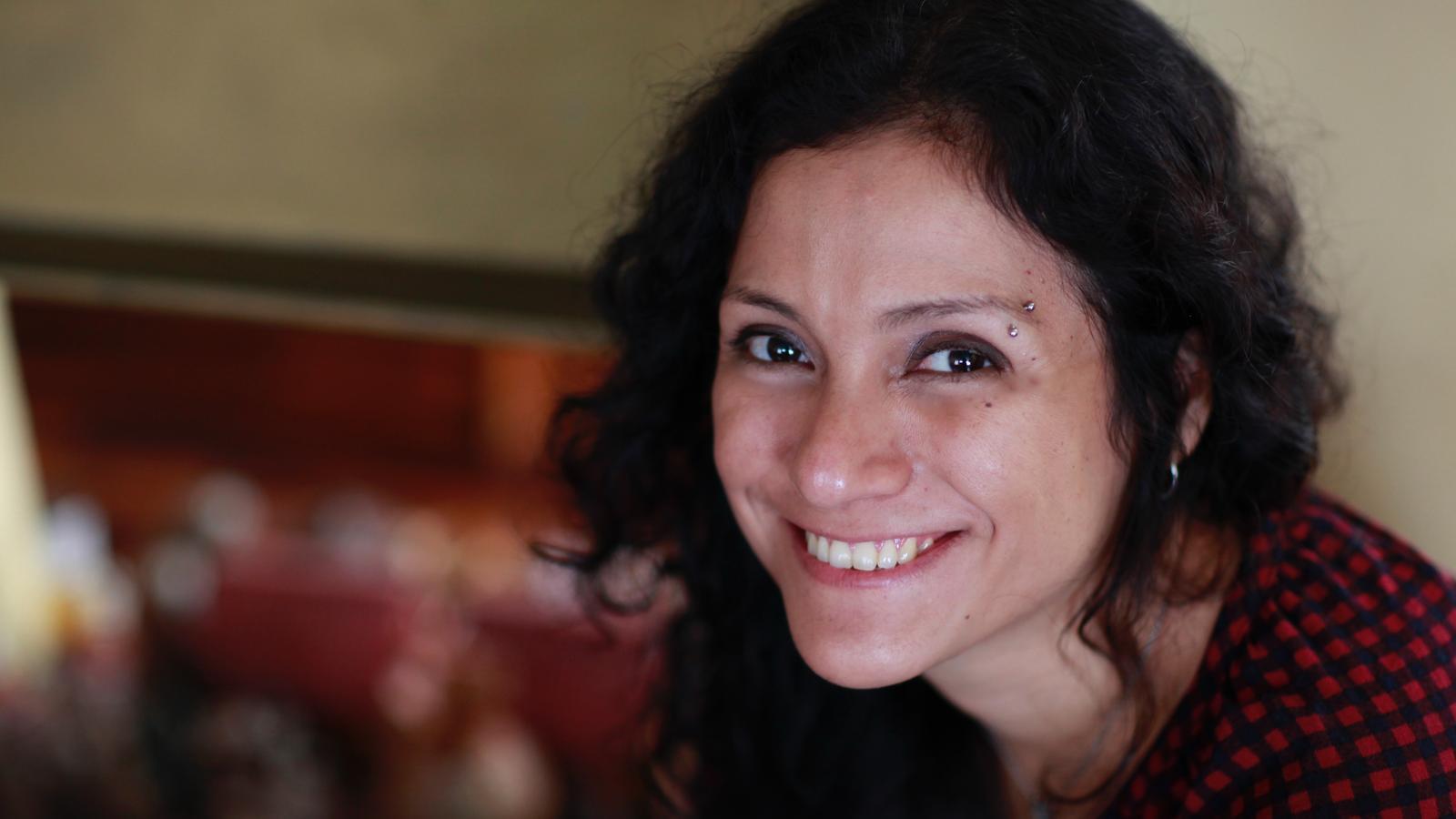
Barcelona"I was born in a country, Peru, where there is very little consideration for animals, and where they are even mistreated, but for a little more than half of my life I have lived in a place where they are highly respected," comments the narrator Claudia Ulloa Donoso (Lima, 1979), who has just arrived from Trondheim, a city located in central Norway, to present her third collection of stories. The Terrible Fear of Being an Animal (Páginas de Espuma, 2026) conjugates the realities of the Latin American country where she grew up and became an adult and those of the European country where she works as a teacher and has consolidated her literary career. "I arrived in Norway for love, but I stayed to study sociology and education, and I haven't left since," she recalls.
In one of the stories in the volume, the examination of a guinea pig's entrails is capable of predicting a child's illness. In another, a cat inspires the writing of a gospel and the founding of a Norwegian neighborhood. "In Peru, to the cuis [the word used to designate guinea pigs] are attributed divinatory properties and even now they are used in a very curious and popular ritual –she explains–. It consists of rubbing the animal over the body of the person who is to receive the diagnosis before killing it and quartering it to analyze its viscera. Those that are affected are the ones that the person had wrong, who has ended up cured thanks to the animal: it is believed that through death, the cui has assumed the illnesses".
"Humanity and animality advance hand in hand, in many cases, and are often present at the same time in these stories," states Claudia Ulloa Donoso. The appearance of a sewer rat can reveal the bonds and problems of a family. A moose, the largest deer of all—which can measure more than three meters in length and two and a half in height and weigh 800 kilos—observes and reflects on the first date of the woman it has just encountered in the middle of the street. "This story was born from a real anecdote I lived through," she recalls. "One night while returning home, to the outskirts of Trondheim where I had recently moved, I found an enormous moose in front of my doorway. I was very afraid that the animal would start running towards me. Perhaps my presence scared or made it nervous... I approached it little by little, because I had to get into the house no matter what: it was one in the morning, and it was freezing cold." The moose not only let the writer pass, but began to walk in the direction of the forest and disappeared among the trees. "Since I was lucky, I ended up dedicating a story to it, but I wrote it from the animal's point of view," she says.
Although she feels more comfortable writing short stories, the book by Claudia Ulloa Donoso that has had the most repercussion so far has been the novel I Killed a Dog in Romania (Almadía, 2022). Starring a semi-depressed teacher who teaches Norwegian to immigrants and accepts an invitation from a Romanian student to travel to his country, it has already been translated into seven languages. "I recently presented the Norwegian translation of an earlier volume of stories, Little Bird [Almadía, 2015], and it was very exciting, because it was based on a conversation in a public library in the country with one of my favorite Norwegian authors, Gunnhild Oyehaug," comments Ulloa. Other writers that Ulloa follows from Trondheim are Vigdis Hjorth, whose novel Fifteen Years can be read in Catalan at L'Altra, and the autobiographical sextet My Struggle, by Karl Ove Knausgard.
