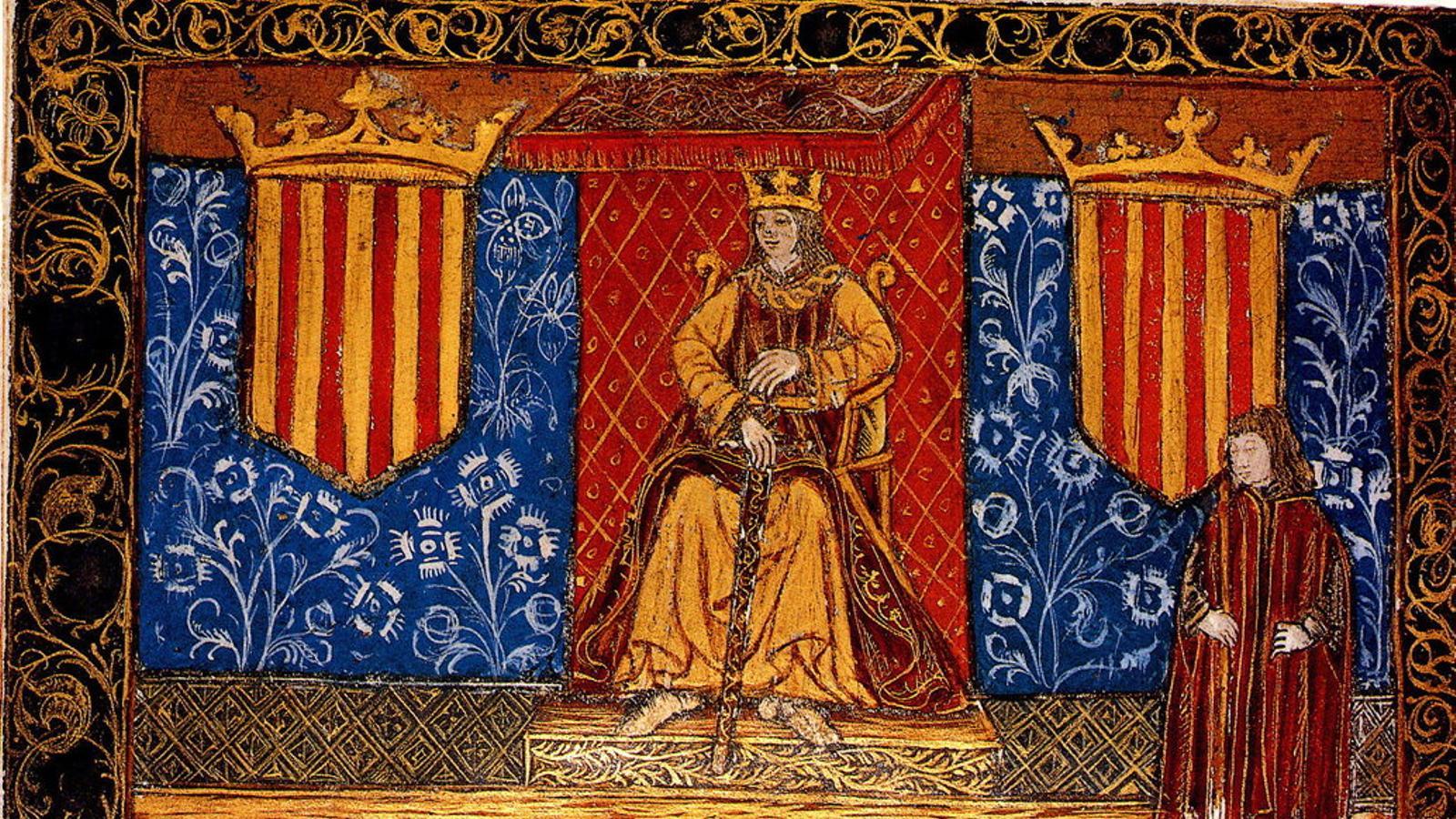
King James I and his 17 children

-
CAT -
CAST
BarcelonaIf we Catalans were monarchists, like the British, James I the Conqueror would be a central figure in our popular imagination. But it has been several centuries since we lost our own dynasty. That is why we have embraced republicanism. The passionate Carlist substitute—traditionalist and rural—has also passed into history for over a century now. For all these reasons, only a mythical shadow and a shall we say friendly indifference remain of the Conqueror. What do people know about his life, his politics, his warrior ardor? Very little. And he is our great king.
This summer marked 750 years since his death, which occurred specifically on July 27, 1276. Did anyone notice? The anniversary passed without much fanfare. How many books have you read about James I? Any biography? What were you taught about him in school? How many films or series have been dedicated to him? And to think he had such a fast-paced life... Nothing. Regarding his memory and survival, everything is quite precarious and hazy, despite having the fabulous biographical chronicle, the Llibre dels fets. Collectively, we neither love nor hate James I; rather, we ignore him, which is the worst punishment.
Historian Josep-David Garrido i Valls now publishes, within the collection Episodis de la Història, by Dalmau Editor, the brief monograph Last years and death of James I. In case anyone has a guilty conscience, or simply a shred of curiosity, it is a good taste. And quite intriguing. The author paints a political and personal portrait of a monarch who sees his days coming to an end surrounded by problems: his children fighting, the nobles revolting, the Andalusians besieging him (a month before his passing, his men suffered a severe defeat in Llutxent), the Muslims of the Valencian lands up in arms...
It was as if everything was shaking. He did not have a peaceful end, that powerful self-made crusader. He must have left this world anguished over what destiny awaited his lands. But, lo and behold, seven centuries later we are still here, even though we do not pay much attention to him.
Given that end, we could conclude that James I was an implacable, ferocious fighter; a notable politician and ruler; but not a good father. Dead at 68 after reigning for 63 –and seeing nine popes succeed each other in Rome–, both for his longevity on the throne and for his work he is, as Garrido says, "the most decisive political figure in the history of Catalan identity". And, nevertheless, we have turned him into an icon hidden in the drawer of historical miscellany. We don't even look at him. And, of course, we don't reason with him, we don't dialogue with him. Anyway.
A turbulent existence
Jaume, a man of flesh and blood, had a turbulent existence, both in personal and public terms. He was a respected and feared medieval monarch. And while he dedicated himself to warring against the Saracens (and avoided conflict with France and Castile; in fact, he often helped his son-in-law Alfonso X the Wise), while he expanded the borders with Mallorca and Valencia, while he repopulated and organized the newly conquered lands, while he did all this, which is a lot, he also cultivated the art of love. The result? He had twelve legitimate children (seven boys and five girls) by three wives: Eleanor of Castile –he never loved her, nor their firstborn Alfonso, who died at 37, in 1260–, Violant of Hungary and Teresa Gil de Vidaure. And he had five natural children, all male, from extramarital relationships with Blanca d'Antilló, Berenguera Ferrandis, Elvira Sarroca and the commoner Genisa, from Alzira. There were also other mistresses who did not give him offspring. In total, seventeen descendants. Goodness. He was "poly-familial," says Josep-David Garrido. Perhaps today we would say he practiced polyamory.
Of course, those brothers and half-brothers fought and hated each other, especially those who aspired to succeed their father, who did not know how to control the roost. After Alfonso died, the infant Pere, son of Violant, became the heir and confronted his brother Ferran Sanxis de Castre, whom he ordered to be drowned in the waters of the Cinca river. King Jaume did not shed a tear for the boy: that death ended up being decisive in ending the revolt –which had been going on for three years– of the Aragonese and Catalan counts and achieving peace in Roses, in July 1275. The king died a year later in Valencia.
