A "wanted" poster campaign by a museum brings a looted painting back to France
The Museum of Fine Arts of Orleans has set out to recover hundreds of works stolen during the Second World War
-
CAT -
CAST
Olivia Voisin talks about her "cold cases" like a police detective, but in reality, she is the director of the Museum of Fine Arts of Orleans, in France, and she is searching for paintings that went missing during the Nazi occupation of the city in 1940.
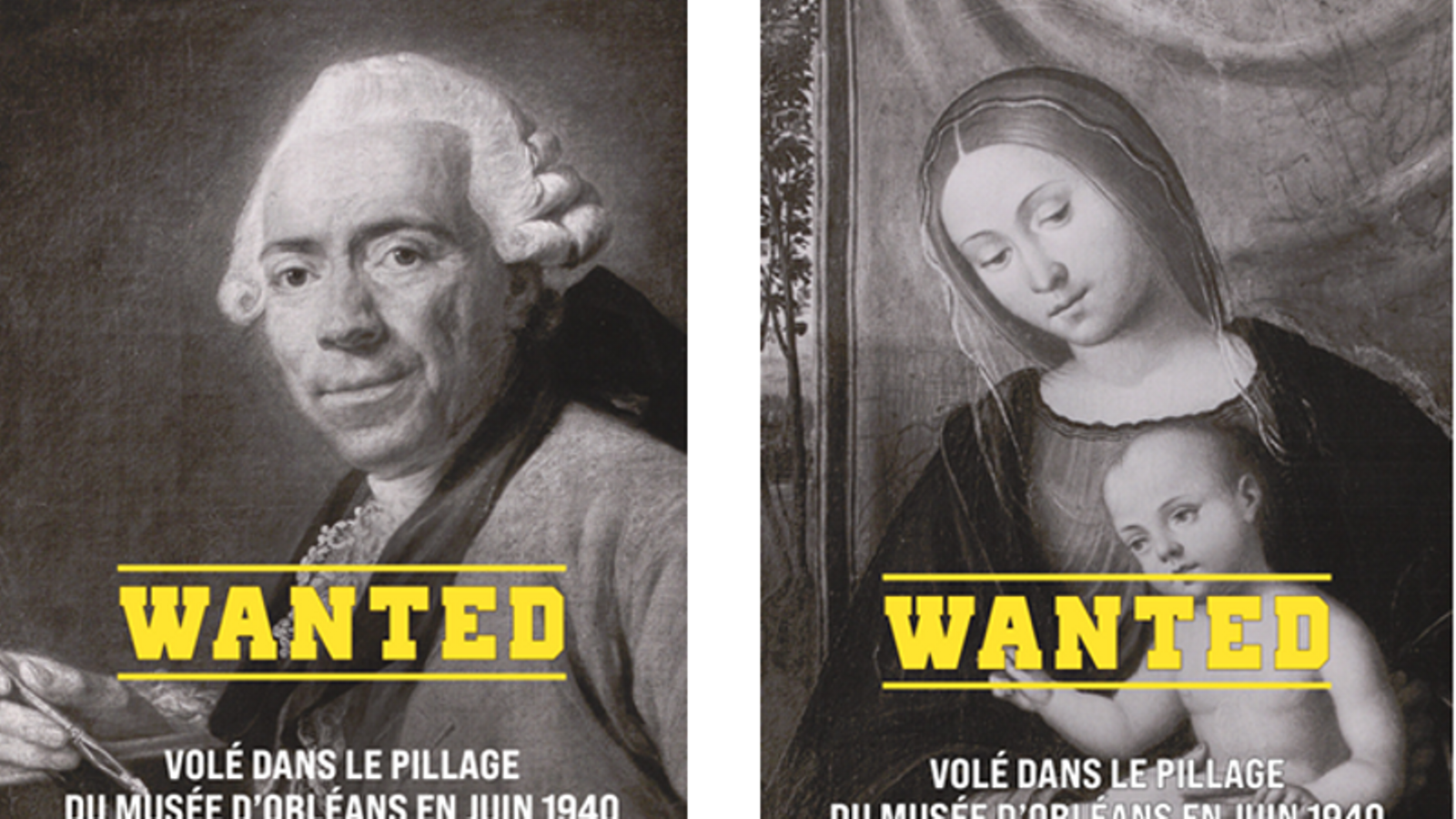
The museum launched a campaign this summer to locate nearly 400 works looted during the Second World War. It created "Wanted" posters with images of the lost works, which it plastered all over the city of Orleans and distributed massively online. Now, the first case has been solved. A fan of clue-hunting in France discovered last month one of the looted paintings in Switzerland that was about to be sold. Now, instead of going to auction, The Drinker, a 17th-century work by the Dutch painter Willem Cornelisz Duyster, will soon be returned to Orleans.
Eventually, it will be exhibited at the museum in a gallery dedicated to the missing works, with the hope that other recovered paintings can be added to it one day, says Voisin. The museum's campaign to recover the missing collection comes at a time when France has taken measures to facilitate the repatriation of artworks looted in wars or during colonization.
"The auction house was very cordial," said Voisin regarding the Swiss firm that had announced the Dutch work. They had cataloged the painting as a preparatory study, unaware that it was the final version, which was known to be missing. "We were able to prove that it belonged to the museum and the possessor of the painting wrote to us saying that they would return it," she explained. The quick and favorable responses from the auction house and from the possessor of the work—a term Voisin prefers over "owner," and the legitimacy of the claim that this may imply—reflect a broader shift in attitude regarding looted art, she believes. But in Orleans, the museum's poster campaign has stirred up a local history that some would prefer to forget.

This was precisely the intention. "The campaign created a situation where we talked about issues that had not been addressed for a long time," argues the director.
The history of Orleans told during the decades following the Second World War maintained that the lost paintings had burned in a fire during the Nazi occupation. But in the nineties, evidence emerged that the museum had been looted before the fire. And in 1994, the French Ministry of Foreign Affairs found references to the collection in Nazi archives that suggested the works had circulated after the fire.
When Voisin took office at the museum in 2016, she received the file of "cold cases." In recent years, the museum has tried to generate debate about the missing works, among other things by organizing an exhibition about Paul Fourché, a local collector whose works filled a good part of the museum's original painting annex, established in 1907. Fourché had contributed many of the missing works.
"There was a silence regarding artistic debate in the city, and people were reluctant to show their collections," says Voisin. "The idea was to relax people and make them feel comfortable." The museum only had about 50 photographs of the missing works, but there was a lot of information about other pieces. Her team created an exhibition that highlighted the old collection with replicas, images, and ancient descriptions to fill the gaps.
For a while, it seemed like there was little progress. But finally, someone called Voisin and revealed that a local notary had spoken of a will that bequeathed works that had once been part of the looted collection. "That was when I realized that something had to be done so that experts would have a reference available, but also so that no one could say: 'We didn't know'."
The museum created an online catalog of the missing works, but Voisin was still eager to reach an audience wary of the implications of owning stolen art, especially works that might have been looted by the Nazis. In July, she started the "Wanted" poster campaign. "The goal was to reach people who do not know the history, and also those who perhaps have their coffee in front of one of our paintings every day."
The campaign generated international headlines, and people began writing to Voisin from all over the world to check the provenance of their own paintings and to ask about the missing works. Some were independent researchers, such as "the friend of the museum," as Voisin refers to the person who helped find The Drinker.
"There are people who say it is impossible to recover all these works, but for the conservators and guardians of the national heritage, it is a duty." The director believes that more missing art will be recovered as the campaign gains momentum. "It's like a game, it's like Pokémon," she says, referring to the nineties craze of collecting "pocket monster" cards. "We have to catch them all."
