Isabel Olesti novels desire and fear in the midst of war
'The women and the shadows' recounts the coexistence and daily life of two refugee families in a farmhouse in Baix Camp

-
CAT -
CAST
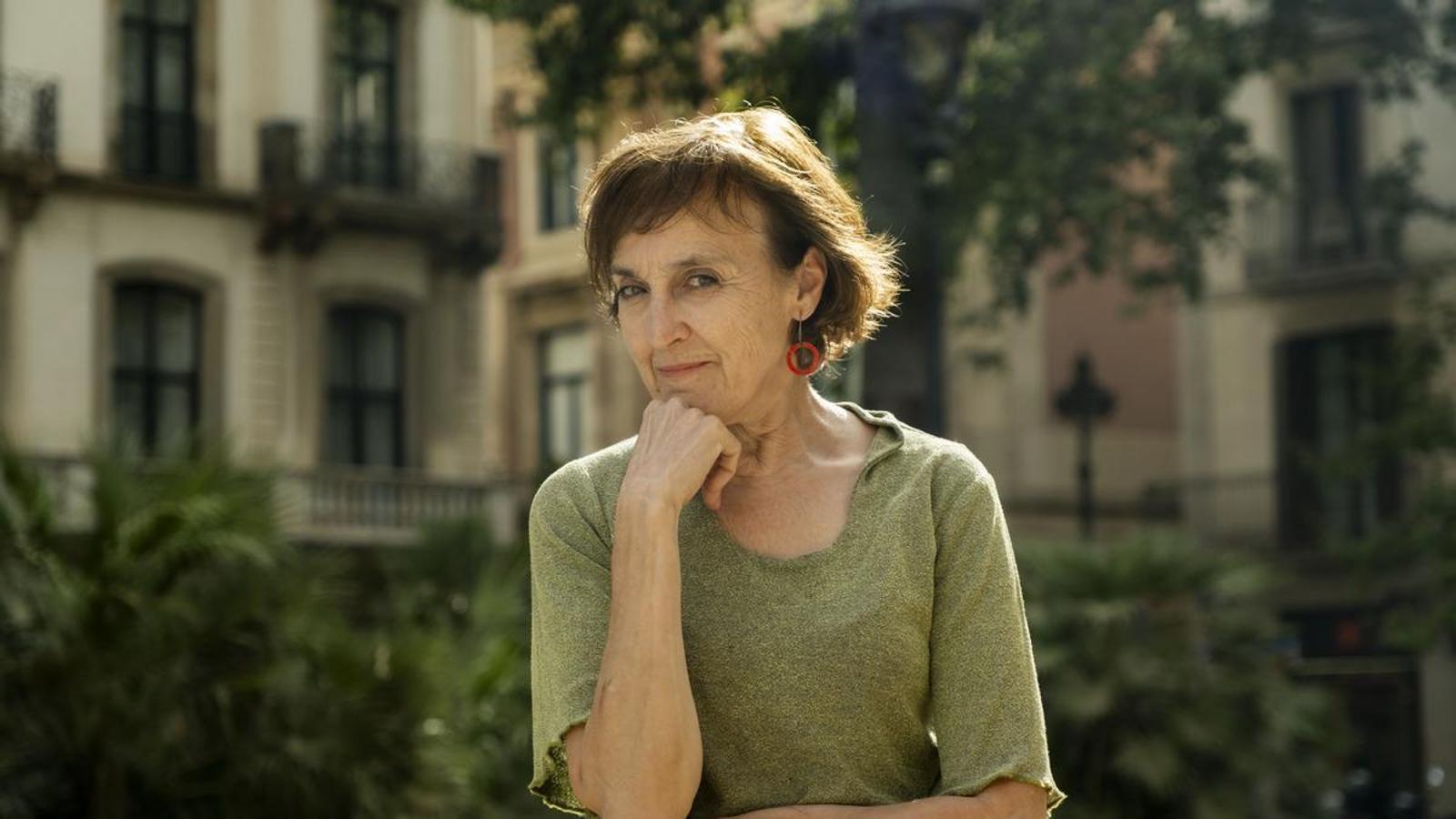
BarcelonaIsabel Olesti's latest book (Reus, 1957), Les dones i les ombres (Proa), is not a historical novel, nor a memoir, nor a war novel. And, despite this, the story takes place between the 1930s and 1940s in Catalonia, starts from family memories, and is profoundly marked by the Civil War. Olesti's mother lived through the conflict sheltered in a farmhouse in Baix Camp, along with her parents and sisters, and surrounded by a group of people who, at first, did not know each other at all. Many years after those experiences, the writer – author of books such as El marit invisible (Columna, 1999) and La pell de l'aigua (Proa, 2012) – has transformed them into a fictional story starring two families who coexist in a forced daily life, between uncertainty, fear, and desire.
"The war is the excuse for these people to be confined in a farmhouse and have to relate to each other. Of all these people, the men were hiding either because they had to go to the front or because they were priests and were afraid of being killed, while the women were the ones who pulled the chestnuts out of the fire," explains Olesti. Part of the seed of the story comes from one of her previous books, Nou dones i una guerra: les dones del 36 (Edicions 62, 2005). "That was a history book about women who actively participated in the Civil War. Now I have done the opposite: I have fictionalized a story based on that context, turning a farmhouse where part of my family lived into literature," adds the writer, who with the title of the novel winks at the poetry collection Les dones i els dies by Gabriel Ferrater.
The microcosm of the story is formed, on the one hand, by the grandfather, the grandmother, and the daughters (one of whom is Olesti's mother) and, on the other, by Mrs. Balbina, her daughter Cecília, and the elderly grandmother. Mrs. Balbina is a wealthy widow, the owner of the farmhouse, and she invites the grandmother to take refuge there one day when they meet in line to buy bread. That coincidence is the beginning of a story far from the front, but with bombs and soldiers very present. Olesti contrasts the experiences of the adults, often worried about the future and longing for the war to end, with the innocent and playful gaze of the girls, who experience childhood among the fields, the pond, the animals, the legends, and curiosity about the farmhands and neighbors.
Repression and sensuality
"What happens to these people, who are very Catholic and accustomed to a comfortable life, when war breaks out? Everything falls apart for them. They have to sleep in any way they can, they have to queue to go to the bathroom, and they have to eat the herbs they pick from the roads," Olesti underlines. The contrast is perceived in the book with characters like Mrs. Balbina or a priest who take them in, and who, every time someone arrives, quickly takes refuge inside a wine barrel. Despite having grown up under the yoke of Catholic repression, desire and sensuality emerge within the walls of the farmhouse, and each person tries to manage it as best they can. "For these people, sex was taboo and only served to procreate, but everyone has a desire, and I explain it from the perspective of everyday life, which is as important as war," points out the writer, who cites Natalia Ginzburg and Mercè Rodoreda as two of her great influences.
Although the book is inscribed in literary realism, Olesti enriches the story with superstitions and legends that fascinate the young and keep the adults somewhat frightened. "They believe there is a woman buried under the upside-down pine tree, that a girl drowned in the pond... All this imaginary space breaks with the war and is important, because it conditions the characters. The shadows in the title refer to the people who are no longer here, but also to the stains on the wall and the shadow the mother sees one night when she flees," says Olesti. When it comes to articulating this entire universe, the writer has opted to construct short, self-contained chapters, which function as little stories. "I saw it clearly when I had the characters, the place, and the story. I started writing it while also working on a book of short stories, but I spent years on it – Olesti explains –. I worked on it, let it rest, and picked it up again. Until I felt it was good enough, I didn't want to publish it".
