Elizabeth Diller: "Everyone wants to achieve a 'Guggenheim effect' but it is an idea from the past"
Architect. Cofounder of the studio Diller Scofidio + Renfro
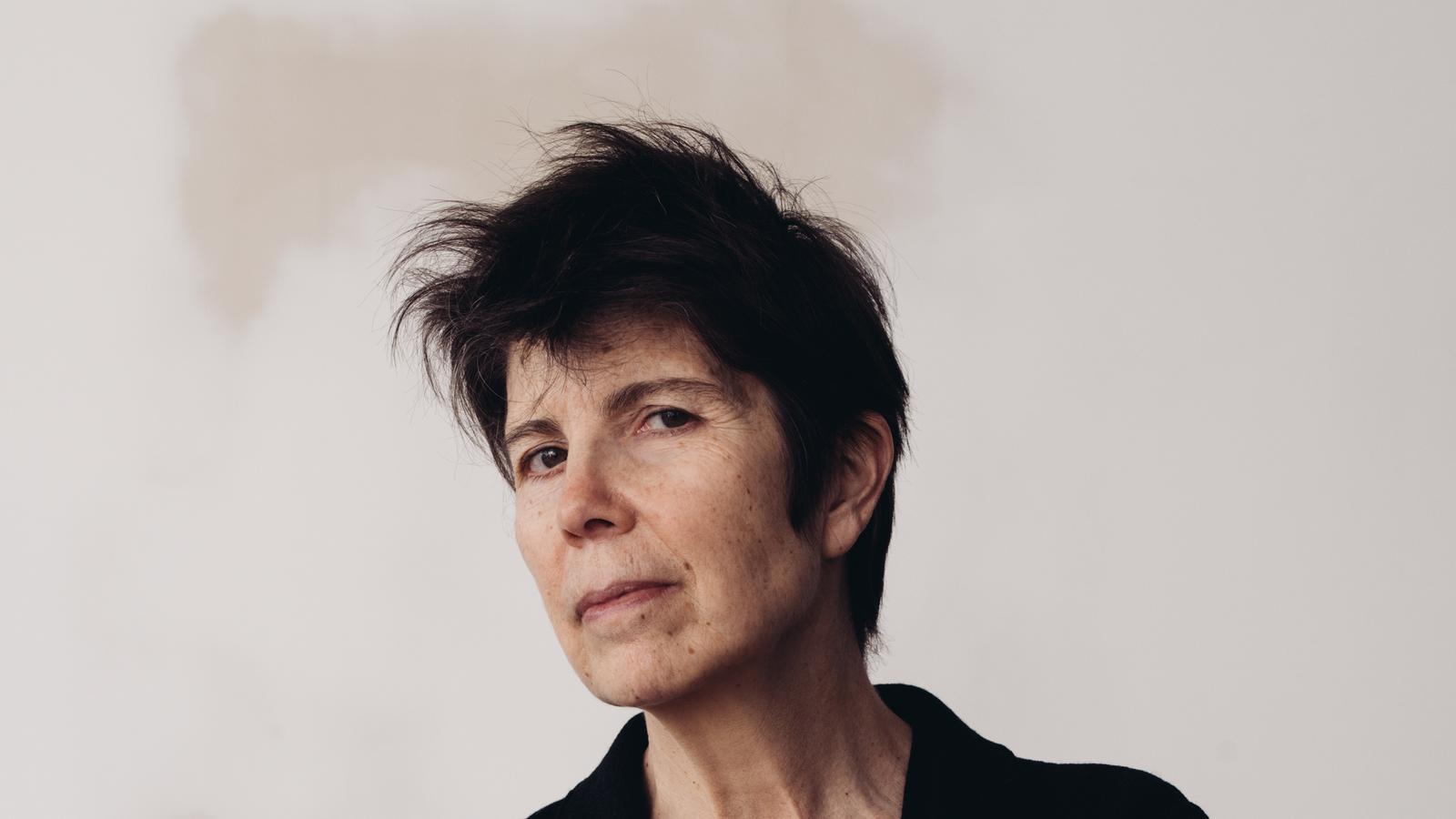

BarcelonaThe American architect of Polish origin Elizabeth Diller (Łódź, 1954) is one of the most influential professionals on the international scene, at the head of the studio she founded together with her husband, Ricardo Scofidio (1935-2025), and Charles Renfro. Diller is in Barcelona this Saturday to participate in the first day of the Museu Nacional d'Art de Catalunya cycle Thinking the museum, imagining futures, organized to discuss the architectural challenges of museums on the occasion of the center's expansion. One of the firm's first works was the Institute of Contemporary Art in Boston. They have also carried out an expansion of MoMA, The Broad, in Los Angeles –currently in the process of expansion– and the V&A East Storehouse, in London. "Nowadays, museums try to attract a very broad public," states Elizabeth Diller. "That is why they have a great variety of exhibitions and a pleasant cafeteria, spaces where people can relax, lecture series, outdoor areas, and spaces for events that, ultimately, serve to raise funds. The financial issue is key: in Europe, culture has always received state support, while in the United States this has not been the case. For that reason, there we have had to depend on philanthropy. In Europe, sponsorship is gaining more and more weight."

You live in New York and have your studio there. How do you see the city, architecturally?
— It is a city very much oriented towards the real estate market. Every square meter is worth an enormous amount of money. Especially in Manhattan, because it is an island with limited surface area and, therefore, it grows in height. The problem is that whoever offers the most money is the one who gets the space and, sometimes, public space or open spaces are conceded to real estate developers before they are to the citizens. We try to protect public space and create as much of it as possible. The High Line was precisely about that.
It was an exemplary and transformative project.
— The High Line was born because the owners of the land surrounding it considered that it harmed the value of their properties. It was an ugly industrial infrastructure that, according to them, had to be demolished. At that time, Mayor Giuliani signed a court order to tear it down. When Bloomberg took office, he faced a lot of pressure from civic movements to consider the possibility of preserving it and turning it into a park. Therefore, it was a great risk for the city. A competition was held and we won it, and we turned it into a park. However, you have to defend the project in economic terms for the city to want to move it forward. This is the only way for owners and developers to support a public space. The properties are worth much more than they would have been worth without the High Line.
How can cases like this of green gentrification be addressed?
— Good question. In areas like this one in Manhattan, which are post-industrial areas, when you do an important project it becomes a catalyst for growth, as happened in Bilbao. And everyone wants to achieve a Guggenheim effect. But it turns out it's not that easy. In a way, it's an idea from the past. Even so, the idea persists that a catalyst project can increase property values. And in this case, many good things happened. It was an interesting area with personality, with a kind of alternative atmosphere, of gay culture, but apart from that it was practically razed, because all the industry had left. Therefore, the idea of making that space available to more people could be very good.
Did you anticipate what would happen?
— But what does it really mean to be successful? How is it measured? For us, when the park became too crowded and property values rose so much that, basically, the middle class was excluded and it became difficult to access affordable housing, it became a problem. Now the city has changed the law. Before, when we were working on the High Line, there was a rule called discretionary housing. This meant that, if a developer included affordable housing in a residential project, they could obtain other benefits, such as permission to build higher. Since 2016, the law stipulates that you must include 25% affordable housing in any case, without anything in return. They could do better and make it more than 25%, but I think that was a step forward: the city understood what happens if a project is so successful that it ends up excluding a large part of the population.
But tourist crowds continue.
— The situation is regulating itself a bit. Normally, New Yorkers don't go there on weekends, when there are tourists, and they go in the evening or during the day. There is a kind of natural selection, so to speak. But, regarding the design, I wouldn't have done anything different. We wanted it to be as beautiful and as powerful as possible. The rest, I think, is a matter of public policy in the cities. With Central Park, Frederick Law Olmsted was already defending the same idea: he argued that Central Park would drive the growth of Manhattan to the north.
An economic argument was already being used.
— It is interesting. There is always some kind of negotiation that must take place for a public space to move forward and be defended. Nowadays, the High Line is a municipal park in New York. It must continue to raise money to keep it clean, keep the vegetation in good condition, and manage it. Therefore, they have to raise a lot of money every year. New York is a peculiar place.

In the Spanish state, there is also a major problem with access to housing. In what way can architects contribute to solving it?
— There is a lot of experimentation regarding dimensions and collective living, sharing kitchens or other spaces. Also with prefabricated units, which are much cheaper to produce in a factory and then transport to the construction site. Architects can do many things, if they are given the opportunity. The problem is that in many cities, for example in New York, when public housing is built there is no guarantee that it will be of good quality. Often, the characteristics of the housing worsen as the price that can be charged for sale or rent decreases. There is a mentality that, if housing is affordable, it must be of lower quality than market-rate housing. And this is a problem. This paradigm must be changed.
You were born in Poland, the daughter of a couple who survived the Holocaust, and you emigrated to the United States when you were five years old. How do you experience the current political situation?
— It’s horrible. My family came to the United States looking for freedom. And we were very proud that it was a place where immigrants from all over the world arrived. There is no one who lives in New York who is originally from New York. But what has happened in the United States is something we see happening all over the world, not just here: there is this fear, this nationalist, racist, and quite horrible atmosphere, very regressive. It is very sad, because my family suffered the Holocaust, and seeing this confusion between religion and politics... People do not understand the nuances. Either you are on one side or the other. And this dynamic is what has led to the extremes. The simplification of the message is a huge problem. I hope that this begins to slowly reverse and that Trump is not here in two years. I suppose we go through cycles of hope and progress, and then of regression and lack of hope. We are trying to regain hope. I want to be optimistic.

Let's talk about museums. The V&A East Storehouse is the result of the redevelopment of the London Olympic Games Press and Broadcasting Centre. Was the project of creating a storage facility very different from that of a conventional museum?
— Yes. At the East Storehouse there was a great conversation between the curators and the conservators. The curators want to put the works in front of the public, while the conservators want to keep them hidden and protect them from the public. And, of course, both have their job and it is important. But, when you exhibit the works in a working facility, in a warehouse, and basically announce to the public that they can enter, look, and explore, you make the works more vulnerable. This makes the conservators a little more worried. Therefore, one must find a balance between these precautions and a kind of new freedom that you give to the public.
Which freedom?
— Do not place objects inside display cases, nor behind glass. Neither is there a guard watching to ensure you do not touch anything or get too close to a painting. It is a much more informal environment, focused much more on curiosity. There are no signs on the walls to tell you how you should understand the works. The works are not organized according to any kind of taxonomy; therefore, no narrative exists. The idea was that the delirium of the collection should be, so to speak, the way of presenting it to the public.
Directly like a warehouse.
— That is why we wanted to display everything in boxes and pallets. It is a very low-tech solution, very, very simple. And we hoped to achieve this effect of slightly crossing a boundary, of entering a space that is a functional storage facility, where you have the opportunity to see what happens behind the scenes. We wanted to balance this feeling with the surprise of seeing how large this collection is. It must be taken into account that collections will always continue to grow, grow and grow. And, therefore, you have to keep up with the pace and continue building more buildings. And the costs are astronomical. There is also the carbon that is generated with the transport back and forth, the labor... It is a huge undertaking to have collections and expand them. Therefore, I believe that the depots could represent a paradigm shift.

Another one of their great works, The Shed, in New York, is a large center for artistic creation and research. It includes a mobile roof that, by moving along rails, can double the surface area of the center by using the adjacent plaza. It seems to be the project where they had the most creative freedom.
— We created The Shed from scratch. It is where we had total freedom, because there was no client. The city had a huge undeveloped plot of land, where the Manhattan railway tracks were, on the west side. There was a site that the city had reserved for a cultural facility, but they did not know what they wanted to do there. They launched a proposal competition and we participated with the idea that New York already has everything, it has all kinds of museums and galleries, spaces for the performing arts, for all disciplines, and it has about two thousand cultural facilities.
What was it missing?
— It lacked a place where all the arts could be under the same roof. But the plot was too small, and we proposed that it could be expanded half the time. This was the origin of the project. For four years we worked practically without a contract or support, until a board of directors was established, we had a contract and, four years later, an artistic director was appointed. Alex Putz is a truly wonderful person and he saw that the building also offered many possibilities. He really put the building's flexibility to the test and, suddenly, we had to change things we had already decided. We consulted many artistic organizations in New York to get input on what the best practices were in each field.
Public space is one of the major concerns of his study.
— Yes, we have even done guerrilla projects in donated spaces and one-day installations. We have placed great value on public space, more so than on museums. At the beginning of our career, it was the era of institutional critique. There was a kind of distrust towards museums, towards the power they hold, their authority, and all that. In the seventies, many things were being questioned, therefore, as a form of alternative practice, we worked outside the museum, but even outside the profession, somewhere between installations and spatial thinking.
